
Fort Lauderdale Aquatic Complex Once Again a World-Record Centerpiece (A List of the Records)
by John Lohn – Editor-in-Chief
04 May 2025
Fort Lauderdale Aquatic Complex Once Again a World-Record Centerpiece
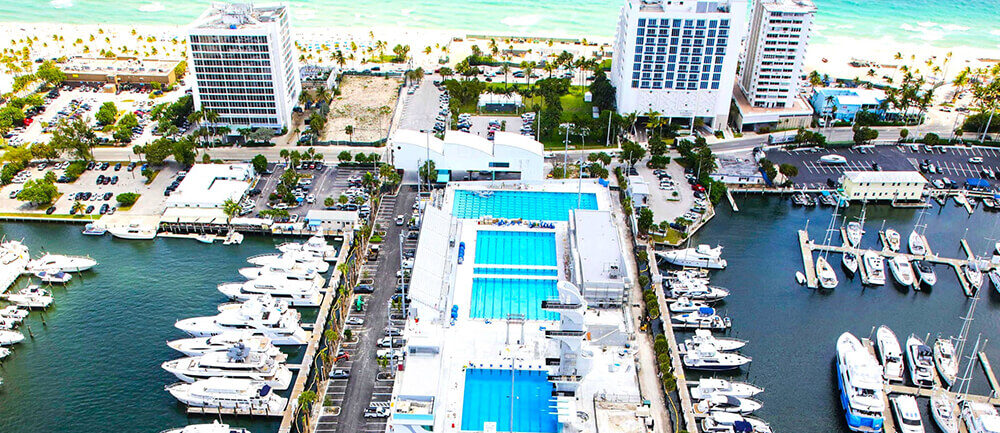
The Fort Lauderdale Aquatic Complex, originally built in 1965, has been no stranger to world records through the years. Some of the biggest names in the sport have competed at the venue since its unveiling, including numerous members of the International Swimming Hall of Fame. Simply, Fort Lauderdale is a destination for elite athletes in the sport, and that fact was on display over the past four days.
The USA Swimming TYR Pro Series was held from Wednesday through Saturday at the renovated facility, with sensational performances highlighting each day of action. Notably, Fort Lauderdale returned to world-record status when Katie Ledecky lowered her global standard in the 800 freestyle to 8:04.12 and Gretchen Walsh twice set world records in the 100 butterfly, first going 55.09, and then 54.60.
Thanks to the efforts of Ledecky and Walsh, the Fort Lauderdale Aquatic Complex now boasts 13 world-record swims in its history. The first record was set by Catie Ball in the 100-meter breaststroke in 1966, with the last before this weekend set by Michael Phelps in the 400 individual medley in 2002. The latter race featured Phelps and Erik Vendt both going under the previous world record.
Here is a look at the 13 world records set at the Fort Lauderdale Aquatic Complex
Catie Ball (100 Breaststroke: 1:15.60) – 1966Pam Kruse (400 Freestyle: 4:36.80) – 1967Andy Coan (100 Freestyle: 51.11) – 1975Mary T. Meagher (200 Butterfly: 2:08.41) – 1979Mary T. Meagher (200 Butterfly: 2:07.01) – 1979Kim Linehan (1500 Freestyle: 16:04.49) – 1979Martin Zubero (200 Backstroke: 1:57.30) – 1991Mike Barrowman (200 Breaststroke: 2:10.60) – 1991Natalie Coughlin (100 Backstroke: 59.58) – 2002Michael Phelps (400 Individual Medley: 4:11.09) – 2002Gretchen Walsh (100 Butterfly: 55.09) – 2025Katie Ledecky (800 Freestyle: 8:04.12) – 2025Gretchen Walsh (100 Butterfly: 54.60) – 2025
May Featured Honoree: Dorothy Poynton (USA) and her Memorabilia
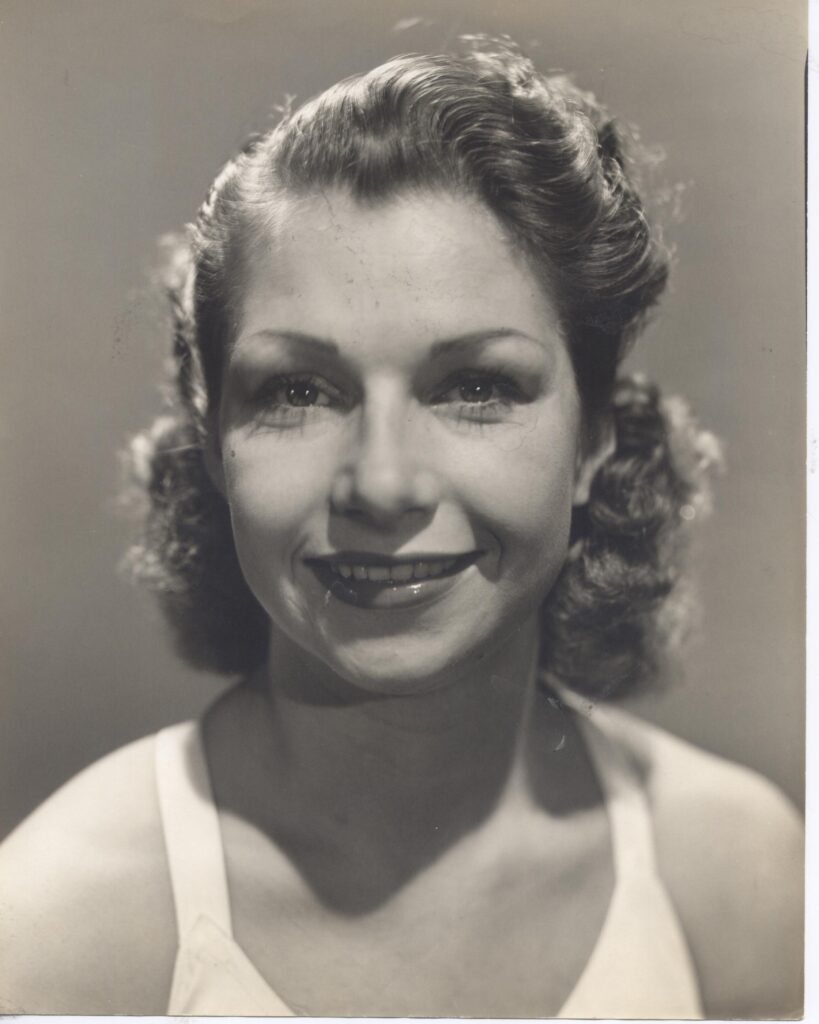
Each month ISHOF will feature an Honoree and some of their aquatic memorabilia, that they have so graciously either given or loaned to us. Since we are closed, and everything is in storage, we wanted to still be able to highlight some of the amazing artifacts that ISHOF has and to be able to share these items with you.
We continue in the new year, April 2025, with 1968 ISHOF Honoree, Dorothy Poynton Honor Diver. Dorothy Poynton donated many fabulous things to ISHOF and we want to share some of them with you now. Also below is his ISHOF Honoree bio that was written the year he was inducted.
Commemorative Medal awarded to Dorothy Poynton from Mayor LaGuardia for 3m Springboard Diving
1932 Participant medal, 1936 Participant medal, 1936 Gold 10m platform, 1936 Bronze, 1932 Gold 10m p
1 Holborow Swimming Club Medal given to Dorothy Poynton from her Coach Frank Holborow
Ryan Lochte to be inducted into ISHOF as Honor Swimmer in Singapore as part of Class of 2025
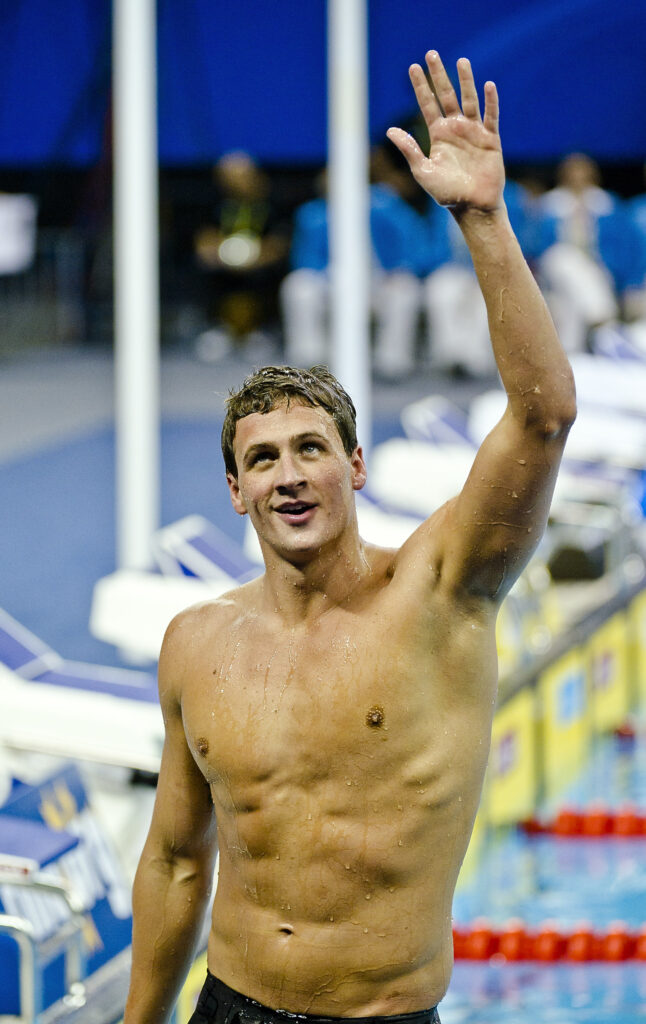
photo courtesy: World Aquatics
by: John Lohn
From the moment Ryan Lochte made his Olympic debut for the United States at the 2004 Games in Athens, he became a critical cog of American success on the international stage. As a four-time Olympian (2004-2016), Lochte obviously possessed the talent necessary to flourish at the elite level.
But the Floridian also owned another key attribute: Belief. Package those traits together and it’s no wonder that Lochte is now an inductee of the International Swimming Hall of Fame.
“I believe in myself,” Lochte said. “A lot of people look at Michael (Phelps) and think he can’t be beaten. That’s not me. I know I can beat him. That’s the competitive edge that I have. I never feel like I’m going to lose, no matter who I’m racing. I always feel like I can win.”
Lochte’s portfolio is stunning, thanks to 12 Olympic medals (six gold), 27 medals from the World Championships and 38 medals from the World Short Course Championships. He is one of the greatest collegiate swimmers in history and stood out in both the long-course and short-course pools.
While his pure talent and work ethic certainly elevated Lochte to the top of his sport, his mental toughness and belief in his abilities played equally critical roles on his road to Hall of Fame status.
Learn more about Ryan Lochte and the other 11 outstanding Honorees who will be inducted this year at ISHOF’s Diamond Anniversary in Singapore! Buy your tickets NOW for ISHOF’s 60th Anniversary of the Honoree Induction Ceremony in Singapore in conjunction with the World Aquatics World Championships
WHEN: Monday, July 28, 2025, 1:00 PM
WHERE: Park Royal Collection, Marina Bay, Singapore
Tickets are NOW ON SALE ~ purchase them HERE!
Buy your tickets NOW for ISHOF’s 60th Anniversary of the Honoree Induction Ceremony

ISHOF Class of 2025
Anthony Ervin (USA) Honor Swimmer
Ryan Lochte (USA) Honor Swimmer
Federica Pellegrini (ITA) Honor Swimmer
Joseph Schooling (SIN) Honor Swimmer
Ous Mellouli (TUN) Honor Open Water Swimmer
Chen Ruolin (CHN) Honor Diver
Endre “Bandi” Molnar (HUN) Honor Water Polo Player
Andrea Fuentes (ESP) Honor Artistic Swimmer
Gregg Troy (USA) Honor Coach
Captain Husain Al Musallam (KUW) Honor Contributor
Sachin Nag* (IND) Honor Pioneer Swimmer
Guo Jingjing (CHN) Honor Diver (Class of 2016)
*deceased
The International Swimming Hall of Fame (ISHOF) is proud to announce this truly international Class of 2025. This year, ISHOF will induct 12 honorees from nine countries. In addition, ISHOF will be inducting Honorees from four new countries that we have never had Honorees inducted from before, Kuwait, India, Tunisia, and Singapore.
Happy Birthday Enith Brigitha!!
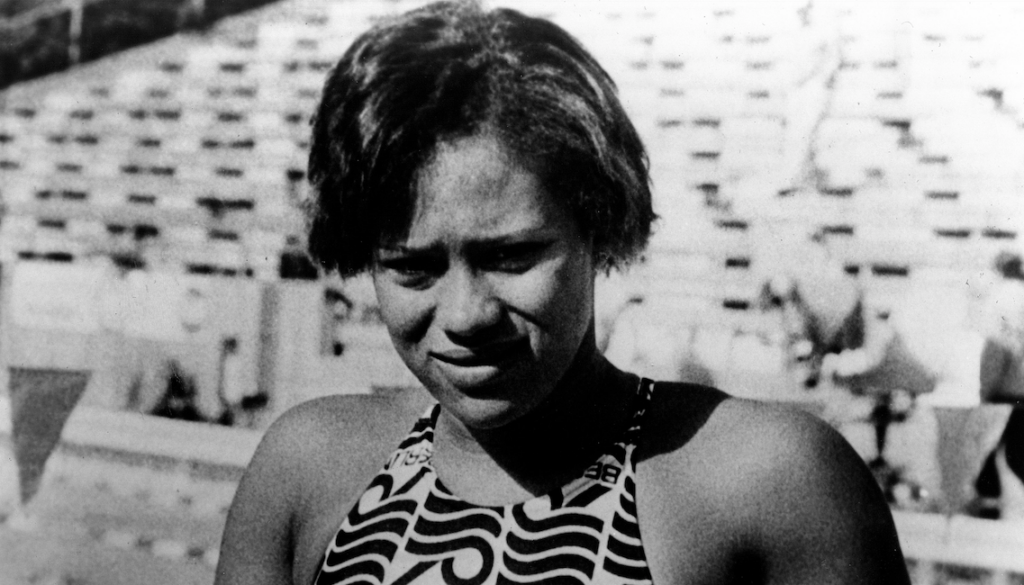
Enith Brigitha (NED)
Honor Swimmer (2015)
FOR THE RECORD: 1972 OLYMPIC GAMES: 8th (100m freestyle), 6th (100m backstroke), 6th (200m backstroke), 5th (4x100m freestyle); 1976 OLYMPIC GAMES: bronze (100m freestyle), bronze (200m freestyle), 4th (4x100m freestyle relay), 5th (4×100 medley relay), 10th (100m backstroke); FIVE SHORT COURSE WORLD RECORDS: 2 (100m freestyle), 2 (200m freestyle), 1 (400m freestyle); 1973 WORLD CHAMPIONSHIPS: bronze (100m freestyle); silver (200m backstroke); 1975 WORLD CHAMPIONSHIPS: bronze (100m freestyle, 200m freestyle, 4x100m freestyle); 1974 EUROPEAN CHAMPIONSHIPS: bronze (100m freestyle, 100m backstroke), silver (200m freestyle, 4x100m freestyle); 1977 EUROPEAN CHAMPIONSHIPS: silver (100m freestyle, 4x100m freestyle).
Enith Brigitha was born on the West Indian Island of Curacao, where she first learned to swim in the Caribbean Sea. By the time she moved to Holland with her mother and brother in 1970, she had become the island’s most promising swimmer.
Two years later, swimming for Coach Willie Storm at the Club Het Y in Amsterdam, Enith qualified for the 1972 Munich Olympic Games and reached the final in four events, and this was just the start of her success. At the 1973 inaugural FINA World Championships in Belgrade, she claimed a silver medal in the 200 meter backstroke and a bronze medal in the 100 meter freestyle. At the 1974 European Championships she won five medals, including four individual medals for the 100 and 200 meter freestyle and backstroke events. In 1975, at the II FINA World Championships in Cali, Columbia, she added three bronze medals to her collection, including individual pieces of hardware in the 100 and 200 meter freestyle.
At the 1976 Olympic Games in Montreal, she earned individual bronze medals in both the 100 and 200 meter freestyle, and at the 1977 European Championships, she won a silver medal in the 100 meter freestyle.
Enith was a genuine superstar in an era dominated by women swimmers from the German Democratic Republic. All told, she set five short course world records and collected 21 Dutch titles in the freestyle, backstroke, medley and butterfly events. She won the Dutch 100 meter freestyle title seven years in a row, was twice named Dutch Sportswoman of the Year – and has the distinction of being the first person of African descent to win Olympic medals in swimming.
Still, her accomplishments have for too long been diminished by the dazzling success of the East Germans. Of the 11 individual medals Enith won at the Olympic Games, World and European Championships – only East German swimmers finished ahead of her in 10 of those events, the one exception being America’s Shirley Babashoff, in the 200 meter freestyle at Munich.
After the fall of the Berlin Wall, Dr. Werner Franke and his wife Brigitte Berendonk, discovered files from the Stasi – the East German secret police – documenting the fact that all of the East German swimmers who finished ahead of Enith Brigitha had been systematically doped, without the knowledge or consent of them or their parents, as a matter of national policy. To the GDR’s rulers, these young athletes were nothing more than pawns in
a global chess game, sacrificial lambs on the altar of East German ideology. Had the world known this at the time, the steroid and testosterone enhanced performances of the GDR’s athletes would have resulted in their disqualification, and Enith’s record would be even more stellar than it is. She also would be recognized today as the first black Olympic champion in swimming history, beating Anthony Nesty of Suriname to the top of the podium by 12 years.
There’s more to life than just swimming, of course. After hanging up her swimsuit and retiring from the sport, Enith married and had three daughters. She moved back to Curacao, where she opened her own swimming school and taught children to swim. Once her daughters were ready to go to University, the family moved back to Holland, where they remain today. Enith says, “With the girls in Holland and with our three grandchildren, it’s not so easy to leave Holland again.”
Happy Birthday Dara Torres!!

Dara Torres (USA)
Honor Swimmer (2016)
FOR THE RECORD: 1984 OLYMPIC GAMES: gold (4×100 m freestyle); 1988 OLYMPIC GAMES: silver (4×100 m medley), bronze (4×100 m freestyle); 1992 OLYMPIC GAMES: gold (4×100 m freestyle); 2000 OLYMPIC GAMES: gold (4×100 m freestyle, 4×100 m medley), bronze (50 m freestyle, 100 m freestyle, 100 m butterfly); 2008 OLYMPIC GAMES: silver (50 m freestyle, 4×100 m freestyle, 4×100 m medley); 1986WORLD CHAMPIONSHIPS (LC): silver (4×100 m freestyle); 1987 PAN PACIFIC CHAMPIONSHIPS: gold (100 m freestyle, 4×100 m freestyle, 4×100 m medley); 1983 PAN AMERICAN GAMES: gold (4×100 m freestyle); SIX WORLD RECORDS: three individual (50m free), three relays (4x100m free, 4x100m medley)
Dara Grace Torres grew up in Beverly Hills, California, where she learned to swim in her family’s backyard pool. At the age of seven, she followed her brothers to swim practice at the local YMCA. During her junior year of high school, Torres moved to Mission Viejo, CA, to train with Hall of Fame Coach Mark Schubert, and in 1983 she broke the world record in the 50-meter freestyle. The next year, while not yet a senior in high school, she won her first Olympic gold medal as a member of the USA’s 4×100 freestyle relay team.
Swimming for Randy Reece at the University of Florida, Torres earned 28 NCAA All-American swimming awards and at the 1988 Olympic Games, she won two silver medals swimming on relays. She finished her collegiate athletic career playing volleyball and took two years off before returning to win her second Olympic relay gold medal in Barcelona, Spain during the summer of 1992.
After 1992, Torres lived what appeared to be a glamorous life. She moved to New York City, worked in television, and as a Wilhelmina model she became the first athlete model in the Sports Illustrated swimsuit issue. Then in the spring of 1999, despite not having trained in a pool for seven years, she decided to give the Olympics one more try.
Training with coach Richard Quick in Palo Alto and Santa Clara, Dara made the Olympic team for the fourth time, at the age of 33. She returned home with five medals, more than any other member of the team, including three in individual events, and retired.
In 2005, while pregnant with her first child, Dara began swimming three or four times a week at the Coral Springs Aquatic Complex, to keep fit. After giving birth to her daughter, Tessa Grace, in April 2006, she entered two Masters meets and posted times that emboldened her to try another comeback. She asked Coral Springs coach Michael Lohberg if he would coach her, and a little over a year later, she won the 100-meter freestyle at the U.S. Nationals in Indianapolis. Three days later, she broke the American record in the 50-meter freestyle for the tenth time – an amazing 24 years after setting it for the very first time. In 2008, Dara qualified for her fifth Olympic team and at the 2008 Beijing Games, she became the oldest swimmer to compete in the Olympics. Dara returned home with three silver medals, including the heartbreaking 50-meter freestyle race where she missed the gold by 1/100th of a second.
In 2009, Dara won the ESPY award for “Best Comeback,” was named one of the “Top Female Athletes of the Decade” by Sports Illustrated magazine and became a best selling author with the release of her inspirational memoir, Age is Just a Number.
Dara continued swimming after recovering from reconstructive knee surgery and with the encouragement of coach Lohberg, she set her sights on making a record sixth U.S. Olympic swim team. When she just missed making the London Olympics by nine-hundredths of a second in the 50-meter freestyle at the 2012 US Swimming Olympic Trials, she announced her retirement with a smile on her face and her six-year old daughter Tessa in her arms.
Olympian, television personality, fitness guru, Queen of the Comeback, best-selling author and mother. Dara Torres is many things to many people, but above all, she is an inspiration.
Today in Swimming History ~ April 11, 1896 ~ Swimming begins at the Athens Olympic Games ISHOF Honoree ~Alfred Hajos wins first Olympic gold medal ever awarded in swimming
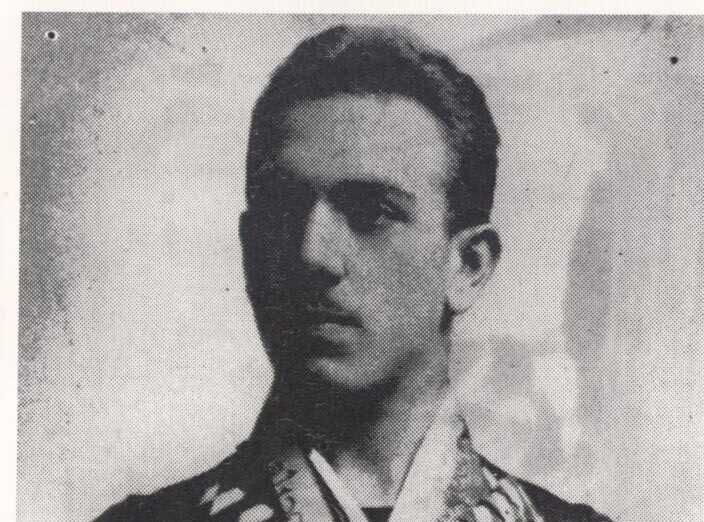
Today in Swimming History…….129 years ago, on April 11, 1896, ISHOF Honor Swimmer, Alfred Hajós of Hungary beats Otto Herschmann of Austria by 0.6s to win the inaugural Olympic 100m freestyle final in a time of 1:22.2 at the first Olympiad in Athens, Greece; He would also take gold in the 1200m on the same day.
Hajos and his Hungarian teammates were one of only three countries that competed in first Olympic Games in swimming. The other two were Austria and Greece. There was a fourth country that competed in the Games, the U.S.A., but they competed in sports other than swimming.
Hajos was inducted into ISHOF in 1966. Read about the rest of his life after that first Olympiad below.
ALFRED HAJOS (HUN) 1966 HONOR SWIMMER
The information on this page was written the year of their induction.
FOR THE RECORD: OLYMPIC GAMES: 1896 gold (100m, 1200m freestyle); first Olympic swim champion. The first modern Olympic swimming champion was Alfred Hajos, a double winner at Athens in 1896. Hajos won the 100 meter freestyle in 1:22.2 beating out the local favorite Chorophas and Herschmann of Austria.
Olympic Swimmers at 1896 Athens Games
The Austrians got back in the swim as Paul Neumann won the 500 meter freestyle over two more Greeks while Hajos was resting up for his second win, the 1200 meter freestyle in 18:22.2. Thus Alfred Hajos took home two of the three gold medals offered in swimming. His teammate, Zoltan Halmay got only a third, but came back in the next four Olympics to be the other Hungarian from the first Olympics to make the International Swimming Hall of Fame. The Austrian Neumann became a prominent U.S. doctor. Hajos stayed in Hungary, survived World War I, and came back to the Olympics 28 years after his first try, this time 1924 Paris, where he won another gold medal. It was in a cultural Olympic art and architectural contest.
Architect Hajos later designed Budapest’s finest competitive swimming pool, club and baths in which Hungary trained its next great Olympic 100 meter champion, Czik Ference in 1936, and its great postwar women swimmers, Szoke, Gyenge, Szekely, Temes and the Novak Sisters.
The Hajós Alfréd National Swimming Pool in 1931… (Photo: Fortepan/No.: 58265)
The National Swimming Pool was opened in 1930. A contemporary newspaper called it the crown of Alfred Hajós’ career.
The National Swimming Pool was commissioned by the Royal Hungarian Ministry for Religion and Education. The minister, Kuno Klebersberg (1875–1932), saw the swimming pool as a vital project.
Happy Birthday Ted Stickles !!!
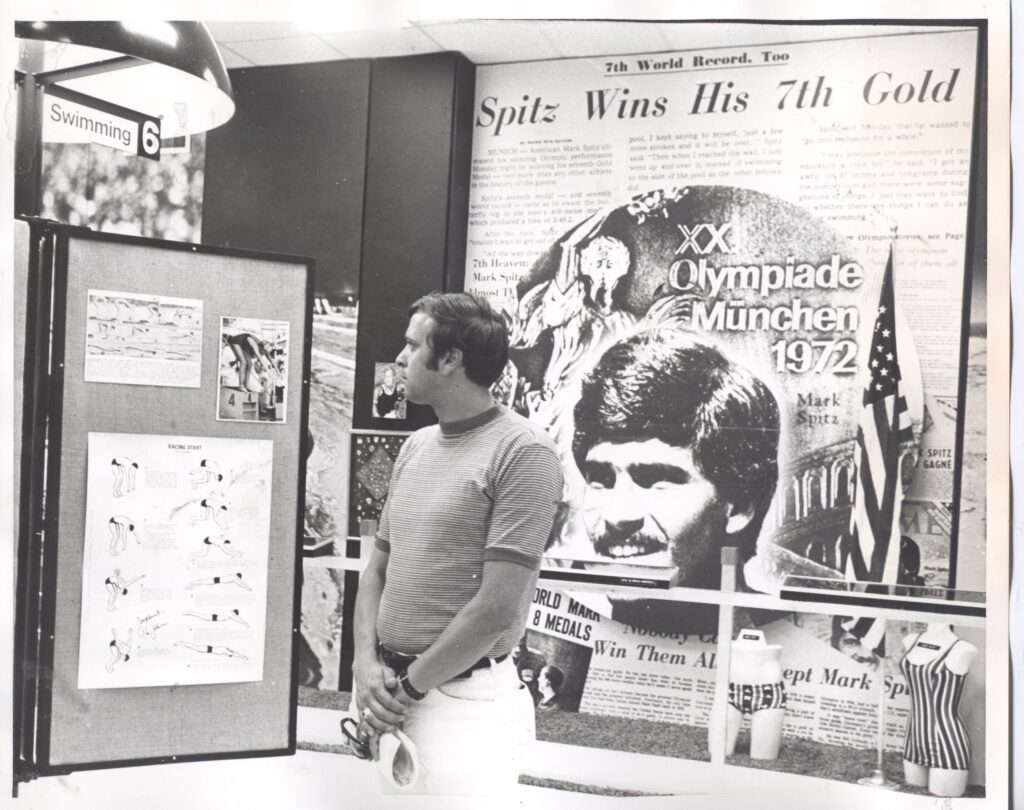
EDWARD “TED” STICKLES (USA) 1995 Honor Swimmer
FOR THE RECORD: 4 WORLD RECORDS: 400m individual medley; 8 U.S. NATIONAL AAU CHAMPIONSHIPS: 200m individual medley, 400m individual medley.
Ted Stickles swam with Doc Councilman’s legendary Indiana University swim team from 1962-1965. At on point during his career, he and his roommate, Hall of Famer Chet Jastremski, held a total of seven world records. Ted dominated the individual medley throughout the early ’60s, breaking a total of nine world records throughout his career.
His mother taught him to swim at an early age, but it was not until he entered high school that Ted began competitive swimming. After enjoying a successful high school career, Hall of Famer Doc Councilman recruited him to his IU team.
At first, Ted felt that Doc had made a mistake in his recruitment, but before long, he surprised himself and began to break unforgettable records. Ted was one of the first people to actually train for the individual medley events. Ted’s ease in moving from one stroke to another and fluidity without breaking stroke helped him be the first person to break two minutes in the 200 yard individual medley and five minutes in the 400 meter individual medley. For a span of three years, Ted Stickles held all of the world records in the individual medley events.
At the height of his career, he developed tendonitis in his elbow, hindering his ability to train. Yet Ted continued to swim and barely missed making the ’64 Olympic team. This was a disappointment because his sister, Terri Stickles, made the team; they would have been the first brother and sister to make an Olympic team.
Ted went on to coach swimming for the University of Illinois and Louisiana State University. Presently, he resides in Louisiana with his wife and two children and is event management director for all athletic functions at Louisiana State University.
Happy Birthday Tom Stock!!
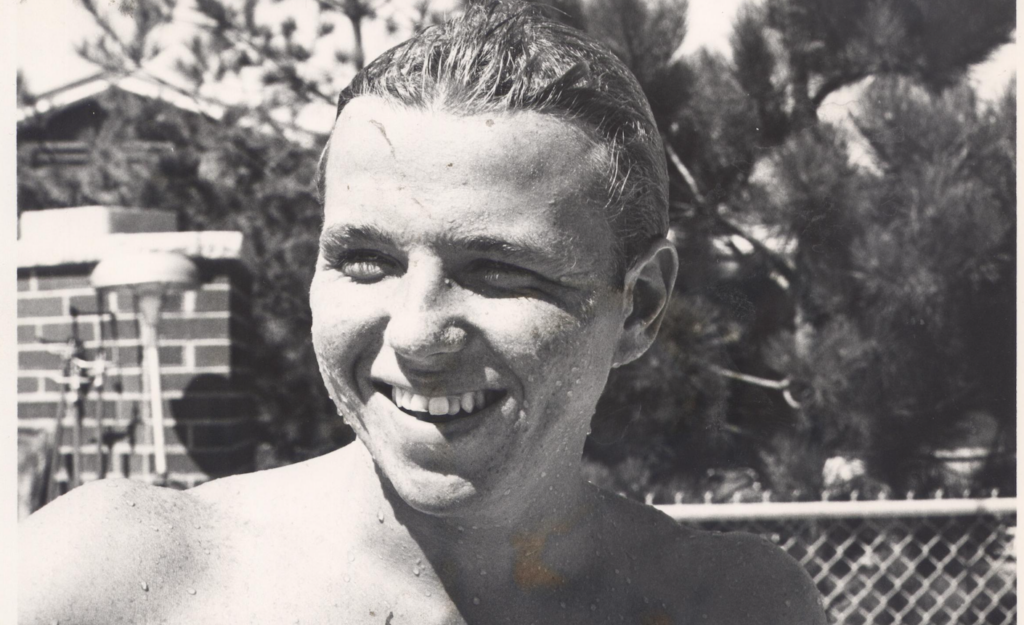
Tom Stock (USA)
Honor Swimmer (1989)
The information on this page was written the year of their induction.
FOR THE RECORD: WORLD RECORDS: 10 (100m, 200m, 220yd backstroke; relays); AAU NATIONAL CHAMPIONSHIPS: 11 (100m, 200m, 220yd backstroke; relays; AMERICAN RECORDS: 14 (200yd, 220 yd, 100m, 200m backstroke; relays).
Tom Stock may just be the greatest backstroker who never swam in the Olympics, due to prolonged illness before the 1964 Olympic Games. He may have been the smallest backstroker to hold a world record. He weighed in at 130 lbs. and set 10 world records. When he was in his second month of competition at Indiana University, Stock became the first man in history to swim the 200 yard backstroke under 2 minutes. This was a performance that caused his coach, “Doc” Counsilman to put a sign on the locker room door which said, “It’s not the size of the dog in the fight, but the size of the fight in the dog.”
This desire and an amazing feel of the water, long arms and a powerful kick, made Tom Stock great in the opinion of his famous coach. To the spectators he looked like he was riding on top of the water from the waist up. This unique buoyancy, plus the fastest arm turnover yet seen in backstroke, took him to 11 National championships, 14 American records and five world records in the 100 meter, 200 meter, 110 yard, 220 yard backstroke and the 400 meter medley relay. For four years he was the World Record holder and “King” of the 200 meter backstroke.
It started just after the Rome Olympics and finished just before Tokyo in 1964. In between, he victoriously represented the USA in Japan, South America, and Europe and was The American Swimmer of the Year in 1962. Stock had only two coaches, Dave Stacy at Bloomington, Illinois and “Doc” Counsilman at Bloomington, Indiana. He missed making the 1960 U.S. Olympic team by a judge’s decision. They took only two and not three as chosen in previous Olympics.
2023 ISHOF Honor Swimmer Kirsty Coventry Elected As The IOC’s First Female President
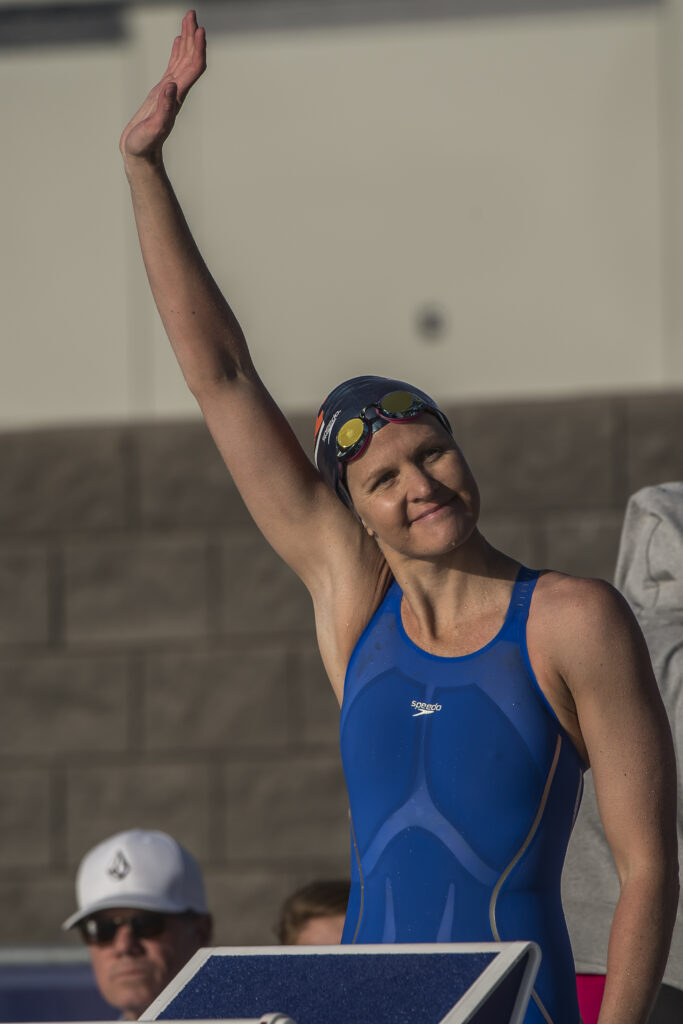
Photo Courtesy: Peter H. Bick
by Liz Byrnes – Europe Correspondent
20 March 2025, 08:41am
Double Olympic Champion Kirsty Coventry Elected As The IOC’s First Female President
Double Olympic champion Kirsty Coventry has become the first female President of the International Olympic Committee following the election at the 144th IOC Session in Costa Navarino, Greece.
Coventry – who has served as Zimbabwe’s Minister of Youth, Sport, Arts & Recreation since 2018 – is also the first African and at 41 the youngest person to be elected to the office in the IOC’s 131-year history and succeeds Thomas Bach whose tenure ran from 2013.
The five-time Olympian was widely believed to have been Bach’s preferred candidate and had been one of the frontrunners along with Lord Sebastian Coe and Juan Antonio Samaranch Jnr.
Kirsty Coventry – Photo Courtesy: Peter H. Bick
Also vying for the presidency were Swede Johan Eliasch, France’s David Lappartient, Japan’s Morinari Watanabe and Jordan’s Prince Feisal al Hussein.
The election had been expected to last at least five rounds but was resolved after only one round of voting with the seven-time Olympic medallist securing an absolute majority with 49 of 97 votes.
Samaranch got 28 votes followed by Coe (8), Watanabe and Lappartient (4 apiece) and Eliasch & Prince Feisal (2 eacch).
Bach was elected Honorary President earlier in the session, a lifetime role that was unanimously approved by IOC members which will commence after his presidency ends on 23 June.
Following the result, Coventry said: “Dear president and my very dear colleagues, this is an extraordinary moment. As a nine-year-old girl I never thought I would be standing up here one day, getting to give back to this incredible movement of ours.
“This is not just a huge honour, but it is a reminder of my commitment to every single one of you, that I will lead this organisation with so much pride, with the values at the core, and I will make all of you very very proud, and also extremely confident in the decision you have made today.”
Coventry won the 200 back at Athens 2004 and Beijing 2008 as well as four silvers and a bronze across five Olympics between 2000 and 2016. She also claimed three world titles among eight medals.
She was was inducted into the International Swimming Hall of Fame as part of the distinguished Class of 2023.
Born in Harare in September 1983, Coventry was first elected as an IOC Member as a member of the IOC Athletes’ Commission in 2013 and served in that role until 2021, when she was elected as an individual member.
The President-elect was elected Chair of the IOC Athletes Commission in 2018, becoming a member of the IOC Executive Board in the process. She was also the IOC Athlete Representative on the World Anti-Doping Agency from 2012-2021 and a member of WADA’s Athlete Committee from 2014-2021.
In an interview with the BBC earlier in March, Coventry addressed the issue of protecting the female category, which includes ensuring that any transgender athletes who have gone through male puberty are not allowed to compete in the female classification. The topic has been hotly debated over the past few years, but the IOC has deferred to various international federations when establishing rules.
Coventry wants the IOC to be more involved, saying: “I believe with the work that has been done with the IFs, the rules they have put in place, you can see there has been research done where it’s showing a disadvantage to women, to the female category. From the conversations that I’ve had now, a lot of the international federations want the IOC to take a more leadership role. We have more facts, there’s more science and medical research being done. We need to protect the female category and I think it’s time right now for the IOC to take that leading role.”
To read Kirsty’s ISHOF bio, click here: https://ishof.org/honoree/kirsty-coventry/
To watch here ISHOF Induction video and acceptance speech, click here:
As a Salute to Women’s History Month, we celebrate Open Water Swimming Pioneer Lynne Cox
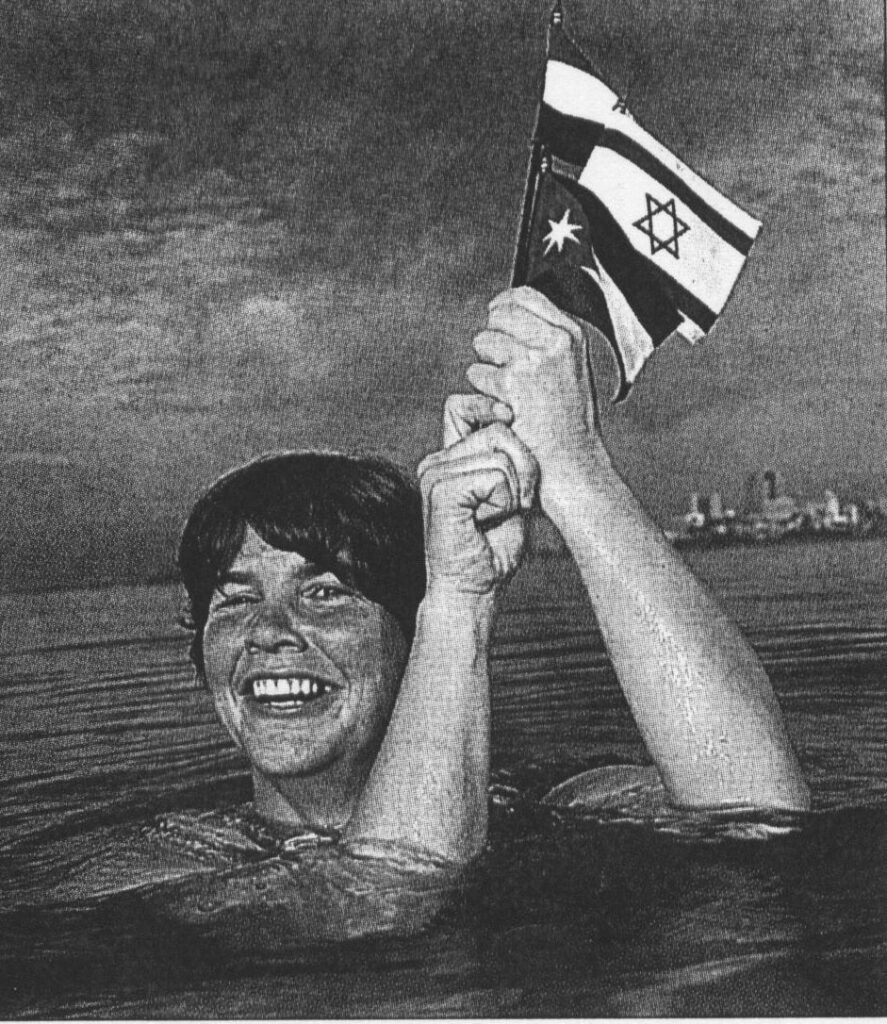
LYNNE COX (USA) 2000 Honor Open Water Swimmer
FOR THE RECORD: First crossing of the Catalina Island Channel (1971) 12:36 hrs.; Women’s and men’s record crossing of the English Channel (1972) 9:57 hrs.; Women’s and men’s record crossing of the English Channel (1973) 9:36 hrs., Catalina Island Channel crossing record (1974) 8:48 hrs.; Cook Straits between North and South Islands of New Zealand (1975) 12 hrs., 2 min.; Straits of Magellan (Chile), Oresund and Skagerrak (Scandinavia) (1976) 1 hr., 2 min.; Aleutian Islands (three channels) 1977; Cape of Good Hope (S. Africa) 1979; Around Joga Shima (Japan) 1980; Across three lakes in New Zealand’s Southern Alps (1983); Twelve difficult “Swims Across America” (1984); “Around the World in 80 Days”, 12 extremely challenging swims totaling 80+ miles (1985); Across the Bering Strait, U.S. to Soviet Union (1987) 2 hr., 6 min.; Across Lake Baikal, Soviet Union (1988); Across the Beagle Channel between Chile and Argentina (1990); Across the Spree River between the newly united German Republics (1990); Lake Titicaca Swim (1992).
Lynne Cox became the best cold water, long distance swimmer the world has ever seen. Her 5 foot 6 inch, 180-pound frame of a body was at one with the water. With a body density precisely that of sea water, her 36% body fat (normal is 18% to 25%) gave her neutral buoyancy. Her energy could be used all for propulsion and not to keep afloat. Propelling though the most treacherous waters of the globe is what Lynne Cox did best.
When her parents moved the family from New Hampshire to Los Alamitos, California in 1969 so that Lynne and her older brother and two sisters could receive better swim coaching, Hall of Fame coach Don Gambril, at the Phillips 66 Swim Club, took her under his guidance. What he saw was a large-boned girl with boundless energy and great upper body strength who could slice through the water like a porpoise. When she was 14 and already tired of “going back and forth in the pool and going nowhere”, Gambril urged her to enter a series of rough water swims near Long Beach. As a result in 1971, at age 14, she swam the 31-mile Catalina Channel in Southern California with four other friends. She loved it. The chill, the chop, the solitude, and the liberation were all exhilarating to Lynne. “Everything opened up. It was like going from a cage to freedom.”
For the next two decades, Lynne competed against the elements in swims which took her to all the major bodies of water in the world, many of which had not been crossed before and most of which had not been done by a woman. Her study of history at the University of California Santa Barbara may have been a catalyst in choosing which swims to pursue. It became her desire to use her swims to help bring people together, to work toward a more peaceful world. This realization was sparked during her 1975 swim as the first woman to swim the 10-mile Cook Straits in New Zealand in 12 hours 2-1/2 minutes. During this difficult swim, the outcry of support from the New Zealand people was all she needed to finish this 50 degree Fahrenheit swim, even when the tides and current had taken her farther away from the starting point after the first five hours of the crossing.
Her most famous swim was in 1987, eleven years after her father had planted the seed in her head. Lynne completed 2.7 miles in the Bering Straits, 350 miles north of Anchorage, Alaska where the water temperature ranges from 38-42 degrees Fahrenheit. Perhaps the most incredible of cold water swims, her 2 hours, 16 minutes from Little Diomede (USA) to Big Diomede (USSR) astonished the physiologists who were monitoring her swim. It marked one of the coldest swims ever completed. One can’t get much colder. After this temperature, the water turns to ice. It was a swim that brought the United States and Soviet Union together in an exchange of glasnost and perestroika. In Washington, Presidents Reagan and Gorbachov toasted Lynne’s swim saying that she “proved by her courage how closely to each other our peoples live”. Before this time, at the start of the Cold War, the families of the Diomede Islands had been split and had not been permitted to see one another since 1948.
Lynne is the purist of marathon swimmers. She does not wear a wet suit in frigid water and does not use a cage in shark infested waters. Her swims in Iceland’s 40 degree F Lake Myzvtan and Alaska’s 38 degree F Glacier Bay, where the lead boat had to break a path in the one quarter inch ice, were done wearing only a swim suit, cap and goggles. She wanted to do more than just achieve times and set records. And she did. But in the process, she became the fastest person to swim the English Channel (1972 and again in 1973), the first person to swim the Straits of Magellan (Chile) 4-1/2 miles, 42 degree F (1976), Norway to Sweden, 15 miles 44 degree F (1976), three bodies of water in the Aleutian Islands (USA) 8 miles total, 44 degree F (1977) and around the Cape of Good Hope (South Africa) 10 miles, 70 degree F which attracted sharks, jellyfish and sea snakes (1978). Many other swims included Lake Biakal in the Soviet Union (1988), the Beagle Channel of Argentina and Chile (1990) and around the Japanese Island of Joga Shima. In 1994 at the age of 37 years, she swam the Gulf of Aqaba in the Red Sea joining the 15 miles of 80-degree water between Egypt, Israel and Jordan. She has swum Lake Titicaca in the Andes Mountains, the world’s highest navigable lake.
Lynne works as an author, motivational lecturer, and teaches swimming technique both in the pool and open water.
