
Even Without the Pro Swim Title, Fort Lauderdale Was the Place to Race

Behind the scenes of the Fort Lauderdale Open: It started with about ten local teams and ended with a world record! Current photo via Liz Rosenthal
by Liz Rosenthal 13
Shared by SWIM SWAM
May 06th, 2026
2026 Fort Lauderdale Open
Wednesday, April 29 – Saturday, May 2, 2026
Fort Lauderdale, Florida
Fort Lauderdale Aquatic Center
Hosted by Swim Fort Lauderdale
LCM (50 meters) Prelims/Finals
Results: “Fort Lauderdale Open” on Meet Mobile
By now, savvy swim fans already know about the sensational swims, stunning stats, and record-setting results from the 2026 Fort Lauderdale Open.
But what you might not know?
While the swims were fast and the field was deep, it wasn’t supposed to be this big.
What began as a modest meet on the Florida Gold Coast Swimming summer calendar quickly evolved into one of the hottest stops on the national stage. So how did it happen?
Last year, Fort Lauderdale reinforced its reputation as one of swimming’s premier racing destinations, hosting a stop on the 2025 Pro Swim Series tour. The meet was magic, producing world-record performances from a formidable field of top-tier talent. Athletes and fans alike fell in love with Fort Lauderdale, and everyone wanted more.
In 2026, while swimmers and coaches were eager to return, the meet was no longer a Pro Swim Series event. As such, this year’s competition was originally designed to host roughly ten teams from around the Florida Gold Coast Swimming LSC.
But Dave Gibson, head coach of Swim Fort Lauderdale, had bigger ideas.
“When I found out we were not being asked to host a TYR Pro Swim Series stop in 2026, I started thinking maybe we could do a meet on our own,” said Gibson, who served as co-meet director alongside his wife, Jennifer.
From there, it was a steady build.
“I thought if I could get the Big 3 pro teams—Florida, Virginia, and Texas—to commit, then we might have something,” Gibson explained. “I reached out to those coaches first, and then to teams like NC State, ASU, Bolles, Sarasota, Nashville, Auburn. They were all saying, ‘Count us in,’ so it just grew from there.”
Even without the Pro Swim title, swimmers came back because they wanted to!
As interest surged, meet organizers recognized that every aspect of the event had to evolve to deliver the demands of a world-class meet. Although they had done it before, it quickly became an all-hands-on-deck situation.
Gibson and his team began assembling the infrastructure to match the field.
He tapped veteran officials Kathy Fish (not to be confused with the USA Swimming board member with the same name) and Allan Golding to help lead the officiating crew and oversee administrative operations. The meet took another step forward with the addition of World Aquatics observers, including referee Trish Martin and starter Lisa Vetterlein, who also served as a starter at the Paris Olympics. Their presence ensured that performances met international technical standards and that times and records would be globally recognized.
With the foundation in place, the planning continued, from hospitality and ticketing to media and athlete experience. Also amping up the atmosphere was the return of announcer Kevin Cargill, the familiar voice of the NCAA Division I Swimming and Diving Championships, as well as last year’s Pro Swim meet. SwimSwam’s Coleman Hodges and Mel Stewart jumped in to fill the demand for a livestream so swim fans everywhere could follow along. And Greg Huskey with Omega Timing was brought on board to ensure the timing system ran seamlessly.
It was a heavy lift, but it wasn’t carried alone.
“Swim Fort Lauderdale has some awesome parents and Masters swimmers who stepped up to help,” Gibson said. “We filled every timer slot for every session.”
More support came from Laura Voet and the Fort Lauderdale Aquatic Center staff. The Fort Lauderdale Dive Team Booster Club ran concessions, and Jennifer Gibson herself balanced co-meet director duties with overseeing hospitality and other responsibilities.
Even the weather cooperated.
Even with its rapid growth, the meet remained true to its initial time standards, keeping qualifying within reach for a uniquely diverse field. From high school and club swimmers to NCAA standouts to World Champions and Olympians, there was a lane for everyone. Fort Lauderdale was a place where they all could race. And the addition of a C Final for 18 & Under athletes created more opportunities to earn a second swim.
Prelims were wide open, showcasing the depth of the field. Younger swimmers tested themselves against the best in the world, and many delivered lifetime-best performances. Athletes as young as 12 stepped up to the blocks seeking to proclaim their place among the sport’s next generation.
By finals, the atmosphere felt like Olympic Trials.
And on that beautiful South Florida weekend, the Fort Lauderdale Open wasn’t even the only game in town. In addition to swimming, the Formula One Miami Grand Prix at Hard Rock Stadium, and the PGA’s Cadillac Open at Trump National Doral made it a sports fan’s dream weekend.
But swim fans are swim fans, and they do what swim fans do.
They show up and watch swimming! (Myself included.)
Even after the final race, the weekend in the sun wasn’t quite done! In the afterglow of her world record in the 100 butterfly, Gretchen Walsh talked about hitting the beach, while Leon Marchand was spotted trackside at Formula One on Sunday.
Looking ahead, all eyes will be on the Florida Gold Coast Swimming calendar to see what the Fort Lauderdale Open becomes next. Demand is likely to be high once again, as Faster in Fort Lauderdale is no longer just a slogan.
With all of the positive feedback, Gibson hopes they can make it happen again next year. “There is something special about this place—especially at finals at night,” Gibson reflected. “Just look at the world records set here.”
The African blueprint: How Penny Heyns opened the pool to a continent

Three decades on, Penny Heyns’ breaststroke double in Atlanta 1996 remains unmatched as her era-defining feat inspired a generation of African swimmers. In the run-up to the Dakar 2026 Youth Olympic Games, we look back at the impact Heyns had on the continent.
By Ockert de Villiers 20 April 2026 08:12
Three decades after redefining breaststroke dominance at the Olympic Games, Penelope ‘Penny’ Heyns’ historic double gold remains unparalleled in female swimming.
The South African icon has forged a new path for swimmers on the African continent with her breakthrough performance at Atlanta 1996, where she became the first athlete ever to win the 100m and 200m breaststroke gold medals at the same Olympics. Her incredible feat instilled African swimmers, both male and female, with the belief that they could hold their own against the best in the world.
Heyns paved the way for the likes of Zimbabwe’s Kirsty Coventry, Africa’s most decorated Olympian and now the IOC President, and later fellow South African swimmer Tatjana Smith (nee Schoenmaker) to dominate in the pool at the global showpiece.
“I feel extremely blessed. I’ve had people ask me, ‘Don’t you wish you were swimming today with all the opportunities and financial rewards?’” Heyns told Olympics.com.
“And my answer was no. I’m very happy I swam in the era in which I swam. It was a very special time for us (in South Africa) with Nelson Mandela just becoming president. His passion for sport was genuine, it wasn’t like a president being informed by a staff member that someone had done something. He took a very personal approach to us athletes. That was very special. I don’t think it can ever be matched.”
Sport providing a roadmap to unify a divided nation
Competing at her second Olympics, just four years after South Africa was readmitted to international sport, Heyns was swimming at a time when the country was still finding its footing on the global stage.
South Africa returned to international competition at the Barcelona 1992 Games, competing under the Olympic flag as the country transitioned from its Apartheid past into a new democratic future.
Distance runner Elana Meyer ushered in a new era, winning South Africa’s first post-Apartheid Olympic medal with her silver in the women’s 10,000m. Heyns made her Olympic debut at the Games as the youngest member of the South African team at 17 years of age. She finished 33rd in the women’s 100m breaststroke and 34th in the 200m.
Four years later, Heyns claimed her own slice of history, becoming the first South African since Joan Harrison in Helsinki 1952 to win a gold medal, with her world-record-breaking swim in the 100m breaststroke.
Mandela, South Africa’s first democratically elected President, acknowledged Heyns’ incredible achievement in a message he sent her at the time: “You have done our country proud. You are our golden girl.”
Two days later, Heyns achieved another first. Never before has a swimmer won both breaststroke events at the same Olympics. That is, until Heyns secured the golden double by defeating the 14-year-old American Amanda Beard for the second time in as many finals.
While South Africa’s fragile democracy was still finding its feet, Heyns and the nation’s sporting fraternity showed that it belonged in the global community despite decades of isolation. Sport provided a roadmap for how the newly found ‘Rainbow Nation’ could be unified.
Picture by 2022 Getty Images
Penny Heyns (centre) from South Africa celebrates winning the gold medal in the Women’s 200 metre Breaststroke competition with silver medallist Amanda Beard of the United States and bronze medallist Ágnes Kovács from Hungary on 23rd July 1996 during the XXVI Summer Olympic Games at the Georgia Tech Aquatic Center in Atlanta, Georgia, United States. (Photo by Mike Hewitt/Allsport/Getty Images)… Read more
Penny Heyns: Becoming the breasstroke G.O.A.T
While no woman has matched Heyns’ achievement, Japan’s Kosuke Kitajima did it at both Athens 2004 and Beijing 2008 in men’s races, and Italy’s Domenico Fioravanti before him in Sydney 2000.
“It was honestly a week before the Olympics that I thought about the 200m for the first time, because I didn’t like the race,” Heyns recalled.
“After the 100, I knew if I went all out and I hoped no one caught me, then maybe, ’cause I had the upfront speed, maybe that could work. It is not the way to swim at 200m, by the way, I only learned how to swim it in terms of pace the year before I retired. Only after I won the 200 did I hear that no one had ever done it before.”
Heyns could not emulate her double at the next edition in Sydney 2000, where she still managed to make it onto the podium, winning bronze in the 100m breaststroke event. By the time she retired, Heyns had built an envious portfolio which included 14 world records, three Olympic medals, double gold at the 1995 World Student Games, and three silvers from the 1999 World Short-Course Championships. She also holds the distinction as the only woman to hold all three breaststroke world records – 50m, 100m, and 200m – at the same time.
Penny Heyns: Setting the benchmark
In the years after her retirement, Heyns has seen Coventry and Smith build on her incredible legacy for female swimming on the continent.
Four years after Heyns’ retirement, Coventry was crowned the queen of African swimming when she won three medals in Athens 2004. She upped the ante in Beijing 2008, where she successfully defended her title and added three more silver medals to become Africa’s most decorated Olympian.
“When 2004 (Athens) rolled around, we had Kirsty Coventry just blowing the competition away and swimming as amazingly as she did,” Heyns said of her fellow Olympic icon.
“She then followed that up in 2008, ultimately ending up being the greatest Olympian on the continent of any sport and one of the best swimmers ever in terms of individual medals.
“That was a big one for us, and it’s proven by the fact that she’s now leading the Olympic movement and up to now doing a very good job at it, so we’re very blessed with that.”
Since her retirement after Sydney 2000, Heyns watched nervously as prospect after prospect came close to achieving the breaststroke golden double. There was Rebecca Soni, who is the only female breaststroke swimmer to win back-to-back golds in the 200m in Beijing 2008 and London 2012. Soni fell painstakingly short, also claiming the silver medals over the 100m distance.
Liesl Jones also came close to winning gold in the 100m and silver in the 200m at Beijing 2008.
Another threat closer to home came nearly a quarter century later, when compatriot Smith announced herself at Tokyo 2020 (in 2021), setting a world record to win the 200m breaststroke. Smith narrowly missed the gold in the 100m event.
At the next edition in Paris 2024, Smith added the 100m breaststroke gold to her collection and finished second in the 200m.
“For me personally, Tatjana’s success was very special. I was very lucky to be in Tokyo in 2021 to witness those swims,” Heyns said.
“I remember I was really emotional. Not only because of her success 25 years after Atlanta, where she won the gold, and of course the silver, and then the gold with a world record – but also what impressed me was her humility.”
Heyns said Smith was a role model for aspiring young swimmers.
“That’s a very important thing, as youngsters look up to athletes. We need to have the role models that are humble and have the right moral attitudes,” she said.
“Unfortunately, in the past, we’ve had some success stories where there’s been a lack of humility, in my opinion. But athletes are young, and they also learn. So I guess it’s all a process.”
26 Aug 1999: Penny Heyns of South Africa in action in the 200m breaststroke during day five of the Pan Pacifiic swimming championships at the Sydney International Aquatic Centre, Homebush, Sydney, Australia. Mandatory Credit: Adam Pretty/ALLSPORT… Read more
Penny Heyns: A role model to many
Heyns herself has been a role model to so many swimmers in Africa and has never wandered too far from the pool in the years after hanging up her goggles.
A life-long service to swimming, which started as a seven-year-old girl, is highlighted by her involvement as the chairperson of the World Aquatics Athletes’ Committee and Bureau Member.
On a more granular level, Heyns has a passion for forging young talent both mentally and physically through swimming clinics and camps, which include swimming technique, essential life skills, motivation, mental toughness, and sports psychology. Heyns also does one-on-one coaching with young swimmers, where she helps them with stroke correction and mental resilience.
“If I say I work with young athletes, it really is, as much as I care about the stroke and the mental aspect, I really want to impart, if it’s just two words to them that can change their lives in some way and make them feel more confident and motivated, then that’s really what the agenda is,” Heyns said.
Heyns said while there have been positive developments in expanding swimming’s reach in Africa, she believed opportunities were still lacking.
Many world-class swimmers from the continent ply their trade in the United States of America, where they get to compete against top talent every week.
“What hamstrings us is the fact that to get good international exposure and experience means travelling to Europe, Australia, maybe the United States,” Heyns said.
“That’s expensive, and it can’t be done that frequently. What the rest of the world has is frequent competition of the highest level.
“That kind of exposure is what will continue to be necessary for the African athletes to go over and continue to improve. Or maybe South Africa would also be the case, but then they’re still footing the bill for their own travel, which I think by large we are doing as well.”
An eye on the future
In recent years, South Africa has produced some homegrown Olympic champions such as Chad le Clos, Cameron van der Burgh, and Smith.
Looking towards LA 2028, Heyns believes rising backstroke star Pieter Coetzé could be joining this elite group on the Olympic honours roll.
Coetzé walked away from the 2025 World Aquatics Championships in Singapore as South Africa’s most decorated swimmer at the global showpiece. The 21-year-old bagged three backstroke medals – gold in the men’s 100m and silver in the 50m and 200m distances – becoming South Africa’s most decorated swimmer at a single global championships.
Considering his trajectory, Coetzé could be a serious contender for an unprecedented three backstroke gold medals should he compete over all three distances on his third appearance at the global showpiece.
“I think he (Coetzé) has exceptional talent. I think what’s very impressive is that he crosses between the 50 all the way through to the 200. That’s quite rare,” Heyns said.
“It is not an easy task. It’s very, very tough. It takes a lot of discipline, also to understand how your body works, and the kind of pacing you need for the different distances. So that in itself is very exciting.
“Pieter has the opportunity to maybe do the triple. On the day it comes down to the big match temperament, the mindset. Mentally, he’s very tough, he’s going up against the big names, and he’s beating them. So that bodes well for him.”
What to expect from Fort Lauderdale’s new ‘Water District’: aquariums, art and rooftop dining

By Susannah Bryan | sbryan@sunsentinel.com | South Florida Sun Sentinel
PUBLISHED: April 28, 2026 at 2:51 PM EDT
The peninsula that’s home to both the International Swimming Hall of Fame and the Fort Lauderdale Aquatic Center now has a catchy new name: The Water District.
The rebranding dovetails with the ongoing $220 million redesign of the Hall of Fame.
The reimagined waterfront destination is set to open in late 2028 at 501 Seabreeze Blvd., also home to the Fort Lauderdale Aquatic Center and its famous dive tower.
“People refer to the peninsula as the Hall of Fame pools, ISHOF pools and the Aquatic Center pools,” said Mario Caprini, the developer behind the Hall of Fame project. “There’s too many names. We decided to rebrand the entire peninsula.”
When the project opens in 2028, visitors will find a marine aquarium built around a 10,000-gallon tank along with a rooftop restaurant and a new Swimming Hall of Fame museum.
“You can come to The Water District 15 times in a year and do something different every single time,” Caprini said.
“You come for a dive competition, you end up in the aquarium,” Caprini said. “You grab lunch on the promenade, you stay for dinner on the rooftop. That is what a real destination does. This is what Fort Lauderdale has been waiting for.”
An elevated public promenade overlooking the Intracoastal will be open from dawn to dusk.
Interactive screens will adapt educational content to each visitor, making the aquarium equally accessible to a first-grader on a field trip and an international traveler stepping off a cruise ship.
The waterfront destination will also house Frameless, an immersive digital art experience that transforms iconic works from across art history into a fully immersive environment.
The four-phase project is part of a public-private partnership between Hall of Fame Partners and the city.
“Fort Lauderdale’s relationship with water is its identity,” Mayor Dean Trantalis said. “The Water District makes that identity permanent. It is a generational investment in our waterfront, our people, and our global standing.”
The project, approved by the commission in 2023, is now in its first phase of construction. The buildings revert to city ownership at the end of a 30-year lease.
One Year Later: Katie Ledecky Returns to Fort Lauderdale After Vintage 2025 Meet
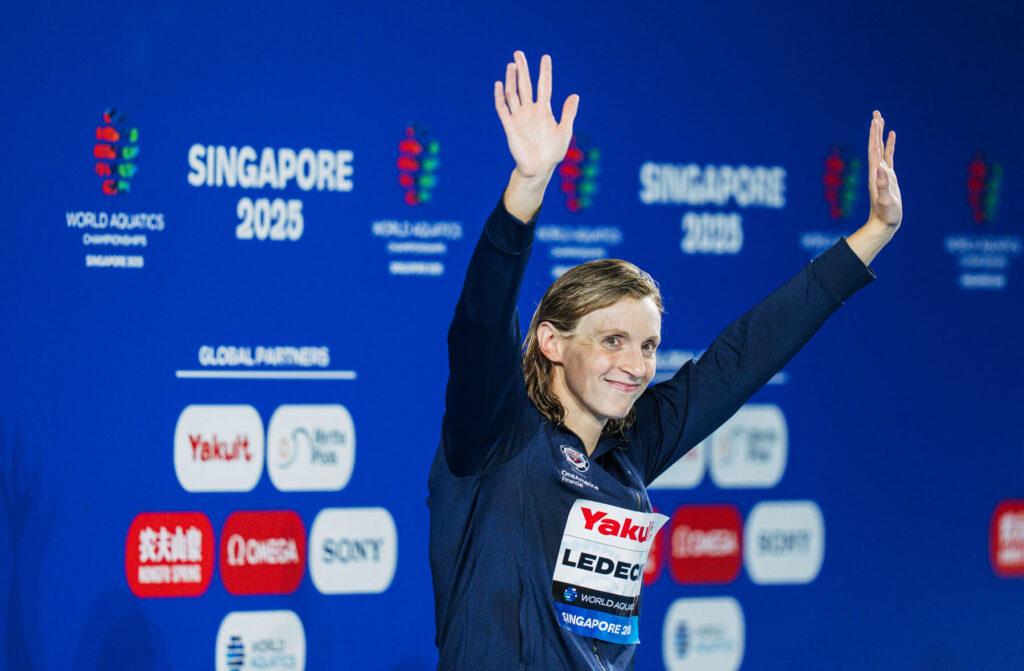
Katie Ledecky — Photo Courtesy: Emily Cameron
by David Rieder – Senior Writer
27 April 2026
Through the back half of her career, Katie Ledecky did not need to set any additional world records. She secured her status as the greatest female swimmer ever long ago: four Olympic appearances, nine gold medals including four consecutive in the 800 freestyle, 23 World Championship golds including seven straight in the 800 and a series of previously-unfathomable world records in the 400, 800 and 1500 free during her teenage years.
Entering the 2025 season, she had not set a long course world record since 2018, when she was 21 years old. The rise of Ariarne Titmus and then Summer McIntosh had forced Ledecky from the peak of the 400 free, but she remained on top in the distance events, with a comfortable margin of dominance in the 1500. Gold medals were coming even without best times, and she supplemented her two in Paris with relay silver and 400 bronze.
But her early May 2025 appearance in Fort Lauderdale showed off a version of Ledecky that fans waited years to see. Most in attendance at that meet hardly remembered the era of a teenaged Ledecky chasing down records meet after meet, obliterating standards by huge margins. For whatever reason, her training and race readiness clicked perfectly on this seemingly-random weekend to produce magical results.
It started off with a time of 15:24.51 in the 1500 free, her fastest time in seven years and the second-quickest mark ever. A day later, Ledecky blasted past McIntosh for an upset win in the 400 free. Her time of 3:56.81 was only 0.35 behind her American record of 3:56.46, a mark dating back to the 2016 Olympics. Ledecky had not been under 3:57 since, and she had not cleared 3:58 in almost five years. “I don’t know if I ever thought I was going to be 3:56 again,” Ledecky said that night.
Suddenly, world records had come back into play. The 8:04.79 from her Rio Olympics finale would be challenged when Ledecky swam the 800 on the final night of competition. The crowd in Fort Lauderdale would roar in adoration as Ledecky went out a full second ahead of world record pace. Yes, her teenage self made up ground during the middle and latter portions, putting Ledecky just three hundredths under the split entering the last length.
One final effort, 28.46 magical seconds with her legs firing at full gas, sealed the deal. Ledecky had her world record, the time of 8:04.12 marking a stunning return to her own best. Ledecky celebrated in the pool and then with countless friends and supporters, including present and former teammates, around the pool deck, many in tears.
“I can’t stop smiling,” Ledecky said. “It’s been like that all week though, so it’s not really new. It’s been so many years in the making to do it tonight.”
No, the record came outside of a major international competition or even a national qualifying meet, but that did not matter. It’s not like Ledecky still had to prove her big-meet performance ability. Of course, she would do just that later on, capturing four medals at the Singapore World Championships. As usual, she earned gold medals in the two distance races, but she needed an extra dash of magic to come through in the 800 as McIntosh and Lani Pallister pushed her to the limit. The result was Ledecky’s quickest championship time ever outside of the aforementioned Rio Games.
She has carried that strong form into 2026, kicking off her year with a 15:23.21 in the mile at the Austin Pro Series, faster than last year’s Fort Lauderdale time, now second-best ever. Ledecky, now 29, will make another trip south on Florida’s Turnpike to Fort Lauderdale this week, once again set to race freestyle events from 200 through 1500 meters at the site of the International Swimming Hall of Fame.
Expecting another world record would be unfair, but it’s hard not to consider the possibility as Ledecky returns to the site of perhaps her greatest achievement in a career full of so many. Her full-force charge has never stopped, with a fifth Olympic appearance now squarely in view.
Passages: ISHOF Honoree and Michigan, Team USA Legendary Diving Coach Dick Kimball Dies at 91
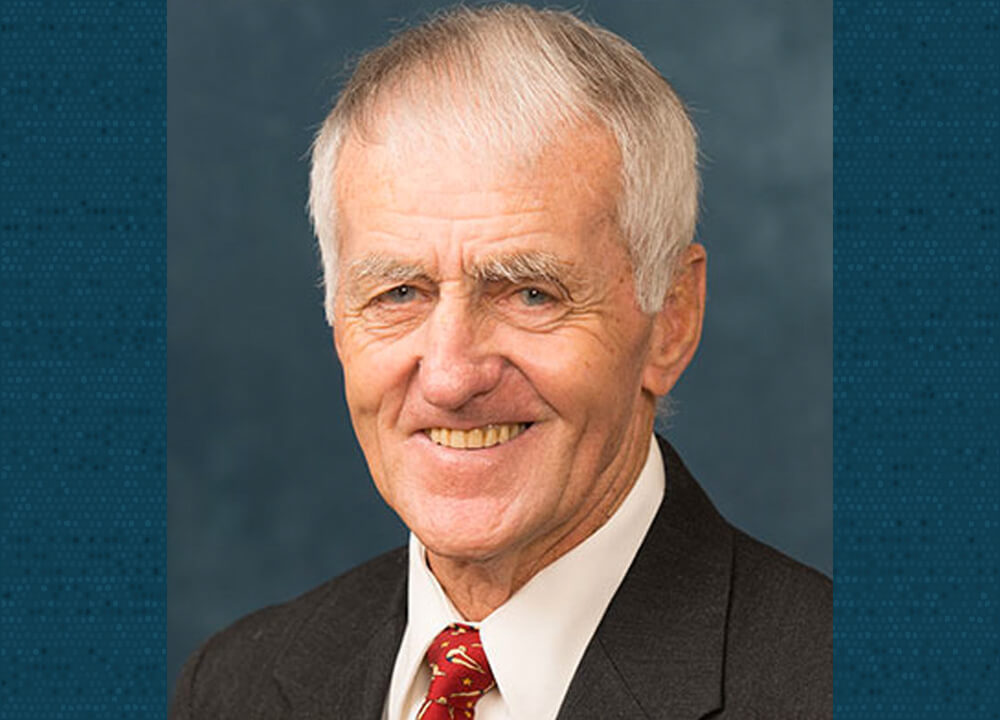
by Dan D’Addona — Swimming World Managing Editor
26 April 2026, 11:37am
Wolverine Diving posted a tribute to the late coach on social media.
“With saddened heart, we lost a diving great today, Dick Kimball. Our coaches at Wolverine Diving have so many fond memories of Kimball, and it was an honor to be coached by him. He was truly one of a kind. We are proud and honored to have our club train at the Dick Kimball Diving Well at the University of Michigan. Kimball’s legacy will continue to inspire generations of divers in the pool. May his memory live on. Rest easy, and forever Go Blue.”
Dick Kimball was born in Rochester, Minnesota, and was a four-time Minnesota high school diving champion. After attending the University of Oklahoma for one year, he transferred to the University of Michigan and helped the Wolverines to three NCAA Swimming and Diving championships
Kimball served 43 years as Michigan head diving coach, winning five NCAA championships and 33 Big Ten championships. As a student, he competed on three of the Wolverines’ NCAA champion dive teams and won two individual titles in the 1957 competition. He also helped coach the 1964, 1984, 1988, and 1992 U.S. Olympic teams.
Part of his legacy was the fun be brought to the sport. At some swim meets at Canham Natatorium, including Big Ten Championships and high school championship meets, Dick Kimball would belly flop fully clothed from the platform. He even got former Michigan football coach Jim Harbaugh to do it once with him.
That started when Kimball and Hobie Billingsley started a “comedy and acrobatic show” of diving in 1960. They gave more than 1,000 performances on their 1962 world tour and also appeared on TV shows including Ed Sullivan’s “Toast of the Town.”
And that was well after he was retired as head diving coach.
The 2001-02 season marked his 43rd and final as the head diving coach of the men’s program and 27th for the women’s team, although he has coached women divers at Michigan even before they officially became a program.
During his time as head diving coach, Dick Kimball helped the men’s and women’s swimming and diving teams win five NCAA championships and 33 Big Ten championships. In 1984, he was named NCAA Diving Coach of the Year for both the men and women, while earning the same honor in 1988 (for women only). At the Big Ten level, Kimball was a four-time Big Ten Diving Coach of the Year.
Kimball mentored nine Olympic medal winners, including gold medalists Bob Webster (1960, 1964 -Platform), Micki King (1972 – Three-Meter), Phil Boggs (1976 – Three-Meter) and Mark Lenzi (1992 – Three-Meter). He was an assistant coach for the U.S. Olympic Team at five Olympic Games (1964, 1980, 1984, 1988, 1992), while coaching international divers at the 1968 and 1996 Olympic Games.
He also coached three Big Ten Women’s Divers of the Year: Diane Dudeck (1984), three-time NCAA champion Mary Fischbach (1988) and Carrie Zarse (1995). In addition, he coached 16 divers (nine men, seven women) to Big Ten titles during his tenure.
Kimball was a three-time NCAA champion at Michigan, helping the Wolverines win three consecutive national championships, while winning individual titles on one-meter and three-meter in 1957.
While at Michigan, Kimball also competed on the gymnastics team and won the national trampoline title.
He has received numerous awards and honors recognizing his contributions to the sport of diving. He was presented the Fred Cady Memorial Award following the 1972, 1976 and 1992 Olympic Games for “sincere dedication in achieving the ultimate in coaching the sport of diving.” He was also the first diving coach to receive the Collegiate and Scholastic Swimming Trophy from the CSCAA in 1986. He was inducted into both the International Swimming Hall of Fame and the University of Michigan Hall of Honor in 1985.
Dick Kimball was inducted into the International Swimming Hall of Fame and was inducted into the Michigan Sports Hall of Fame in 2013.
Happy Birthday Donna DeVarona!!

Donna DeVarona (USA)
Honor Swimmer (1969)
The information on this page was written the year of their induction.
FOR THE RECORD: OLYMPIC GAMES: 1960 (participant); 1964 gold (400m individual medley, 4x100m freestyle relay), 5th (100m butterfly); WORLD RECORDS: 8 long course events; AMERICAN RECORDS: 10 short course events (she broke and re-broke her World and American records in these events many times); NATIONAL CHAMPIONSHIPS: 37 individual titles in backstroke, butterfly and freestyle (including 18 gold medals and 3 national high point awards); AWARDS (1964): America’s Outstanding Woman Athlete, Outstanding American Female Swimmer, San Francisco’s Outstanding Woman of the Year, Mademoiselle Award, National Academy of Sports Award, and others.
What Eleanor Holm and Esther Williams were to the “Aquacades” 20 years earlier, Donna deVarona was to swimming in the 1960s. Her glamour and showmanship seen on television, in swimsuit ads, and as an after-dinner speaker are a popular reflection of a swimming record second to none in her time.
Miss deVarona won 37 individual national championship medals, including 18 golds and three national high point awards. She held world records in 8 long course events and American records in 10 short course events, which would have been world records if FINA still recognized 25 yard pool times as they did until 1957. Most of Donna’s world and American records were broken and re-broken numerous times by Donna herself, so she actually held many times more records than the 18 events she held them in.
Her versatility is reflected in her absolute dominance of the tough four stroke Individual Medley, often thought of in tract terms as “the decathlon of swimming.” She further won national titles and set world fastest times in 3 of the 4 strokes in individual events (backstroke, butterfly, and freestyle), establishing herself at various times as the world’s fastest as well as the world’s best all-round swimmer of her day. Her day was a 5-year period which extended from the Rome Olympics until retirement after the Tokyo Games. She was the youngest American on the 1960 team, and four years later she won two gold medals.
In between and following these two Olympics, she was the Queen of Swimming and was so recognized by the International Swimming Hall of Fame at its first International Meet in 1965. During her reign, as most photographed woman athlete, Donna was cover girl on “Life”, “Time”, “Saturday Evening Post” and twice on “Sports Illustrated”.
Her biggest award year was 1964 when she was voted America’s Outstanding Woman Athlete, Outstanding American Female Swimmer, and San Francisco’s Outstanding Woman of the Year, plus the Mademoiselle Award, National Academy of Sports Award and many others in as many languages. She has represented the United States, “doing her thing” in Australia, New Zealand, Germany, Japan, Netherlands, Peru, Brazil, England and Italy.
ISHOF Honoree Anthony Ervin Leads Unconventional Masters Clinic in Montauk
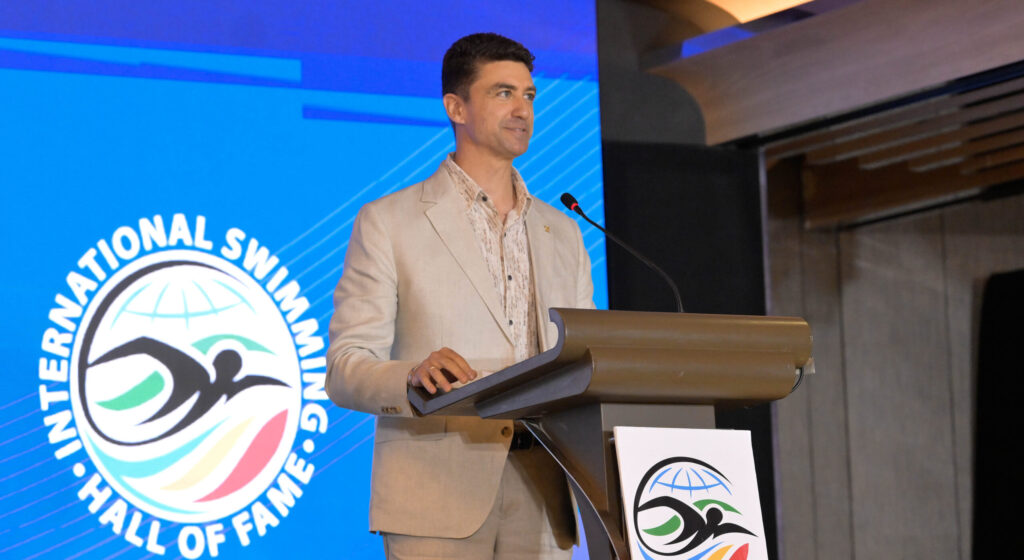
by Dan D’Addona — Swimming World Managing Editor
19 April 2026
Olympic champion Anthony Ervin taught a masters class that was a little different than most clinics.
Ervin led a clinic in Montauk, New York, less on technique and more about feeling.
“Everything becomes so mechanical in our lives, even how we get through the day ” Ervin told the East Hampton Press. “I wanted to reinsert the fundamental understanding of movement in the water, to try to break up the mechanical nature of it, to get back to the liquid movement … in the water, you plan for every breath, it can be a moving meditation.”
The clinic was for swimmers 18-84 at the Montauk Playhouse pool. Ervin was Cal teammates with Lars Merseburg, who runs Imagine Swimming that also runs a pool in Brooklyn and three in New York City.
“It wasn’t a typical masters class — he had us play around with the strokes and with being in the water,” Jasie Britton, one of the swimmers in the clinic told the East Hampton Press. “(He) was trying to get us to focus on the flow, through practicing different ways of moving … seeing him swim that lap alternating the breaststroke and butterfly was the most beautiful thing to watch.”
Merseburg was pleased to see the different approach resound with the swimmers.
“Yes, think it, feel it, do it,” Merseburg told the East Hampton Press. “He wanted to show them what they could do.”
ISHOF Honoree Libby Trickett tells of her shock heart attack ~ send her well wishes!
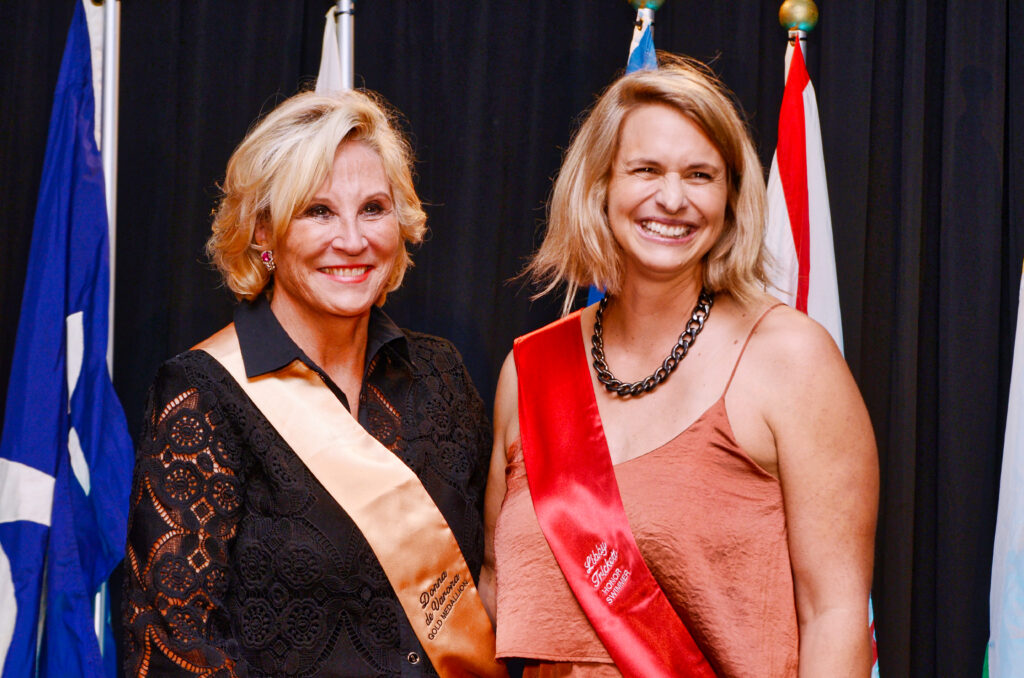
Libby at her 2019 Honoree Induction with Donna deVarona
Shared from Woman’s Day, powered by NOW.
Olympic legend and mum-of-five Libby Trickett has received an outpouring of support from friends and fans after sharing details of a shock heart attack she suffered.
In a video shared to Instagram on April 17, Libby, 41, revealed that there had been some “health things” she’s been “exploring and investigating” in recent months.
Libby welcomed her fifth child with husband Luke – a little boy named Archie – after a “volatile” pregnancy in April 2025.
“Turns out, in June last year, I would have been about two months postpartum after Archie, I actually had what turns out to be a type of heart attack,” the mum shared.
Libby shared details of her shock heart attack. (Credit: Instagram/libby_trickett)
She went on to explain she had suffered a specific kind of heart attack called a spontaneous coronary artery dissection (SCAD) – a serious, often emergency condition where an artery wall in the heart tears, blocking blood flow.
“It’s not caused by the normal things that cause heart attacks like build up of plaque and things like that,” Libby went on. “But basically a tear that happens in the artery wall in the heart.”
The star went on to explain that her diagnosis has “lots of different implications” that she continues to work through and discover, adding that she felt it was a “frustrating condition” because it is relatively under researched.
“It almost exclusively happens to women under the age of 50, it commonly happens in pregnant women or women who have recently given birth. There’s a genetic component it seems.”
Libby appeared visibly shaken as she said it had been a “challenging” time for her.
“There’s a lot of uncertainty because there is a certain change of recurrence as well, and they don’t necessarily know why that happens,” she said.
“I will likely be on lifelong medication to manage my heart rate and my blood pressure.
“I need to do moderate cardio exercise, I can’t lift heavy weights, there’s question marks around rollercoasters and all different types of things,” she added.
“It’s been a lot.”
The star’s followers were quick to share their concern, writing messages of support beneath her post.
Home and Away star Penny MacNamee was one of those to send a message, writing, “Thanks for sharing and being so vulnerable Libby, sending you so much love as you navigate this diagnosis.”
Australian author Maggie Dent added, “Libby as always you are such a voice for good and sharing this big health challenge will help so many. Huge Maggie hugs.”
Libby is a proud mum of five. (Credit: Instagram/libby_trickett)
A critical care paramedic was also among those commenting on Libby’s post, with the expert saying they had been “screaming about SCAD for a decade” after having a young female patient “nearly get dismissed as anxiety” when she was actually having a heart attack.
“I was mortified how little was known and taught about it in the pre-hospital world and went on to present many times about SCAD,” they wrote. “Thank you for using your experience to raise awareness of SCAD. I hope your recovery is speedy.”
It’s not the first time that Libby has been candid about health challenges she has gone through.
In a 2019 interview with The Morning Show, Libby revealed how she had suffered from severe post-natal depression after the birth of her first child in 2015.
“It felt very slow and steady, as though the burden just became harder and harder to carry,” she shared.
“It wasn’t until she was about eight months that I had a mental break – and it was at that moment that I realised I wasn’t behaving in a normal way.
“I was so angry at everything, and I had no idea that anger was a sign of depression. But that was the moment I realised I needed to get help.”
Everyone at ISHOF wishes Libby a fast recovery and her ISHOF family is sending lots of love her way!
Passages: ISHOF Honoree and 1964 Olympic Gold Medalist, Steve Clark, age 82
by Matthew De George – Senior Writer
21 April 2026, 05:15am
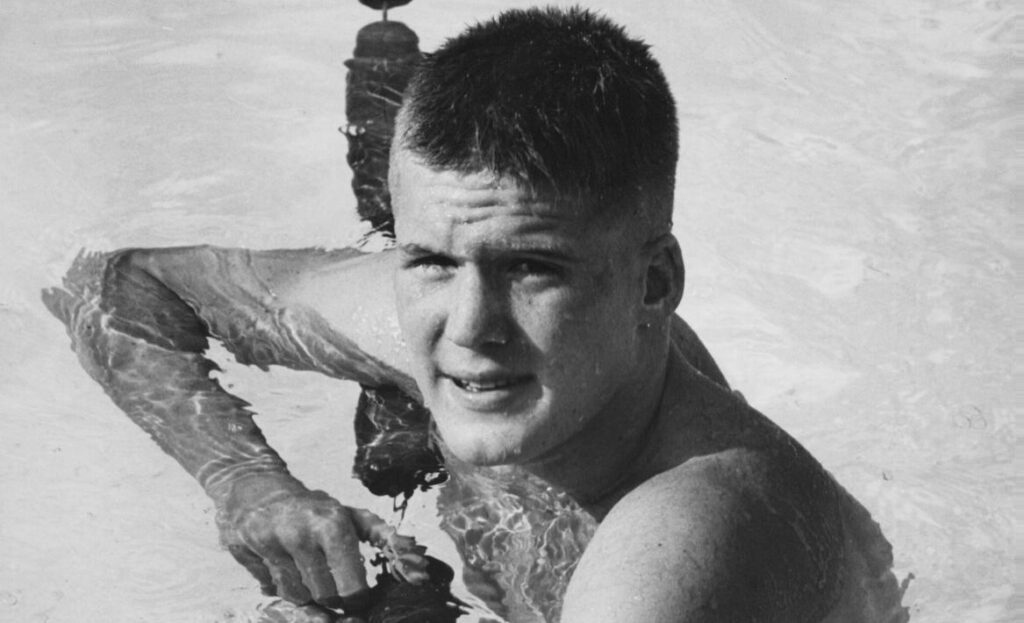
Steve Clark, a two-time Olympian and a three-time Olympic relay gold medalist for the United States, died on April 14. He was 82 years old.
Clark was a rare two-time Olympian, qualifying for the U.S. team at both the 1960 and 1964 Olympics. He won gold medals in the men’s 400 freestyle, 800 freestyle and 400 medley relays at the 1964 Olympics, and he swam in preliminaries for two gold-medal winning American relays at the 1960 Rome Games before the rule change that allowed prelims swimmers to win the same medals as finals participants.
It’s one of several ways in which the final numbers on Clark’s career undercount his true impact. Clark was a dominant short-course swimmer, in an era where that discipline remained underemphasized.
He set world records in the 50-yard, 100-yard, 100-meter, 200-yard and 200-meter freestyles. He was the first man to break 21 seconds for 50 yards, 46 seconds for 100 yards, 53 seconds for 100 meters, 1:50 for 200 yards and two minutes for 200 meters. (The Olympic program in 1960 and 1964 featured only the 100 free and 400 free for men).
Clark was born in California and swam for Santa Clara Swim Club under George Haines, where he won six AAU national titles, and at Los Altos High School for future Cal coach Nort Thornton. He competed at Yale under Phil Moriarty, where he won five NCAA titles and graduated in 1964.
At the 1960 Olympics, in the inaugural Olympic men’s 400 medley relay, Clark anchored the American team in prelims to a world record in 4:08.2, the finals squad winning in 4:05.4 (only Jeff Farrell swam in both). He also swam in prelims of the 800 free relay. There was no 400 free relay in Rome in 1960.
Clark was not one of the American men to qualify for the men’s 100 free at the 1964 Olympics, suffering a bout of shoulder tendinitis during Olympic Trials. But he recovered in time for Tokyo, where he led off the 400 free relay in both prelims and finals. His time of 52.9 seconds on the leadoff leg in the finals set the 100 free world record for the gold-winning Americans.
His record held until the 1967 Pan American Games when countryman Ken Walsh took it down, and it would’ve medaled at the 1968 Olympics.
In the 100 free in 1964, Don Schollander set the Olympic record to win gold in 53.4. Gary Ilman was fourth in 54.0 (on unofficial electric scoring when he tied with Hans-Jaochim Klein of Unified Team of Germany), and Mike Austin was sixth in 54.5.
Clark led off the 800 free relay at the 1964 Olympics that set a world record in 7:52.1. He swam freestyle on the world-record 400 medley relay that went 3:58.3.
Clark won gold in the 100 free at the 1963 Pan American Games, beating fellow American Steven Jackman with a time of 54.7 seconds.
Clark’s career didn’t end at the 1964 Olympics: He set another American/world record as the first man to break 46 seconds in the 100-yard freestyle at the 1965 AAU National Championships in his home pool at Yale.
He was inducted to the International Swimming Hall of Fame in 1966. He enrolled in Harvard Law School and wrote a book on swimmer, Competitive Swimming As I See It, in 1967.
Passages: Two-time Canadian Olympic Medalist Nancy Garapick, 64
Photo Courtesy: Taylor Brien
by Matthew De George – Senior Writer
08 April 2026
Two-time Olympic medalist Nancy Garapick of Canada died on April 7. She was 64 years old.
Garapick died at her home in Langley, British Columbia, a Swimming Canada statement confirmed.
Garapick was born in Halifax, Nova Scotia. A product of the Halifax Trojan Aquatic Club, she qualified for a home Olympics in Montreal in 1976 at the age of 14. She finished second in both the women’s 100-meter backstroke and 200 back. She was named Canada’s female athlete of the year in 1976, the youngest person to ever win the award.
She won a silver medal in the 200 back at the 1975 World Championships in Cali, Columbia, to go with bronze in the 100 back. She added medley relay bronze at the 1978 edition of the meet.
At the 1979 Pan American Games in San Juan, Puerto Rico, Garapick won five medals, including silver in the 200 individual medley (behind American Tracy Caulkins) to go with bronze in the 100 fly and 400 IM.
Garapick continued to swim into the 1980s, first at the University of California and then at Dalhousie University. She won an Association of Intercollegiate Athletics for Women (AIAW, the NCAA precursor on the women’s side) national championship in 1981 in the 200 IM. She claimed five Canadian Interuniversity Swimming Championships for Dalhousie, from which she received a degree in 1982. Garapick also won a pair of national titles in the U.S. at the 1977 AAU National Short Course Championships.
In all, Garapick was a 17-time Canadian national champion and 38-time national medalist.
Garapick was inducted to the Canadian Olympic Hall of Fame and the Canadian Sports Hall of Fame, the latter in 2008. She is also a member of the Nova Scotia Sports Hall of Fame, which in 2018 named her one of the province’s 15 greatest athletes of all-time.
Garapick’s career was among those most affected by the Cold War geopolitics of the era. She was one of many victims of the East German doping regime that only came to light years later. In both Montreal backstroke races, she finished behind East Germans Ulrike Richter and Birgit Treiber, the former winning both events in Olympic records. At Worlds in 1975, she was behind Richter and Treiber in the 100 back and Treiber in the 200 back (though she did beat Richter to silver).
Garapick was not on Team Canada’s medley relay team in Montreal that won bronze, more than seven seconds behind the world record time set by the GDR. She also missed a chance at a second Olympics with Canada joining the U.S.-led boycott of the 1980 Olympics in Moscow, one of four swimmers recognized as 1980 Olympians by the Canadian Olympic Committee.