
For 4th of July, We Want to Celebrate One of Our Founding Fathers 1968 Honoree Benjamin Franklin.

Country: USA
Honoree Type: Contributor
FOR THE RECORD: Benjamin Franklin was a competent swim coach and teacher; he advised on water safety, lifeboat rescue escape from shipwrecks, and the advisability of universal learn-to-swim classes.
One of United States first “ornamental swimmers”, on a Thames River excursion in 1726, he swam from Chelsea to Blackfriars (3½ miles) “performing on the way many feats of activity, both upon and under water, that surprised and pleased those to whom they were novelties”.
“When I was a boy, I made two oval palettes, each about 10″ long and 6″ broad, with a hole for the thumb in order to retain it fast in the palm of my hand. They much resembled a painter’s palette. In swimming, I pushed the edges of these forward and I struck the water with their flat surfaces as I drew them back. I remember I swam faster by means of these palettes, but they fatigued my wrists. I also fitted to the soles of my feet a kind of sandals, but I was not satisfied with them because I observed that the stroke is partly given by the inside of the feet and the ankles, and not entirely with the soles of the feet. When I was a boy, I amused myself one day with flying a paper kite, and approaching the bank of a pond which was near a mile broad, I tied the string to a stake, and the kite ascended to a very considerable height above the pond while I was swimming. In a little time being desirous of amusing myself with my kite and enjoying at the same time the pleasure of swimming, I returned; and, loosing from the stake the string with the little stick which was fastened to it, went again into the water where I found that, lying on my back and holding the stick in my hands, I was drawn along the surface of the water in a very agreeable manner. Having then engaged another boy to carry my clothes round the pond, to a place which I pointed out to him on the other side, I began to cross the pond with my kite, which carried me quite over without the least fatigue, and with the greatest pleasure imaginable. I was only obliged occasionally to halt a little in my course, and resist its progress, when it appeared that by following too quick, I lowered the kite too much; by doing which I occasionally made it rise again.”
In addition to being our first kite-man, “water skier” and one of the first to use flippers (Leonardo da Vinci has prior claim here) Franklin was one of our first marathon and ornamental “synchronized” swimmer. On a Thames River excursion in 1726, Franklin wrote: “At the request of the company, I stripped and leaped in the river, and swam from near Chelsea to Blackfriars (3 1/2 miles) performing on the way many feats of activity, both upon and under water, that surprised and pleased those to whom they were novelties. I had from a child been ever delighted with this exercise, had studied and practiced all Thevenot’s motions and positions, added some of my own, aiming at graceful and easy as well as useful. All these I took occasion of exhibiting to the company, and was much flattered by their admiration.”
Franklin, an early oceanographer, also charted and measured the Gulf stream, advised on using it for America to Europe speed packet crossings, avoiding it on return. He advised on water safety, lifeboat rescue escape from shipwrecks, sea anchors and even on the advisability of universal learn-to-swim classes for peace of mind and safety in modern life.
” ‘Tis supposed that every parent would be glad to have their children skilled in swimming, if it might be learnt in a place chosen for its safety and under the eye of a careful person . . .’tis some advantage besides, to be free from the slavish terrors many of those feel who cannot swim, when they are obliged to be on the water even in crossing a ferry.”
Franklin was also a competent coach and teacher. He taught his friend Wygate and a friend to swim “at twice going into the river” but turned down an offer by Sir William Wyndham to open the first American swim school in England. He was homesick and returned to Philadelphia where among other things, he proposed that all commonwealth schools should have swimming programs.
The information on this page was written the year of their induction
Ahead of USA’s 250th Birthday, Olympic Champion and ISHOF Honoree Wendy Boglioli Reflects on Celebrating 200 Years
by John Lohn – Editor-in-Chief
30 June 2026
Ahead of USA’s 250th Birthday, Olympic Champion Wendy Boglioli Reflects on Celebrating 200 Years
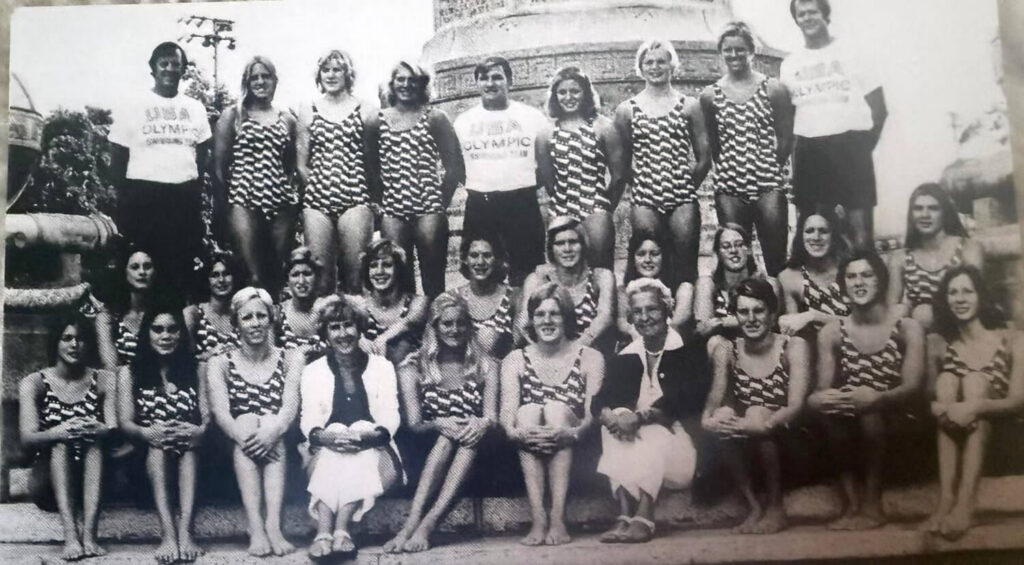
In a recent Facebook post, Olympic gold medalist Wendy Boglioli reflected on the Golden Anniversary of the start of her Olympic experience, when she and her United States teammates prepared for the upcoming 1976 Olympic Games in Montreal. The year marked the 200th birthday or the United States, and as the U.S. approaches its 250th birthday this week, Boglioli eloquently wrote about her memories.
Here is what she said:
“I watched America turn 200 from inside the U.S. Olympic Team at West Point. This week, we turn 250.
“Fifty years ago this summer, I stood and watched the Tall Ships sail in.
“I was 21 — a brand-new member of the U.S. Olympic Team.
“It was the summer of 1976. America was turning 200.
“Our U.S. Women’s Olympic Swimming Team was at training camp at West Point — the final stop before Montreal. And on a perfect July night, the United States Army Band played at the water’s edge while the great Tall Ships of the world glided in to celebrate the Bicentennial.
“I will never forget it.
“A girl who learned to swim in a 17-yard hotel pool, in a town of 600 — standing shoulder to shoulder with the best swimmers in the country, the whole nation celebrating 200 years of itself right there in front of us.
“That summer was a season of firsts. We were the first U.S. women’s Olympic swimming team ever to train at West Point. And just weeks before we arrived, the first women cadets in the Academy’s history had marched through those same gates. The country was turning 200 — and right there at West Point, doors were opening. For the nation. For those young women in gray. And for us.
“We trained in Crandall Pool — named for Robert Crandall, Class of 1939, captain of the Army swimming team, killed in action in Italy in World War II. Every length we swam, we swam in water that carried the name of a young man who had loved this same sport, who stood where we stood, and who gave his life for the country we were about to represent.
“We took our team photo at the base of Battle Monument — the great column at Trophy Point, crowned by the winged figure of Victory, raised to honor those who gave everything for this country. A team of young women, about to swim for that same country, standing at the feet of Victory. I don’t think we understood it then. I do now.
“Because here’s what I have loved every single day of the fifty years since: our Olympics weren’t just ours. They were America’s 200th. We weren’t only swimming for ourselves — we were swimming in the year the whole country was celebrating itself. That made it so much more than a race. It made us part of the story of America.
“Days later, we left for Montreal.
“This Saturday, America turns 250.
“And in a few weeks, our 1976 team gathers in Colorado Springs — together again for the first time in half a century.
“200 and 50. Then and now. The country has come full circle. So have we.”
Happy Birthday Michael Phelps!!
Country: USA
Honoree Type: Swimmer
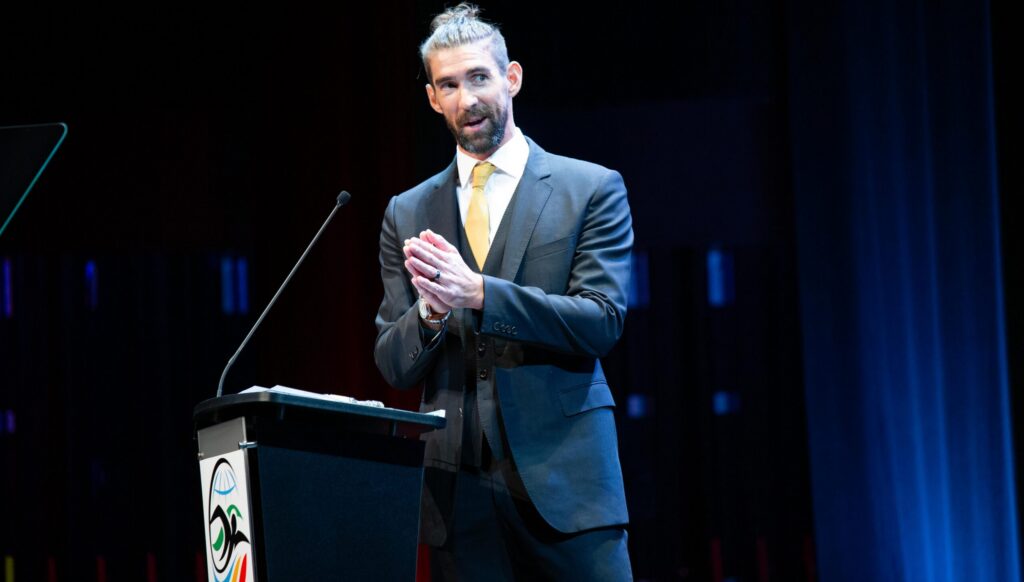
FOR THE RECORD: GREATEST ATHLETE/SWIMMER IN THE HISTORY OF THE OLYMPIC GAMES; 28 total Olympic medals: 23 gold, 3 silver, 2 bronze; 2016 OLYMPIC GAMES: gold (200m butterfly, 200m I.M., 4 x 100m medley relay, 4 x 100m, 4 x 200m freestyle relay), silver (100m butterfly); 2012 OLYMPIC GAMES: gold (100m butterfly, 200m, I.M., 4 x 100m medley relay, 4 x 200m freestyle relay), silver (200m butterfly, 4 x 100m freestyle relay); 2008 OLYMPIC GAMES: gold (100m, 200m butterfly, 200m freestyle, 200m, 400m I.M., 4 x 100m medley relay, 4 x 100m, 4 x 200m freestyle relay); 2004 OLYMPIC GAMES: gold (100m, 200m butterfly, 200m, 400m I.M., 4 x 200m freestyle relay); 2013 FINA WORLD CHAMPIONSHIPS: gold (100m, 200m butterfly, 4 x 200m freestyle relay, 4 x 100m medley relay), silver (200m freestyle, 200 I.M.), bronze (4 x 100m freestyle relay); 2011 FINA WORLD CHAMPIONSHIPS: gold (100m, 200m butterfly, 4 x 200m freestyle relay, 4 x 100m medley relay) silver (200m freestyle, 200 I.M.), bronze (4 x 100m freestyle relay); 2009 FINA WORLD CHAMPIONSHIPS: gold (100m, 200m butterfly, 4 x 100m, 4 x 200m freestyle relay, 4 x 100m medley relay), silver (200m freestyle); 2007 FINA WORLD CHAMPIONSHIPS: gold (100m, 200m butterfly, 200m freestyle, 200m, 400m I.M., 4 x 100m, 4 x 200m freestyle relay); 2005 FINA WORLD CHAMPIONSHIPS: gold (200m freestyle, 200m, 400m I.M., 4 x 100m, 4 x 200m freestyle relay), silver (100m butterfly); 2003 FINA WORLD CHAMPIONSHIPS: gold (200m butterfly, 200m, 400m I.M.), silver (100m butterfly, 4 x 200m freestyle relay); 2001 FINA WORLD CHAMPIONSHIPS: gold (200m butterfly).
More than 20 years ago, a teenager from Baltimore arrived on the swimming scene, hungry to showcase his prodigious talent. Yet, for all the potential he flashed at a young age and for all the promise recognized by coach Bob Bowman, there was still no way of predicting a career that can only be described as one-of-a-kind.
The summer of 2000 was a transformative period for the sport as USA Swimming watched a special group of teenage boys emerge as cornerstones for the future. One of them was Phelps, who as a 15-year-old qualified for the Olympic Games in Sydney in the 200-meter butterfly, in the process becoming the youngest male swimmer to qualify for Team USA in 68 years. A month later, Phelps claimed a fifth-place finish at the Games, and his journey to greatness was underway.
Within a year of making his Olympic debut, Phelps had elevated to another level, thanks to a world record in the 200 fly while still 15 years old, and by claiming the first world championship of his career in the summer of 2001. From there, additional events were added to Phelps’ program, this expansion providing the opportunity to showcase his vast skill. While additional world records were registered in the 200 fly, Phelps also defined himself as a world-record setter in the 100 butterfly, 200 individual medley and 400 individual medley.
At the 2004 Games in Athens, the birthplace of the Olympics, Phelps embraced an eight-event schedule that resulted in eight medals – six gold and two bronze. A world record in the 400 individual medley launched his efforts in Greece, which also included solo titles in the 200 IM, 100 butterfly and 200 fly. A bronze was earned in the 200 freestyle, where Phelps challenged himself on the turf of legends Ian Thorpe and Pieter van den Hoogenband.
Over the next few years, Phelps continued to reign, enhancing his portfolio via the World Championships and Pan Pacific Championships, and by encouraging growth in the sport among young boys who envisioned themselves as the next Michael Phelps. When he walked away from the 2007 World Champs in Melbourne with seven gold medals, including four solo world records, the stage was set for the 2008 Olympic Games in Beijing.
Not since the great Mark Spitz in 1972 had an athlete captured seven gold medals in a single Olympiad, and inside the Water Cube in China, Phelps was prepared to chase eight. To accomplish the feat, Phelps needed to be at his peak, and required a little good fortune. Both proved true. From August 9 through August 17, Phelps was perfect. Eight events. Eight gold medals. There were also seven world records.
In the 400 freestyle relay, Phelps’ pursuit of history was kept alive by the greatest relay leg in history, Jason Lezak’s epic anchor and rundown of France’s Alain Bernard. Meanwhile, Phelps’ instinctual decision to take an extra half-stroke at the finish of the 100 butterfly handed him an improbable comeback triumph over Serbia’s Milorad Cavic, the margin of victory as small as possible – .01. Simply, it was a special week, one forever etched in the annals of the Olympic Games and the sport of swimming.
Following Beijing, Phelps remained an ever-present force, evident in further world championships, world records and epic performances, including another comeback victory over Cavic in the 100 fly at the 2009 World Champs. Come the 2012 Olympics in London, Phelps may not have been in peak form, but he still secured six medals – four of them gold. When the torch was extinguished in the British capital, Phelps headed for retirement.
Eventually, Phelps returned to the pool, eager to end his competitive career with a flourish at the 2016 Olympics in Rio de Janeiro. Again, Phelps collected six medals, headlined by a fourth consecutive title in the 200 individual medley and the recapturing of gold in the 200 butterfly, the event that initially sparked the Phelps phenomenon.
All told, Phelps captured 28 Olympic medals during his illustrious career, 10 more than the second-most ever. Of that total, Phelps won 23 gold medals, 14 more than the second-most in history. His career featured 33 medals from the World Championships and 21 medals from the Pan Pacific Championships, along with an incredible 39 world records.
As impressive, Phelps has served as an inspiration to the next generation of athletes to walk the deck, and his public emphasis on the importance of mental health has highlighted the need to take care of oneself and seek support when necessary.
The information on this page was written the year of their induction
Happy Heavenly Birthday to 1965 Honoree Adolph Kiefer!!
Country: USA
Honoree Type: Swimmer
FOR THE RECORD: OLYMPIC GAMES: 1936 gold (100m backstroke); WORLD RECORDS: every backstroke event; U.S. NATIONAL RECORDS: every backstroke event, 3-stroke individual medley; Officer in charge of swimming for U.S. Navy during WWII; Advisor to President’s Council on Physical Fitness.
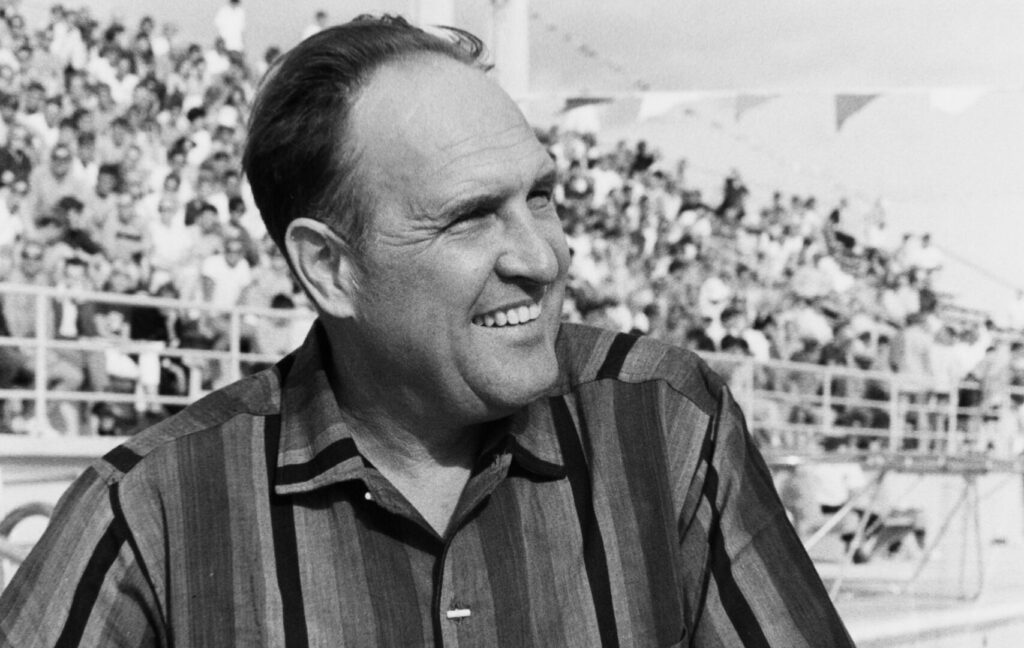
Adolph Kiefer was the first man in the world to swim 100 yds. backstroke under 1 minute. His backstroke records stood for 15 years, which is why swimming people universally acclaim him the greatest backstroker ever. It was in 1936, while a 17-year-old schoolboy, he first earned huzzahs from the athletic fraternity by establishing a backstroke swimming record to win an Olympic gold medal in Berlin. If wider acclaim eluded him then, the oversight can be attributed to the presence of Jesse Owens and the absence of “Life” magazine.
Many major headlines blared his name in the decade to follow because Kiefer went on to set world records in every backstroke event in the books and won national championships in the 3 stroke individual medley as well. None of his backstroke records were broken until 1950, four years after his retirement from competitive swimming.
Although World War II pre-empted his chances to further distinguish himself in Olympic competition, the Kiefer name continued to be news. He conducted a global survey of shipwrecks and documented the enormous and unnecessary toll of GI deaths resulting from inadequate swimming instruction. A shocked corps elevated a young Lt. Kiefer to officer in charge of swimming for the entire U.S. Navy. He revamped the entire instruction program, trained or retrained 11,000 Navy swimming instructors.
Today Adolph Kiefer, at 46, is a few pounds heavier than his best swimming weight and the hair has thinned a bit. But the enthusiasm and zeal with which he assaults the developments of daily business seem greater, if this is possible.
“I sometimes believe industry stamps a man physically fit if his handshake is firm, his head steady enough to do battle with a three-martini lunch, and his bottom hard enough to sit long hours behind a desk,” says Adolph Kiefer.
“The key to physical fitness in this country is the woman of the house. It is she who motivates the children to forsake the TV set and empty the garbage, and it is she who convinces her husband to clean out the garage and repaint the living room ceiling. And it is she, through her own trim example, who can effect a family fit for a good life.”
“Americans are generally very conscientious and attentive when it comes to business and religious responsibilities, but is there not such a thing as physical morality?” Kiefer attaches great importance to home exercise, but even more to prospective industrial fitness programs. He has flown more than 60,000 miles in the last ten months to acquaint business leaders with his ideas for industry-sponsored fitness development.
He has been a prominent figure in the swimming industry since World War II and a liaison between the industry and competitive swimming. His activities pursuant to the promotion of physical fitness have earned him the role of advisor to the President’s Council on Physical Fitness.
The information on this page was written the year of their induction
Happy Birthday Dennis Pursley!!

Country: USA
Honoree Type: Coach
FOR THE RECORD: Five-time Olympic Coach: 1980 OLYMPIC GAMES: USA Assistant Coach who placed six of his Cincinnati Marlin swimmers on the USA Olympic team, including two world record holders (Mary T. Meagher & Bill Barrett); 1984 OLYMPIC GAMES: Head Coach Australia Institute of Sport, credited with leading a resurgence in Australian swimming after placing six swimmers on the Australian Olympic Team who won half of Australia’s medals, finishing second behind the USA; 2012 OLYMPIC GAMES: British Swimming Head Coach; 1992, 1996 & 2000 OLYMPIC GAMES: USA Swimming National Team Director, USA Men’s and Women’s teams finished first in total medal count in all three Olympiads (1992, 1996, 2000), culminating with 33 medals (14 gold) in the 2000 Olympics, heralded as the “greatest team performance of all time”; 1991, 1994, 1998, & 2001 FINA WORLD CHAMPIONSHIPS; USA Swimming National Team Director; Selected as the First Ever USA Swimming National Team Director: performed coaching and administrative duties; 1979 PAN AMERICAN GAMES: Assistant Swimming Coach, as Head Coach of Lakeside Swim Club in Louisville, KY(1974-79) was named to the USA coaching staff for the 1979 Pan Am Games where one of his swimmers, Mary T. Meagher, broke her first of several world records; UNIVERSITY OF ALABAMA: Head Coach(2012-2019), his men’s team qualified only one swimmer for the NCAA Championships in the first year, then went on to achieve six consecutive top 15 finishes, including four in the top 10; American Swimming Coaches Association “Coach of the Year”(1980); U.S. Olympic Committee Chair’s Coaching Award (2000); One of the “25 Most Influential People in the History of USA Swimming”(2003) ASCA Coaches Hall of Fame(2006);
Whether at the club level, in the collegiate ranks or as the head of a national program, Dennis Pursley has excelled on the coaching front. His influence has been felt directly by the swimmers he developed into some of the best in the world. His impact is also measurable in the coaches he educated while overseeing a country’s operations.
Pursley started to make his mark as the head coach of the Lakeside Swim Club, located in Louisville, Kentucky. While at Lakeside (1974-79), Pursley was selected as a staff member for Team USA at the 1979 Pan American Games. At that edition of the Pan Am Games, Pursley’s protégé, future Hall of Famer Mary T. Meagher, set the first of her several world records by winning the 200-meter butterfly in 2:09.77. Following his success at Lakeside, Pursley took the reins at of the Cincinnati Marlins, which he guided to women’s and combined national championships
during his stint. Although politics led the United States to boycott the 1980 Olympic Games in Moscow, Pursley guided six swimmers onto the 1980 Olympic team, including Meagher and Bill Barrett, a world-record holder in the 200 individual medley. From 1981 through 1984, Pursley took on the first international challenge of his career. As the head coach of the Australian Institute of Sport, Pursley played a significant role in Australia’s resurgence. Pursley placed six athletes on the 1984 Australian Olympic squad, as the country finished second to the United States in the medal’s standings with a 12-medal haul.
In 1989, Pursley was named the National Team Director for USA Swimming, a position he held until 2003. During his tenure, the United States topped the medals chart at three consecutive Olympic Games (1992, 1996, 2000). The squad at the 2000 Games in Sydney collected 33 medals, including 14 gold. The overall medal total is the most (along with 2016) since the 1984 Games, when the U.S. won 34 medals.
After leaving the National Team job, Pursley coached the Brophy East Swim Team(Phoenix Swim Club) from 2003-2006 and he returned to international duty from2008-2012 as the head coach of the British National Team. In 2012, Pursley returned to his alma mater, the University of Alabama, and he led the men’s squad to six top 15 finishes in the team standings, including four in the top-10.
Pursley has also spent time coaching in Canada and was named the American Swimming Coaches Association Coach of the Year in 1980 and inducted into the ASCA Hall of Fame in 2006.
The information on this page was written the year of their induction
USA Swimming, ASCA Announce Partnership to Strengthen Coaching Profession

by John Lohn – Editor-in-Chief
11 June 2026
USA Swimming, ASCA Announce Partnership to Strengthen Coaching Profession
In a landmark move for the American swimming community, USA Swimming and the American Swimming Coaches Association (ASCA) today announced an agreement that brings together two of the sport’s most influential organizations in support of a shared commitment to strengthen the coaching profession and grow swimming from the grassroots level to the Olympic podium.
The new alliance comes at a pivotal moment for both organizations. Following the arrival of Kevin Ring as USA Swimming Chief Executive Officer in September 2025, USA Swimming has continued to advance its strategic priorities related to coach development while ASCA has embarked on a comprehensive organizational transformation over the past five years led by CEO Jennifer LaMont and forward-thinking board of directors.
The agreement provides momentum as ASCA prepares to launch the next stage of its evolution involving significant upgrades to its technology platforms, member experience, and coach education. ASCA’s redesigned certification program starting in November 2026 will feature updated course content, modernized delivery systems, and more flexible certification pathways to better serve.
Photo Courtesy: ASCA
Today’s coaches and elevate the value of ASCA certification throughout the swimming community.
The partnership establishes a collaborative framework centered on strengthening the coaching profession, retaining and developing coaches, and providing resources that help coaches, clubs, and athletes succeed.
USA Swimming and ASCA will work together to:
Expand and improve coach education opportunities
Support the recruitment and retention of coaches
Promote consistency and quality across competitive swimming programs
Increase participation and long-term engagement in the sport
A key initiative within the agreement will be the launch of the “ASCA New Coach Initiative, a collaborative program designed to support coaches entering the profession. As part of the initiative, new USA Swimming coach members will receive cohort-based educational programming designed to help coaches build foundational skills, professional connections, and long-term career pathways.
“Coaches are critical to athlete’s journey and fundamental to our success as an organization,” said Kevin Ring, Chief Executive Officer of USA Swimming. “This alliance represents an important step forward in our commitment to supporting coaches throughout their careers and creating a more connected pathway for development. Together with ASCA, we are investing in the people who shape the future of swimming every day, helping ensure our sport continues to grow and thrive from the grassroots level to international excellence.”
“Coaches are the backbone of our sport,” said Jennifer LaMont, Chief Executive Officer of ASCA. “This collaboration creates meaningful opportunities to elevate coach education, improve retention, and provide stronger support systems for both new and experienced coaches nationwide. We have spent several years building toward this moment, and we are excited about what our organizations can accomplish together for coaches and the athletes they serve.”
Additional components of the agreement include:
USA Swimming participation and engagement at ASCA clinics and events, including the ASCA World Clinic
Expanded collaboration on coach recognition and development
Joint marketing and communication efforts promoting coach education and professionalism
Enhanced support for emerging swim clubs and coaching programs
Shared resources, research opportunities, and coach engagement initiatives
The agreement represents a renewed commitment by both organizations to invest in coaches as leaders, educators, and essential drivers of athlete success and lifelong participation in swimming.
The above press release was provided to Swimming World by ASCA and USA Swimming.
Today We Remember 1965 Honoree Johnny Weissmuller on His Birthday!!

Johnny Weissmuller (USA)
Honor Swimmer (1965)
The information on this page was written the year of their induction.
FOR THE RECORD: OLYMPIC GAMES: 1924 gold (100m, 400m freestyle; 4x200m freestyle relay), bronze (water polo); 1928 gold (100m freestyle; 4x200m freestyle relay); WORLD RECORDS: 51; U.S. NATIONAL CHAMPIONSHIPS: 52; Played Tarzan in 16 movies.
Johnny Weissmuller holds no current world swimming records and by today’s Olympic standards, you might say he never swam very fast, but you can’t get anyone who ever saw him swim say that there never was a greater swimmer. This was the verdict of 250 sportswriters at A.P.’s mid-century poll and it is still the verdict 15 years later.
He was the swim great of the 1920’s Golden Age of Sports, yet because of the movies and TV, he is as much a part of the scene in the 1960s as he was in the 1920s when his name was coupled with sports immortals such as Babe Ruth, Bill Tilden, Bobby Jones, Jack Dempsey and Red Grange. He is the only one of this group more famous today than in the “Golden Age.”
Weissmuller set many world records and won 5 gold medals in two Olympics (1924 and 1928). He never lost a race in 10 years of amateur swimming in distances from 50 yards to 1/2 mile. Johnny’s 51 seconds 100 yard freestyle record set June 5, 1927, in the University of Michigan Union Pool stood for 17 years until it was broken by Alan Ford at Yale in 1944. The 100 yd. distance is swum more often than any other, yet in 17 years, only one man ever swam it faster. That man was Johnny Weissmuller, who later, as a professional in the Billy Rose World’s Fair Aquacade swam 48.5 at the New York Athletic Club while training Walter Spence to win the nationals. For those who think swimmers must be teenage bobby-soxers, it might be of interest to note that Spence was 35 at the time and Weissmuller was 36.
His record of 52 national championship gold medals should stand forever. He is famous for his chest high crawl stroke seen by millions in Olympic swim stadiums, on movie screens and on TV, but he also held world records in the backstroke and never lost a race in that stroke. “I got bored,” says Johnny, “so I swam on my back where I could spend more time looking around.” Weissmuller set 51 world records in his ten years as an amateur but many more times he broke world records and never turned in the record applications. Every time he swam, the crowd expected a new record, so Johnny learned pace. He learned how to shave his records a tenth of a second at a time. If he missed, his 350 lb. coach Bill Bachrach would say “rest a few minutes, Johnny, and we’ll swim again.” Bachrach would promise his protégé a dinner if he broke the record and Johnny always seemed to be hungry. Many a world mark was set with only a couple of visiting coaches or a few guests of the Illinois Athletic Club to watch.
Every old-timer in swimming has a favorite Johnny Weissmuller story. To them all, he was the world’s greatest swimmer, yet ironically the producer who signed him to play Tarzan didn’t know Johnny could swim. “Many think I turned pro to go into the movies,” Johnny says, “but this is not true. I was working for a bathing suit company for $500 a week for five years, which was not bad money then (or now). I was in Los Angeles and they asked me if I would like to screen test for Tarzan. I told them ‘no thanks’ but they said I could go to the MGM lot and meet Greta Garbo and have lunch with Clark Gable. Any kid would want to do that so I said ‘okay’. I had to climb a tree and then run past the camera carrying a girl. There were 150 actors trying for the part, so after lunch, I took off for Oregon on my next stop for the swim suit outfit. Somebody called me on the phone and said ‘Johnny, you got it.’ ‘Got what?’ ‘You’re Tarzan.’ ‘What happened to those other 150 guys?’ ‘They picked you.’”
“So the producer asked me my name and he said it would never go. ‘We’ll have to shorten it,’ he said. ‘Weissmuller is to long. It will never go on a marquee.’ The director butted in. ‘Don’t you ever read the papers?’ he asked the producer. ‘This guy is the world’s greatest swimmer.’ The producer said he only read the trade papers, but okay, I could keep my name and he told the writers, ‘put a lot of swimming in the movie, because this guy can swim.’”
“So you see why I owe everything to swimming,” Weissmuller says. “It not only made my name, it saved my name. Without swimming, I’d be a nobody. Who ever heard of Jon Weis, marquee or no marquee.”
Besides swimming, Johnny Weissmuller played on two U.S. Olympic water polo teams. “Water polo’s a rough game,” Johnny says. “We never could beat those Yugoslavians. They never blow a whistle over there. Anyhow, that’s where I learned to duck. It came in handy when Cheetah started throwing coconuts.”
1st photo L to R Johnny Weissmuller, Duke Kahanamoku and Buster Crabbe
2nd photo Marshall Wayne, Stubby Kruger, Dick Degner and Johnny Weissmuller
As We Close Out The Month of May We Want to Highlight Some of Our Honorees for Asian American & Pacific Islander Heritage Month.

The were many early Honorees from the Hawaiian Islands, as well as other Pacific Islands, the most famous was probably Duke Kahanamokou, Olympian and the Father of Surfing and his brothers, but there were many others that paved the way for the athletes of today. Let’s take a look at some of those athletes that we have inducted over the years:
Duke Kahanamoku (USA)
Honor Swimmer (1965)
The information on this page was written the year of their induction.
FOR THE RECORD: OLYMPIC GAMES: 1912 gold (100m freestyle), silver (4x200m freestyle relay); 1920 gold (100m freestyle; 4x200m freestyle relay), 4th (water polo); 1924 silver (100m freestyle); 1932 team member (water polo); WORLD RECORDS: freestyle.
The history of modern swimming started with the English in 1838. It was the breaststroke, and still the breaststroke, when Matthew Webb swam the Channel in 1875; yet, bas-reliefs dating to 880 B.C. taken from the palace of Nimroud (now in the British Nimroud Gallery) show a fugitive escaping from soldiers by swimming a river using a head high overarm crawl. This stroke was evolving painfully in the western world until a bronzed Duke Kahanamoku swam out of the Hawaiian Islands with it in 1911. His world record times no one would believe.
Jam Handy describes The Duke as a superbly conditioned athlete planing and crawling over the top of the water as no one his size and only one smaller man, Perry McGillivry, seemed able to do. Only after ten years in Hollywood did a 42 year old Duke Kahanamoku in 1932 finally fail to make an Olympic team in swimming. He made it in water polo. He made his first Olympic team in 1912. “He still swam well,” says Handy, “but in the water like other mortals, he was no longer in that superb condition needed to get his body planing up on top of the water.” Kahanamoku, the perennial Sheriff of Honolulu, and island king in so many movies, was and is a real Duke by christened surname, as well as in deference to his royal Hawaiian blood. His father, Captain Kahanamoku, born in Princess Ruth’s palace during a visit of the Duke of Edinborough, named him Duke in honor of that occasion.
In swimming, he rates his dukedom by Olympic titles as well as his ambassadorship in first introducing surfing around the world, including Australia where it has become a national sport. Duke’s royal position in swimming took time to be recognized. He first startled the swimming world by shattering both the 50 and 100 yard world records on the anniversary of Hawaiian annexation day, August 2, 1911, just 12 days before his 21st birthday–doing 24 1/5 in the 40 or 1 3/5 seconds better than the record, and 55 2/5 in the 100, 4 3/5 seconds better than the record. Unfortunately the cast was all Hawaiian and the times were so unbelievable that the Amateur Athletic Union, headquartered in New York, refused to recognize them in spite of the careful reports that were compiled showing that the course in Honolulu Harbor had been measured before the race and 3 times after; had been surveyed by a registered surveyor, that the swimmers were swimming against the tide; and that his nearest competitor, Lawrence Cunha, was 30 feet behind.
After considerable correspondence back and forth, President Wahle of the AAU wrote:
“According to my mind, this matter should be treated very carefully and with extreme caution before the 100 yard record is to be accepted as an AAU record. If his 55 2/5 seconds were accepted and he should afterwards compete in the U.S. or Europe and be beaten by swimmers, the correctness of his 55 2/5 seconds would be seriously questioned as well as the good faith of the AAU.
For this reason, I would like to see Kahanamoku beat the fast men first and have the record accepted afterward.”
In the 1912 Stockholm Olympics, Longworth of Australia was the favorite but Duke won the Olympic championship in 63 2/5 seconds. Eight years later at the 1920 Antwerp Olympics, on his 30th birthday, the Duke had to win his gold medal twice. The Australians protested his first win saying their man had been boxed, so the Duke had to win it again. Australia was fourth with Hawaiians first, second and third.
From the time the King of Sweden presented him with his Olympic gold medal and wreath of olive branches in 1912, the Duke has been an international idol, the first and foremost in a long line of Hawaiian world record holders, national and Olympic champions. These tiny islands dominated world swimming from 1912 until 1956 when the six Hawaiians on the U.S. Olympic team were no match for the Australians. Swimming had gone full cycle for it was the Australians who had been dominant in swimming when Duke swam past them in 1912.
Mariechen Wehselau (USA)
Honor Pioneer Swimmer (1989)
The information on this page was written the year of their induction.
FOR THE RECORD: OLYMPIC GAMES: OLYMPIC GAMES: 1924 gold (400m freestyle relay), silver (100m freestyle); WORLD RECORDS: (100yd, 100m freestyle; 400m freestyle relay); Hawaii’s first woman Olympic gold medalist.
Mariechen Wehselau became Hawaii’s first woman Olympic gold medalist by swimming anchor on the USA winning 400 meter freestyle relay team at the 1924 Paris Olympics. She was 18 years old and never had been out of the territory of Hawaii before she traveled to the tryouts in New York. It was the year that nine Hawaiian swimmers made the team…eight men and Mariechen.
On board the SS America, during the voyage from New York to Paris, Mariechen remembers training in the little canvas pool below deck. She wore a harness suspended from a cable so the swimmers would swim in place, a not very elegant way to stay in peak condition. But it was enough to enable her to set the world record in the Olympic 100 meter freestyle semi-final, take the silver medal the following day in the finals, and anchor the gold-medal winning freestyle relay team for the USA (she had already set the world record for the 100 yard freestyle the year before). Teammates Euphrasia Donnelly and Hall of Famers Ethel Lackie and Gertrude Ederle joined Mariechen in setting a new Olympic and world record in this event.
After Paris, Mariechen was invited by the Australian Swimming Association to compete in their championships and perform in various exhibitions. She and Mrs. E. Fullard Leo traveled to Sydney, Brisbane, Melbourne, and many small towns where Mariechen won every head-to-head race, except one which was an impossible handicap.
From 1928 to 1937, Mariechen helped her coach, Dad Center, train the younger swimmers. She had retired from active competition leaving her mark in US and International swimming.
Ellen Fullard-Leo (USA)
Honor Contributor (1974)
The information on this page was written the year of their induction.
FOR THE RECORD: Organized first women’s swim clubs in Capetown, South Africa; Victoria, British Columbia; and Honolulu, Hawaii; started the Royal Life Saving Course; Representative to 1921 AAU Executive Committee (first women delegate); In 1921 helped launch the U.S. Olympic Association; Manager-Chaperone for swimming trips to Australia, Olympics and Nationals, raising money for the athletes to attend.
“Ma Leo” was the grand dame of Hawaiian swimming for more than half of her 90 years. She was not a “women’s libber” but it could have come naturally. Born in Capetown, South Africa, she was the youngest of 19 children (17 were brothers). “I had to fight for women’s rights,” she said, “just to hold my own at the breakfast table.” There were also 11 step-children so “Ma Leo” also came naturally by her success in handling large fractious groups of energetic children, something she did so well and for so long in amateur athletics as the primary organizing authority in Hawaiian AAU.
Still in Capetown, she married Leslie Fullard-Leo in 1908. They moved to New York, “Mother City” of the AAU in 1909, then on to Victoria, British Columbia in 1912. In 1915, on her way to Australia she visited Honolulu and decided to stay. In all three places, Capetown, Victoria and Honolulu, she organized their first women’s swim clubs and started the Royal Life Saving Course. The Fullard-Leos bought a home site on Waikiki from Prince Kuhio. “Ma Leo” introduced Royal Life Saving Classes to the Islands in 1917. With their great Nui Lani, it was natural for the Hawaiians to take to leadership from females, so Ellen Fullard-Leo was elected their representative to the 1921 AAU Executive Committee meetings in Chicago. She sent in her credentials and they were accepted. The only problem was that on arrival the delegate bearing the name E. B. Fullard-Leo turned out to be a woman, the first woman delegate in AAU Convention history. “One man grumbled that he was afraid he wouldn’t be able to smoke during the meetings. I put him at rest by explaining I was used to my husband’s pipe and tobacco.”
In that same year (1921) she helped launch the U.S. Olympic Association. In 1922, the Fullard-Leo’s had their Mid-Pacific Palmyra Island annexed to her adopted country the United States. The island was an important Naval Station in World War II.
Whether marching in Olympic parades, organizing the first women’s swim clubs in South Africa, Canada and Hawaii, or organizing the Pan Pacific Games and the Hawaiian AAU, “Ma Leo” has been a prime force in Amateur Athletics for 65 years. Her oldest of three sons, under the stage name Leslie Vincent, played featured and supporting roles in more than 100 Hollywood movies before returning to Honolulu to manage and develop the Fullard-Leo holdings.
Mrs. E. Fullard-Leo got involved in amateur athletics “because her husband was a great athlete and not because she was a tomboy,” says Hal Wood, sports Editor of the Honolulu Advertiser. “I grew up in the Victorian age when it was considered vulgar for young ladies to compete in athletics,” she once told him. “So of course I didn’t compete, although I knew how to swim.” “Ma Leo” never limited her interests to swimming. It followed that she was the manager-chaperone for swimming trips to Australia, various Olympics and Nationals on the mainland. It cost money to send Hawaiian athletes to Nationals in New York and Chicago, so she raised the money. She also raised the money for the Hawaiian lava waterfall in the entrance-way at the International Hall of Fame where she was one of the first individual Charter members. After she died in October, 1974 her ashes were spread from a surfboard off Waikiki in an ancient Hawaiian burial. No mermaid Haole ever deserved the honor more.
Warren Kealoha (USA)
Honor Swimmer (1968)
The information on this page was written the year of their induction.
FOR THE RECORD: OLYMPIC GAMES: 1920 gold (100m backstroke); 1924 gold (100m backstroke); NATIONAL AAU CHAMPIONSHIPS: 2 gold (50 freestyle); Backstroke world record holder and national champion for 6 years.
Hawaiian Olympic swimming is a study in brotherhood — the Kahanamoku brothers, the Kealoha brothers and the Kalili brothers. The Kahanamoku brothers, Duke and Sam, were second and third to Johnny Weissmuller in the 1924 Olympic 100 meter freestyle after Duke had won in 1912 and 1920. The Kalili brothers, Mailola and Manuella, were on the silver medal 800 meter freestyle relay team in 1932. The Kealoha brothers, Pua and Warren, won gold medals in the 800 freestyle relay (Pua) with The Duke; and the 100 meter backstroke (Warren) in the 1920 Olympics.
Warren Kealoha, the baby of the 1920 team, was 16 when he won his first Olympic backstroke crown. He came back to win again in 1924 as the Olympics first double winner in any stroke other than freestyle.
Warren Kealoha, like his brother, was a USA champion freestyler, twice winning the National AAU 50 freestyle gold medal, but he was supreme for 6 years as backstroke world record holder and national champion.
“It wasn’t easy for Hawaiians to get to the Olympics back in those days,” Warren says, “or I might have had a chance at my third Olympics in 1928.” Warren Kealoha had more trouble getting to his races than winning them. “We had to break a world record before they could afford to send us to the Mainland,” he says, “then when we arrived by boat and out of shape, we had to beat all comers on the West coast, again in Chicago, and again in New York before we finally made the Olympic team.” Warren joins the late Duke Kahanamoku, Bill Smith, Buster Crabbe and coach Soichi Sakamoto as Hawaiian swimmers in the Hall of Fame. Now a successful rancher, Kealoha represents an amazing heritage of Island swimming which dominated the world for 50 years. The list, beginning with coach “Dad” Center and ending with diver Keala O’Sullivan, including Sargent Kahanamoku, Keo and Bunny Nakama, Douglas and Jerry Miki, Bill Woolsey, Allan Stack, Dick Cleveland, George Onekea, Sonny Tanabe, Halo Hiroshi, Ford Konno, Oshi Oyakawa, Charlie Oda, Evelyn Kawamoto, Thelma Kalama, Ivalena Hoe, Clarence Lane, Dudley Pratt, Jose Balmores, Kenny and Sammy Nakasone, Walt Richardson, the Honda boys and many others.
There may have been years when the Hawaiian Islands would have won the Olympics without help from the Mainland. It should be an inspiration to island peoples everywhere that swimming championships can become part of the way of life in island recreation.
Soichi Sakamoto (USA)
Honor Coach (1966)
The information on this page was written the year of their induction.
FOR THE RECORD: Great Hawaiian coach who developed many of the world champions between 1948-1956. All of his swimmers became National Champions during this period.
Soichi Sakamoto is the great coach responsible for modern Hawaiian swimming success. Hawaiian swimmers dominated the sport from 1912, but Buster Crabbe, in the 1932 Olympics, was their last champion of that long illustrious era.
Then came a drought and Japanese-Hawaiian Sakamoto, starting with children in an irrigation ditch, was developing new ideas of pace and rhythm with a metronome. His young swimmers were not the greats of Punaho School, then and still going on to Yale, but a new breed of public school swimmers going on to Ohio State and Indiana–Hirose, Nakama, Smith, Konno, Oyakawa, Onekea, Cleveland, Woolsey, Tanabe, Miki and the girls Kalama Kleinschmidt, Kawamoto and Hoe. All became national champions, most made the Olympic teams of 1948, 1952 and 1956.
During this period, Sakamoto was sought out by swimmers all over the world, journeying to Hawaii in search of the magic touch. They found technique, method dedication and conditioning, which produced champions at all strokes and distances, but as the coach told all in his somewhat difficult-to-understand English, “Magic, No!”
“The swimming stroke is a ‘working tool’,” says this master coach, “and therefore it must be one which must be sound in its practical use–to get the most out of a given effort. It must be simple and efficient, and one which can be controlled at will by the individual. . . Swimming with and not against the water.”
“Patience, above all, is tantamount and a rule,” Sakamoto continues, “as improvement, growth, speed and success come only at a snail’s pace. First, it is learning to swim, training and conditioning, competing and going through the bitter experiences of defeat and chagrin. The light of success comes only when everything seems hopeless and wasted.”
Takashi “Halo” Hirose (USA)
Honor Pioneer Swimmer (2017)
The information on this page was written the year of their induction.
FOR THE RECORD: 1938 NATIONAL AAU MEET: 2ND (200m freestyle); 4TH (100m freestyle); 1939 NATIONAL AAU: 4TH (100m freestyle); 1940 NATIONAL AAU: 2ND (100m freestyle); 1941 NATIONAL AAU: 1ST (100m freestyle, 800m freestyle relay); 1940-44 MEMBER OF THE MYTHICAL OLYMPIC TEAM, WHICH WAS NOT ABLE TO COMPETE DUE TO THE WAR; 1946 BIG TEN: 1ST (100yd freestyle), NCAA: 1ST (100yd freestyle), OHIO STATE UNIVERSITY: WON BIG TEN, NCAA AND AAU TEAM CHAMPIONSHIPS, 3 TIME ALL-AMERICAN; 1987: INDUCTED INTO OHIO STATE’S SPORTS HALL OF FAME
He learned to swim in the irrigation ditches of Maui’s Pu’unene’s sugar plantation, where his parents worked as laborers. Watching over him and the other kids was Soichi Sakamoto, one of their elementary school teachers.
Sakamoto knew nothing about swimming, but in time, he would come to be regarded as a coaching genius. In 1937, he dared to dream that some of his “ditch kids” could represent the USA, in the home of their ancestors, at the 1940 Olympic Games in Tokyo.
Just one year after “coach” started his “Three Year Swim Club”, 15 year-old Takeshi “Halo” Hirose placed second in the 200m freestyle at the US Nationals, finishing just inches behind the great Adolph Kiefer. This earned him a spot on the US team that toured Europe and the distinction of being the first AJA (American Japanese Asian) to represent the USA in international competition.
During the tour, Halo became the first AJA to set a world record, as a member of the USA’s 4x100m freestyle relay team, at a meet in Germany.
At the 1939 Nationals, Halo was selected along with Maui teammate Keo Nakama for the US team that participated in the Torneo Panamericano de Nation in Guayaquil, Equador – a forerunner of the Pan American Games. Shortly before that meet, in the face of an international boycott, the Japanese Olympic Committee announced it was giving up the Games for financial reasons, owing to its costly war with China. While Finland was an eager replacement, the outbreak of WWII dashed Halo’s Olympic dreams. It was little consolation that he, along with his Maui teammates, Keo Nakama and Fujiko Katsutani were selected for the USA’s “mythical” 1940 Olympic Team.
After he won the US National 100m title in 1941, came Pearl Harbor, and once Japanese Americans were permitted, he volunteered to fight in Europe as a member of the 442nd “Nisei” Regimental Combat Team. On the battlefield he gained almost as many honors as he had in swimming events in Hawaii, the USA, South America, Germany, Austria and Hungary. A member of a machine gun platoon through some of the heaviest fighting in France and Italy, Hirose received five battle stars, the combat infantry badge and a Presidential Unit Citation. In November of 1944, he contracted “trench foot” during deployment in France and was paralyzed from the hips down. It was feared that he might lose his feet. Although he recovered the use of his legs after six months in rehabilitation, he would feel the effects of “trench foot” for the remainder of his life.
After the war, Hirose followed his Maui teammate, Keo Nakama to the Ohio State University where he became a three-time All-American for the Buckeyes. Although he was an NCAA champion in the 100m freestyle and helped Ohio State win the Big Ten, NCAA and AAU team titles, Hirose had been denied his opportunity to swim in the Olympic Games in 1940 and 1944, and his war injuries no doubt affected his chances to make the US team in 1948. The story of Halo resurfaced when author Julie Checkoway published the remarkable story of The Three-Year Swim Club and the men and women who brought national and international acclaim to the island of Hawai’i and the USA.
Winning gold is ‘way less important than having a chance to save a life’: Michael Phelps on finding purpose beyond the pool
Shared from CNN
By Emile Nuh Coy Wire
Updated May 25, 2026
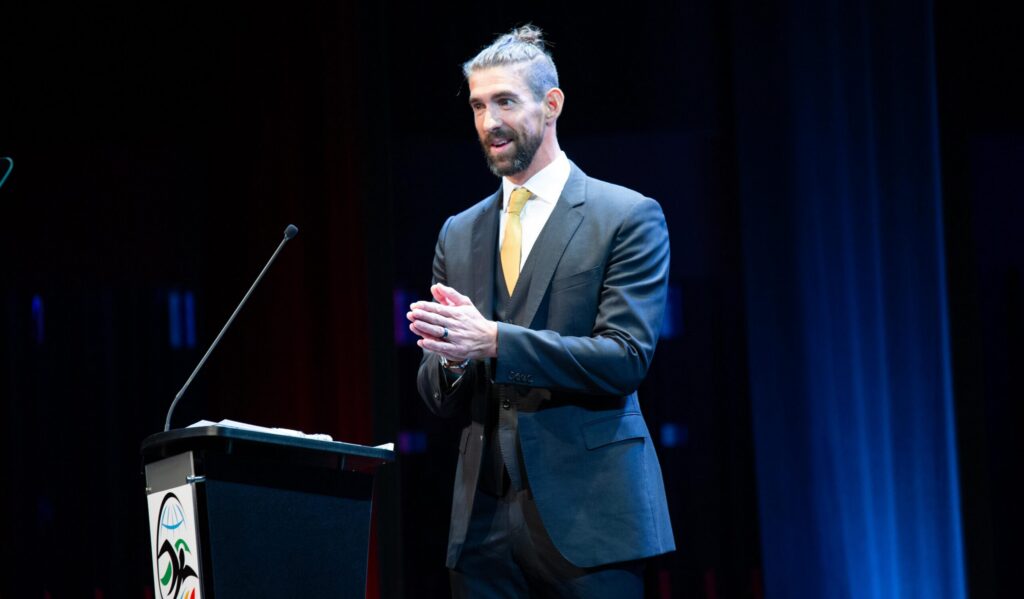
Michael Phelps discusses importance of mental health
Almost a decade has passed since Michael Phelps set the world alight on the Olympic stage at Rio 2016, when he took home the most medals of any athlete with five golds and one silver.
And when he called time on his legendary career after those Games as the most decorated Olympian of all time – with an astounding 28 medals across four Olympics – it seemed unthinkable that his name would ever be synonymous with anything other than swimming.
But the 40-year-old has found a new calling since stepping out of the pool, becoming one of the most prominent and outspoken advocates for mental health and well-being in sports and beyond.
“Water safety but also mental health – those two things are who I am,” Phelps told CNN Sports’ Coy Wire.
Those are also the key focuses of the Michael Phelps Foundation.
The organization, which launched in 2008, was initially set up to help young people by promoting healthy living and water safety – as the retired swimmer was himself scared of the water when he first took up the sport at seven years old.
However, as Phelps evolved, so did the purpose of his foundation. And in 2020, it formally expanded its mission to include mental wellness and emotional resilience support for children.
“Being able to implement mental health into my foundation along with swimming, it kind of gives me that purpose again I had when I was competing,” the 23-time Olympic gold medalist said.
Finding purpose beyond the pool
Phelps’ foundation is just one of the many ways in which he’s now diving into his newfound mission.
In 2023, he partnered with online therapy company Talkspace and fronted its “Start from the Top” campaign, an initiative focused on building sustainable mental wellness habits through five key pillars.
He’s also delivered several keynote speeches around the world in recent years, detailing his struggles with depression and the lessons he’s learned through his many trials and tribulations.
Since his swimming career ended, Michael Phelps has been open about his struggles with depression and made mental health a key part of his foundation. Sean Gardner/Getty Images
Phelps is acknowledged by NASCAR drivers before serving as the honorary pace car driver before a Cup Series race at Phoenix Raceway in 2024. Sean Gardner/Getty Images
The man who spent nearly two decades relentlessly chasing perfection in the pool has now made it his life mission to help others by openly speaking about the treacherous journey it took to achieve it.
And for Phelps, there was one defining, lightbulb moment that changed everything.
“I honestly think it’s really when I got to that point of not wanting to be alive,” he explained. “Once I got to that point, I was like, ‘OK, something is wrong. I need to ask for help.’
“That was the first time that I ever asked for help because I just didn’t know what to do, (and) I’m very thankful that I got the help that I needed because I wanted change.
“And then, at that point, (it was about) just being able to find that ground to stand on and be OK sharing the stories that I talk about.”
Saving lives trumps everything
For many athletes, especially those who have reached the absolute pinnacle of their sport like Phelps did, retirement normally signals the end of an arduous journey and a time for nostalgic reflection.
But for Phelps, when he jumped out of the pool professionally for the final time in Rio 2016, his work was far from finished.
There was still another race to run. One that, according to the Olympic icon himself, has a far greater reach than any of his sporting achievements.
“I remember after the 2016 Olympics, I was at Microsoft and this kid … I say ‘kid,’ he was probably 25 years old, stood up and he was like, ‘I have my dream job. Everything I’ve ever wanted to do has happened. And I don’t want to be alive anymore.’
“And I was like, ‘Bro, I hear you. I’ve had those thoughts before.’ So we had that moment where he was like, ‘You sharing that gave me the power or the confidence to open up and share.’”
In sports, vulnerability can often be misinterpreted as a sign of weakness – especially in elite athletes who are idolized by millions.
By continuing to speak so candidly about the importance of mental health, Phelps is helping to shift the narrative.
The motivation is no longer gold medals, but something far more important: “For me, winning a gold medal is way less important than having a chance to save a life.”
Eagle’s Rebirth: A Lifesaver’s Odyssey to Gold

Greece, 3 May 2026. Eagle’s Rebirth tells the remarkable true story of Pantelis Avramidis, a man who refused to be defined by hardship. After a lifetime of struggle, illness, and sacrifice, he achieved the unimaginable, becoming a European and World Masters Lifesaving Champion in his eighties, decades after most athletes retire. The film, directed by Stathis Avramidis and produced by the GLSA, is endorsed by international organisations (ILS, ILSE, MLC, ISHOF), and celebrates courage, resilience, and the power of the human spirit set against the backdrop of the sport that aims to enter the Olympic Games because it saves lives.
Synopsis
Eagle’s Rebirth is a poetic short film that tells the true story of Pantelis Avramidis, a man born during World War II who sacrificed his dreams for survival and family. After enduring poverty, 42 professions, and a devastating cancer diagnosis, he was invited to compete in lifesaving, a sport he had never pursued. Denied opportunities and challenged by age, failing eyesight, and numb limbs, Pantelis continued training, ultimately winning three international gold medals at his eighties. Through a visual language of paintings and symbolic eagle imagery, the film explores rebirth—not as myth, but as moral courage. At its heart, the story is not about medals, but about a father whose children return the dream he once postponed for them, through a sport seeking inclusion in the Olympic Games.
Credits
The film was produced by the Greek Lifesaving Sports Association (GLSA) and endorsed by the International Life Saving Federation (ILS), the International Life Saving Federation of Europe (ILSE), the Mediterranean Lifesaving Confederation (MLC), and the International Swimming Hall of Fame (ISHOF), which promote aquatics, water safety and lifesaving sport as means of drowning prevention. Dr Stathis Avramidis is a prolific author and an award-winning film director who tells stories that warm the human hearts. OneVoice Award winner Joe Geoffrey is the narrator and Yiannis Balambanos the video editor.
Impressions
The film received positive responses:
The ILS Secretary General, Dr Harald Vervaecke PhD, said: “One film, one protagonist, many messages. This is the first time since Baywatch that lifesaving sport is promoted so elegantly as a pathway to wellbeing. Congratulations to the Avramidis family for their gift to the global lifesaving community!”

The ISHOF Chairman, Dr Bill Kent, stated: “This film justifies my belief that the best is yet to come. We are the screenwriters of our own lives. Thanks for the beautiful moral lesson that it is never late to dream and accomplish!”
The MLC President, Dott Giorgio Quintavalle, commented: “With lifesaving sport at the background, the messages of this touching film are eternal. The values of family, love, learning, and persistence, celebrate the true meaning of life!”
The former ILSE Vice President and President of the Latin American Lifesaving and Lifeguarding Association, Isabel Garcia Sanz, said: “Stathis’ endless creativity is gifting the lifesaving community with an extraordinary story of courage and hope.”

Dedication
“Eagle’s Rebirth” is dedicated to the lovely memory of Dr. Louis Bonann, whose philosophy, that the “failure stones” of our lives, pave the road toward destiny, guided his son, Greg, to worldwide success with the TV series “Baywatch”. This belief deeply resonates with the spirit of the film.
The GLSA President and MLC Secretary General, Dr Stathis Avramidis stated: “Eagle’s Rebirth was made for Pantelis and dedicated to Louis — two amazing fathers who taught their sons that it is never too late for rebirth in whatever the dream may be. The storm always precedes the rainbow!”
Message
Eagle’s Rebirth, that took 11 years to be created, is not a conventional sports film. It is told through painterly visual storytelling — because memory, resilience, and rebirth are not sharp-edged experiences. They are textured, layered, and deeply emotional. Through the metaphor of the eagle, the film explores fatherhood, endurance, illness, sacrifice, and the quiet heroism that rarely makes headlines. At its core, the film asks a universal question: “Is it ever too late to begin again?” Its answer is a resounding “no”. Pantelis’ journey reflects the spirit of the Olympic motto, not as an athletic slogan, but as a human experience. He reached higher levels of performance, moved forward faster than expectations, proved stronger than the obstacles life placed before him, and ultimately shared the victory together with his family. The story quietly echoes the deeper philosophy of lifesaving sport, that athletic excellence should ultimately serve a greater purpose. In this sense, the film subtly suggests that alongside Higher, Faster, Stronger — Together, the spirit of lifesaving adds one more word to the Olympic motto: Safer.