
A Special Happy Birthday to ISHOF’s Chairman BILL KENT!
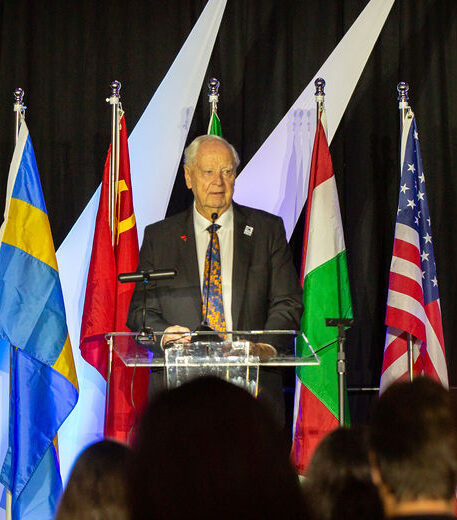
Happy Birthday to our fearless leader, Mr. Bill Kent, Chairman of the Board of the International Swimming Hall of Fame. Bill’s involvement with the ISHOF dates back to the 1980’s, and without his support, we do not know where we would be today!
In 2025, ISHOF created the Dr. Bill Kent Chairman’s Award which was present to Bill in Singapore. The award write up is below.
2025 WorldAquatics/DBM_Deepbluemedia
“The International Swimming Hall of Fame is proud to introduce The Dr. Bill Kent Chairman’s Award, a prestigious new award that recognizes individuals who have demonstrated extraordinary dedication, leadership, and service to the Hall of Fame, water safety, and the aquatics world. Awarded only on rare occasions to maintain its distinction, The Chairman’s Award celebrates the lifelong achievements and unparalleled contributions of those who exemplify the values and mission of the International Swimming Hall of Fame.
The first recipient of this award is Dr. Bill Kent, whose life’s work has been a beacon of positive transformation for Fort Lauderdale and beyond.
Honoring Dr. William Kent: A Lifetime of Leadership and Service
Dr. Bill Kent’s remarkable career spans over five decades, marked by a visionary dedication to safety, community, and innovation in the aquatic industry.
* A Champion of Youth Safety and Aquatic Education: Dr. Kent’s advocacy for youth drowning prevention has set a new national standard. His groundbreaking Every Child a Swimmer program, which offers free swimming lessons to underserved children, has impacted countless lives. This program, passed by the Florida legislature and now adopted in several other states, aims to make swimming a universal life skill, with over 600 children reached so far and many more to come.
* A Vision for the International Swimming Hall of Fame: Under Dr. Kent’s leadership as Chairman of the Board, ISHOF has embarked on a $221 million renovation, transforming it into a world-class attraction featuring a state-of-the-art aquarium, museum, and public spaces. His vision has ensured that ISHOF will continue to inspire future generations and contribute to Fort Lauderdale’s cultural and economic vitality.
* A Legacy of Recognition: Dr. Kent’s contributions have been celebrated by his community and around the globe. Named Philanthropist of the Year by the Florida Swimming Pool Association and recognized as one of the “10 Most Impactful People” by Swimming World Magazine, Dr. Kent’s dedication to service, innovation, and safety has established a legacy of enduring impact.
Dr. Bill Kent is a model of leadership, philanthropy, and commitment to a better future for all, making him the ideal inaugural recipient of the Dr. Bill Kent Chairman’s Award. His contributions will forever inspire ISHOF and the aquatics community he has so deeply enriched.
As an added note, after this first inaugural presentation, this award will forever be known as the Dr. Bill Kent Chairman’s Award.”
Thank you Bill, for everything you do for us at ISHOF and wishing you the happiest of Birthdays!
ISHOF 2027 Honoree Induction Ceremony Dates Announced: April 9-10, 2027
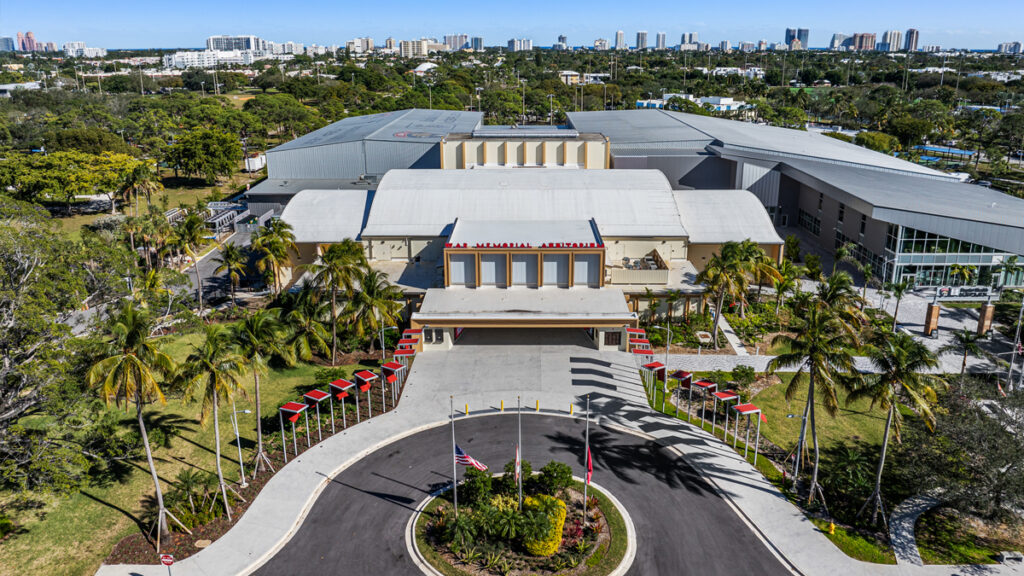
Photo credit: War Memorial.
ISHOF is proud to announce that we will be back in Fort Lauderdale for the 2027 Honoree Induction Ceremony and the dates will be Friday, April 9 for the ISHOF Aquatic Awards presented by AquaCal and Saturday, April 10 for the 62nd Annual ISHOF Honoree Induction Ceremonies.
We will be back at the War Memorial Auditorium once again in 2027, the same venue as 2026 for the induction and we are currently working to secure Friday night’s location. We are hoping to also be at the War Memorial but we have not yet locked it in. Stayed tuned for details!
We will be announcing the Class of 2027 late this week!
A Century Later: Celebrating Trudy Ederle’s Historic Channel Crossing
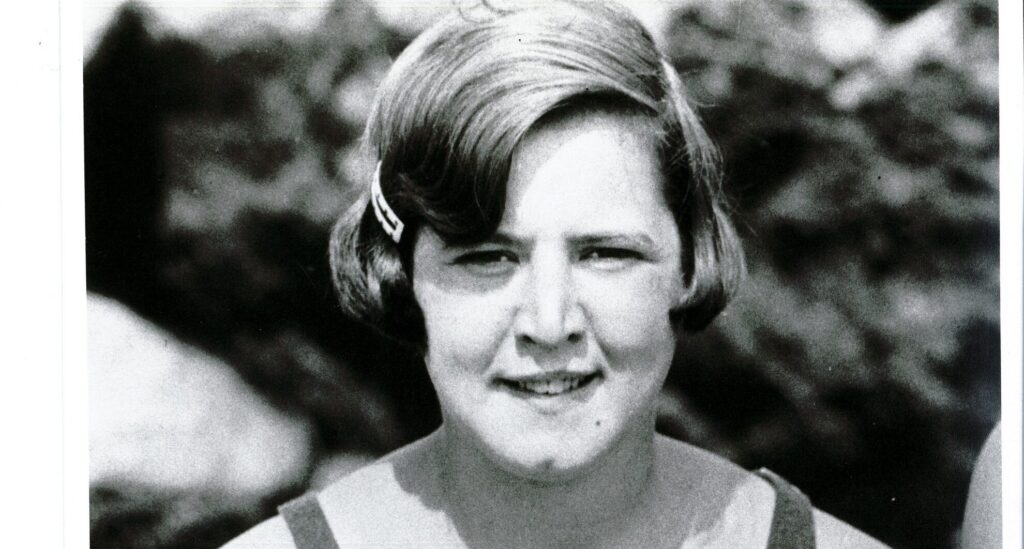
The International Swimming Hall of Fame was honored to be part of a small but special group invited to Dover and Kingsdown, England, to celebrate the 100th anniversary of the first successful crossing of the English Channel by a woman: the one and only Gertrude “Trudy” Ederle.
The event was hosted by the Trudy Ederle Foundation https://trudyederlefoundation.org/en/ on August 6, 2026 — 100 years to the day since her historic swim. We began with a visit to the Dover Museum for “Queen of the Waves,” a special exhibition dedicated to Ederle, and our first chance to meet members of the Ederle family in person, along with members of the Foundation.
Mary Ederle Ward, Trudy’s Niece
Our curator and historian, Bruce Wigo, had connected with Mary Ward, Trudy’s niece, after Mary and I spoke by phone earlier in the summer. Bruce then traveled to Mary’s home in New Jersey to personally collect Gertrude Ederle’s 100-year-old scrapbook, and at last, Mary and I were able to meet face to face. The Ederle family came out in force, and it was wonderful to share the day with so many relatives who so clearly adored their Aunt and Great Aunt.
The Ederle Family with The Trudy Ederle Foundation Members, including Rainer Frase, Founder
Imagine our surprise when we ran into 1995 Honoree “The Albatross,” Michael Gross of Germany, and his lovely wife, Ilona, who were in attendance. “Michael was is attendance as he represents something very closely connected to the Trudy Ederle Foundation‘s mission: outstanding achievement in elite sport combined with a successful and meanful second career beyond competitive sport”.
Michael and Ilona Gross
The Dover Museum’s exhibit was a wonderfully thorough tribute to Ederle and to the many remarkable Channel and marathon swimmers who followed her, and the museum itself is a real gem, tucked in the heart of Dover just minutes from the beach.
That evening, a bus carried our group of more than 50 to “The Rising Sun” restaurant just steps from Kingsdown Beach, where Ederle came ashore 100 years earlier. The Foundation had thought of everything. Dinner began around 7:30, and live monitors placed throughout the room were tracking Ederle’s swim in real time, as if she were making her way across the Channel that very night. We always knew exactly where she was and how much farther she had to go — it was a beautiful touch.
Watching Trudy swim 100 years earlier
Before dinner, guests mingled and swapped stories, and I had the pleasure of chatting with two more of our Honorees: Michael Read, inducted in 2011, and Kevin Murphy, inducted in 2009 — both of whom, at different points in their careers, were known as the “King of the English Channel.” The room was full of fascinating people: the High Sheriff of Kent, appointed by King Charles; the youngest swimmer to complete the Oceans Seven at the time of her achievement; Sally Minty-Gravett, an ISHOF Honoree; and so many more.
The two Michael ISHOF Honorees ~ Read and Gross
Friends celebrating Trudy along with Billy Morrison and Kevin Murphy
Dina Levačić, Marathon Swimmers, Sally Minty Gravett, ISHOF Honoree Kevin Murphy
The meal itself was exactly the kind of English fare Trudy would have loved — another lovely touch. My husband, Stu, and I were seated with the Ederle family, so we got all the inside stories. Much of the evening was spent simply telling tales about Trudy, and that was one of the best parts of the night: getting to know someone through the family who truly knew her.
Dinner!
The Trudy Ederle Foundation also presented gifts to a handful of people who had helped make the evening possible, and ISHOF was proud to be included. We received two special one-of-a-kind pieces of artwork and a copy of the new book, Trudy ~ What the Applause Left Behind, by Tobias Kolesnyk, the Foundation’s Director of Strategic Communications, plus lots of other goodies.
ISHOF representative Meg Keller-Marvin accepting award from Ranier Frase and grandson, Phillip.
ISHOF had gathered video tributes from Honorees and swimmers to honor Trudy, and all of them were shown that night. No surprise: Katie Ledecky’s left the whole room starstruck. A heartfelt thank you to everyone who contributed a video — Donna de Varona, Missy Franklin, John Naber, Marcella MacDonald, Katie Ledecky, and Dara Torres.
Watching Katie Ledecky video
The true star of the evening, besides Trudy herself, was Hannah Hubert, Executive Director of the Trudy Ederle Foundation. Hannah was the smiling face behind every detail, crossing every “t” and dotting every “i” to bring this event home with an A+. Her attention to detail was truly one for the ages.
Hannah Hubert, Executive Director of the Trudy Ederle Foundation
After a delightful dinner filled with English fare, stories of Trudy, presentations, thank-you’s, and video tributes, the magic hour of 21:39 was almost upon us. We all made our way outside, where torches awaited — just like they carried 100 years before. We lit them and set off down a path through the residential streets of Kingsdown toward the beach.
Meg Keller-Marvin and Jon of the Dover Museum
As the path opened onto the shore, I was amazed to see more than 100 people already gathered on the beach, chatting and mingling. As it turned out, the townsfolk of Kingsdown had come out too, to celebrate Trudy at the stroke of 21:39 — the exact moment she had come ashore a century earlier. Torches lit up the night sky, and a local woman had even set up a table pouring glasses of champagne for anyone who wanted to partake. A few more speeches followed, and as the countdown began, the whole crowd joined together, cheering for Trudy at the exact moment: “Hip, hip, hooray!”
Celebrating on Kingsdown Beach
It was an unforgettable evening from start to finish, and ISHOF is so grateful to have been included. We loved reconnecting with old friends and meeting so many new ones. A special thank you to Hannah, to Tobias, Rainer and the Ederle family and to the entire Trudy Ederle Foundation for hosting this true once-in-a-lifetime event.
The Gertrude Ederle Trophy
A special thank you to the Trudy Ederle Foundation for the use of some of the their photos and to Hannah Hubert for all her help.
Michelle Ford ~ After the Applause
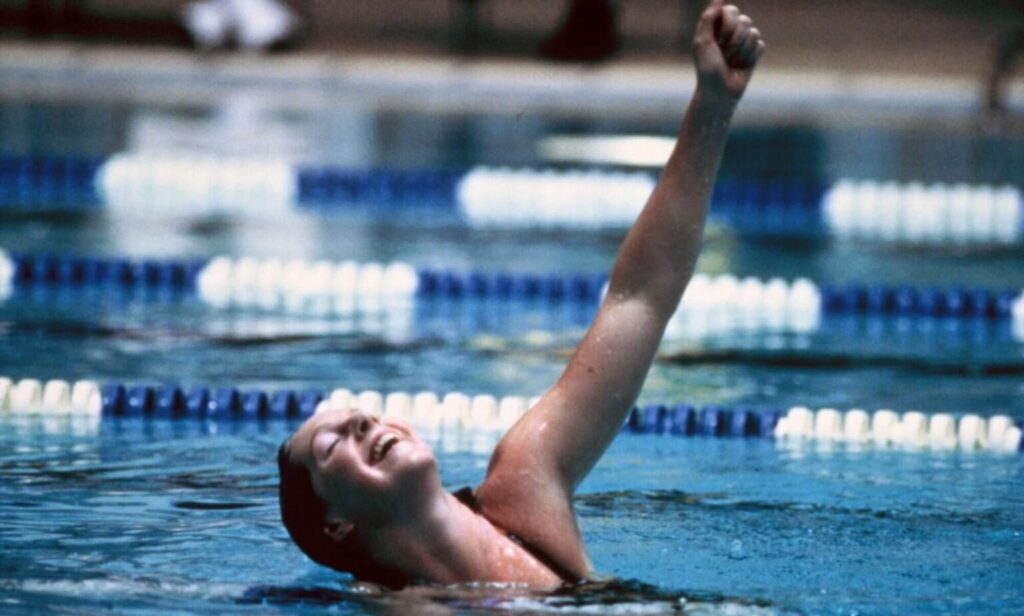
Honoree Questions for: Michelle Ford ~ Honor Swimmer
You were inducted in 1991. Tell us what you have been up to since then?Since my induction into the International Swimming Hall of Fame in 1991, Ihave built an rewarding career in sport, raised two wonderful boys, andcontributed to several important milestones in sport. I was a foundingmember of the IOC Athletes’ Commission, where we advocated for;stronger anti-doping regulations – calling for bans on athletes and theirentourage if found guilty of doping, equal opportunities for women, and theend of the amateur code. It was at the end of the cold war, and our call toaction became a critical turning point in sport and gave athletes a voice,through the creation of the IOC Athletes Commission.
I was director of the university sports program in Switzerland, and createda sports testing unit for sporting clubs and the university. I later returned toSydney, where I served as a Director of National Olympic Committees forthe Sydney 2000 Games. After the Games, I worked with the Oceaniaregion to develop its sports program. I also helped shape Australian sportspolicy through my board work with the Australian government as well asthe board of swimming Australia. Most recently, and something that I amextremely proud of, after 6 years of research and writing, I published mymemoir, ‘Turning the Tide’,
I continue to advocate for athletes and promote healthy lifestyle throughmy coaching.
What do you do for work / as a profession?I have degrees in Business communications and MA in Sports Psychology from the University of Southern California. My professional career began at the helm of the University sports program in Lausanne Switzerland, as Director and I have since held many board positions including the Australian Sport Commission, Swimming Australia, and the World Masters Games. From the organizing committee of the 2000 Sydney Games to help the Oceania region sports programs. and consulted with international Federations, I have enjoyed positions where I have influenced institutional changes and promoted sport programs.
Are you still involved in swimming in any capacity?
I coach adult swimming and still swim regularly
Do you still stay in touch with any swimming friends from your competitiondays, if so, who?
Writing my memoir, I reconnect with many swimming colleagues in Australia and abroad; Shane Gould, Jenny Turrall, Tracey Caulkins, Wendy Boglioli, my USC Colleagues John Naber and Sharron Davis (UK). Recently I initiated andorganized a welcome home and recognition by the Australian Prime Minister for the Australian 1980 Olympic team and their contribution to Australian sport and the Olympic movement. 45 years on it was great to see some familiar faces.
If you have children, do your kids swim, if yes, tell us about them, if no, tellus about what they are involved in (sports, arts, etc.)I have two boys, now working in Private equity, and Hotel development. Theyboth swam and participated in a range of sporting activities. Compared to myupbringing in Australia living in Switzerland, has been more challenging to have a successful career in swimming. Tennis and sailing were their preferred sports.
What is best memory of your days in swimming? The best and proudest memory of my swimming days was to stand on theOlympic podium to receive my Gold medal as the national anthem played andthe Australian flag rose above the East German flag – I became the onlyindividual female swimmer to defeat the GDR.The coolest memory, however, is the incredible comradery amongst team mates and the friends that I made especially from my college days at USC.
Seeing the changes that have occurred in swimming/aquatics now versuswhen you were competing, do you wish you could have competed now, orare you glad you competed when you did and why?Competing today would certainly have had its advantages—five-star hotelsinstead of being billeted out with families or in migrant hostels, along with access to personal coaches, psychologists, physiotherapists, massage therapists, and other support staff. The opportunity for swimmers to earn money today would also have made a significant difference. In my era, none of that was permitted; you could even be considered a professional and be ineligible simply for working as a lifeguard.
Have you written a memoir/book about yourself, if yes, what’s the title andcan our readers purchase it? If not, do you ever plan on written a book?I recently completed my memoir, Turning the Tide. Part memoir and part exposé, it is more than the story of winning Olympic gold. It is the journey of a young swimmer from Sydney whose determination, resilience, and love of the sport led her to become the only female swimmer to win an individual Olympic gold medal against the might of the East German state-sponsored doping machine. Interwoven with my personal story is the shocking truth behind the GDR’s systematic doping program and how politics, gender inequality, and doping reshaped the Olympic movement and the landscape of international swimming.
Above all, Turning the Tide is a tribute to the values that define our sport—hardwork, integrity, and fair competition—and to the belief that you can triumph even when the odds are stacked against you. It reflects my lifelong fight for clean sport, athletes’ rights, and fairness for women in sport, while reminding us why those causes remain as important today as ever.
Any advice to all the future want-to-be Olympic swimmers out there?Swimming is an amazing and fulfilling sport. Although it is demanding, it is also deeply rewarding. And despite the misconception that swimming is not social or team-oriented, nothing could be further from the truth.
As an Olympian, National Team Member, you travelled all over the world.What was your favorite place you visited, or your favorite meet to attend?My trips to Europe, were always a buzz. Discovering new cultures and walkingcobbled street was new and exciting for me. Until then I had only read about it in books and talked about it at school history and geography lessons.
Something that I must add to this was my first trip behind the ‘iron curtain’ in 1989 for the Spartakiade Games in Moscow – it was definitely an eye-opener, quite austere and mystical.
You can purchase Michelle’s book, Turning the Tide, on Amazon.
100 Years ago Today! Gertrude Ederle becomes the first woman to successfully cross the Channel ~ August 6, 1926
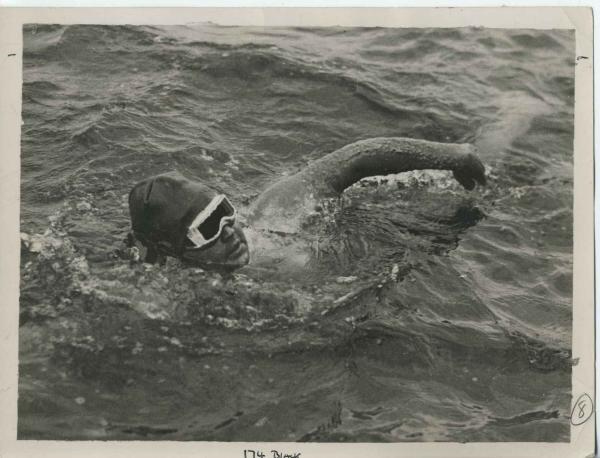
Gertrude Ederle vs. the Channel
The setting for the greatest sports story of the year, to my mind, will be the twenty-two miles of sullen gray Channel water between Cape Gris-Nez and Dover early in August, when Gertrude Ederle makes her second attempt to conquer the elements that beat her last year. Only five men out of the hundreds who have tried have made it and not a single woman.
This is more than a great melodramatic sporting event. The Ederle family is installed at the Hotel of the Lighthouse talking it over and Pa Ederle is planning his celebration in the event of his daughter’s victory. And Gertrude said naïvely, “And I’ll bet all the women in the world will celebrate that night.” That is the keynote of the interest. Swimming the Channel is a supreme test of courage and endurance, requiring a physique which makes victory possible. And a victory for Gertrude Ederle will be one of the greatest feminist stories, as well as one which will appeal to the dullest imagination.
In Paris the gamblers are willing to give heavy odds on the Channel against the young champion of her sex, a girl who is to make the attempt to demonstrate that the members of her sex can possess virtues held previously exclusively by the masculine. She is trying for the second time a feat that only the hardiest and most exceptionally equipped male swimmers have succeeded in accomplishing.
Standing beside Miss Ederle as she sat on one of the rocks near the lighthouse and looked across the gray, sullen water, I’d be inclined to back this girl against the Channel. If there is one woman who can make the swim, it is this girl, with the shoulders and back of Jack Dempsey and the frankest and bravest pair of eyes that ever looked into a face. It is improbable, but not impossible.
At first Miss Ederle gives the impression of being dull, because she is slightly deaf through an injury to her eardrums from swimming and because, like all swimmers, she is a mouth breather. But she is far from dull. She has a sense of humor. She told me of her last attempt, when she swam for an hour on instinct alone, blinded, deaf, and only half conscious. She remembered only the humor of the trip.
She told of the correspondents boarding the tug at Cape Gris-Nez airily waving at her and saying, “See you in Dover.” Then she told in words and pantomime how they crawled off on the English side, wan and seasick, and how one of them said, “This is the last time I make any Channel swims.” She threw back her bobbed head and laughed with the heartiness of a big boy.
“This time,” she said, “I am preparing myself to stay eighteen hours in the water. The last time I was trying for a record. When I start again it will be with the idea of reaching the other side, and I will not quit until I cannot move.”
As she spoke she peered through the chill mists that hid the outlines of the English coast. Below, the Channel was growling as it lashed against the rocks with a constant menace. Behind her was standing the north coast of France.
“All I am going to get for this is a roadster. Pa promised me one if I make the swim this time. So I’ll be seeing nothing but that roadster on the boat while I am making the swim.” A little while later she was cuddling a little baby rabbit, which she had picked up in the fields, against her brown cheek. A strange mixture is this girl, with the simplicity of Shaw’s Joan of Arc and the physique and many attributes of a male giant. To picture what eighteen hours in the Channel might seem you must stand with her on the rocks at Cape Gris-Nez.
Consider the ancestry of this young Amazon. Her grandmother was the mother of twenty-one children and she is still alive and active in Stuttgart, on the edge of the Black Forest in Germany. When this swim is over Gertrude is going to visit her. The swimmer herself is one of a family of twelve—one of the old-fashioned German-American families.
Her training quarters are rougher than those of any prize fighter I have ever visited. In fact, the manager of one of these delicate male athletes would seize his fighter and flee at first sight of the Hotel of the Lighthouse, with beds that sag in the middle and running water that never runs. The diet she eats would shock a trainer. It is the diet of a stenographer mixed with pickles. Yet I have heard third-rate prize fighters complaining that they didn’t get their proper nourishment even when they had their own chefs.
The loneliness would make even an unimaginative prize fighter mad in a few weeks. But this girl keeps her even temper and her sunny good humor, living day by day with a battlefield by her side. This time she is under the charge of the gray-haired William Burgess, who swam the Channel years ago, and a man who has spent his life studying its changes and its cruel moods. The present plan is to have Gertrude Ederle start from the point on the French coast where he finished and have the light of Cape Gris-Nez guide her through the long, weary miles of darkness and silence, broken only by the growl of the waters.
She was at the door of the lighthouse when I left her with her toy phonograph playing a jazz tune. She held out one of the strong brown hands that will beat against the waters of the Channel and said with that boyish smile, “Good-by, good luck.”
I felt that I would sooner be in that tug the day she starts than at the ringside of the greatest fight or at the arena of the greatest game in the world, for this, in my opinion, is to be the greatest sports story in the world.
Written by the New York Daily News, August 1926
Counting down to the 100th Anniversary Celebration of Gertrude Ederle’s successful Crossing of the English Channel ~ August 6, 2026
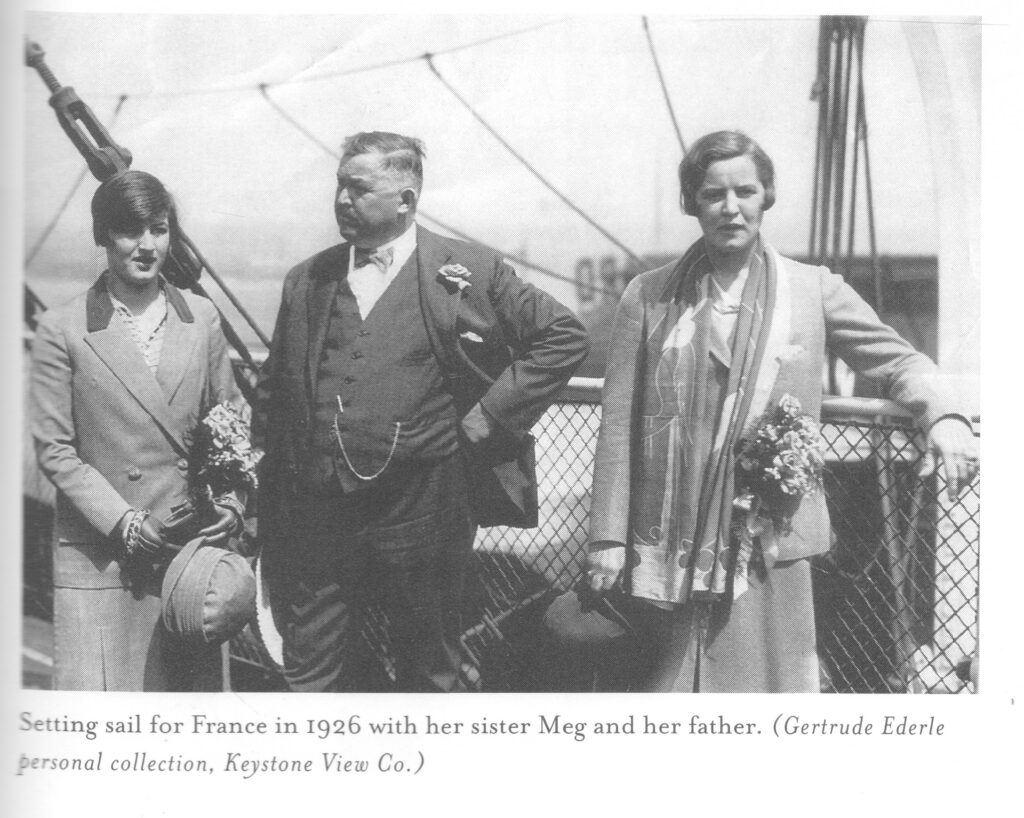
On August 6, 1926, Gertrude “Trudy” Ederle became the first woman to successfully swim the English Channel. Only five men had completed the Channel swim before Trudy, beginning with Captain Matthew Webb in August, 1875. In 1926, it was said that women were dainty and could not possibly achieve a feat so grueling as swimming the English Channel. Not only did Ederle complete the grueling Channel swim, but she beat all the men’s times by two hours.
As we count down to the Centennial anniversary of Trudy’s swim this week, we are going to share “All Things Trudy” with you, leading up to her swim.
As we start our series, we begin with the first photo, of Trudy with her father, and her sister Meg on the boat heading to England in 1926 for Trudy’s second attempt to cross the Channel. Trudy had tried the Summer before, but this time she would be more prepared, as she knew what to expect, and more importantly, she would have the moral support of her father and her sister, Meg.
They would land in England, spend almost two months getting ready on both sides of the Channel, Dover and Cape Gris Nez, preparing for the swim. This year she would be ready; she had a new trainer and lots of swimming friends surrounding her.
International Swim & Save Program “Leucothea” created by Dr. Stathis Avramidis, Greek Lifesaving Sports Assoc.
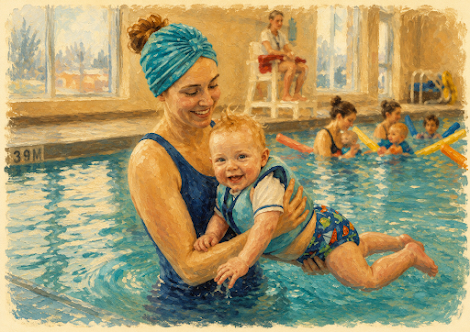
Greece 25.07.2024. On the World Drowning Prevention Day, seven international organizations launch the International Swim & Save Program “Leucothea”, to preserve human lives from aquatic related injuries through free online education on swimming, safety, resuscitation, first aid, survival, fair play, and lifesaving sport.
The problem
Our world is covered at 75% by water. Drowning is a global public health problem, with 1 fatal death every 30 seconds. Those aged 0-5 years old, teenagers and elderly belong to a high-risk group. There is clearly a need for preventing death in these age groups.
The solution
To achieve drowning prevention, resources are needed (money, access to training facilities) but this does not necessarily mean that such intervention is always effective or available to the potential “victims”. According to a famous quote, “the bait should be attractive to the fish and not to the fisherman.” In our today’s society, children learn how to use technology often before they are able to walk and even before their parents find the time or money to offer them proper swimming lessons. Likewise, adults spend a substantial time scrolling on their electronic devices.
The program is endorsed by the following organizations: Greek Lifesaving Sports Association (GLSA), International Federation of Swimming Teachers’ Association (IFSTA), International Life Saving Federation (ILS), International Life Saving Federation of Europe (ILSE), International Swimming Hall of Fame (ISHOF), Mediterranean Lifesaving Confederation (MLC), Lifesaving Network (LiNe).

Creator of Leucothea is Dr Stathis Avramidis, GLSA President, MLC Secretary General and ISHOF Every Child A Swimmer Committee Member. It was developed by the following students from Furtwangen University (Germany): Antonios Stefanakis (Greece), Takal Ebrahimkhel (Germany), Marian Ankoma-Sey (Ghana), Mohammad Sharif Azimy (Afghanistan), Basim Siddiqui (Pakistan), and Gayatri Naidu Arnapalli (India).
Content
The program is composed by 18 modules that are available online. The content deals with the issues of drowning and water safety in all aquatic environments, theories and models of water safety, rescue methods, fair play, swimming and lifesaving sport techniques and legendary figures who excelled in their career as athletes, lifeguards or administrators. The number of modules may increase in the future. Water is our world, but sky is our limit! Upon successful reading of the modules, the participants may test their understanding and receive 18 elegant certificates. This may hopefully motivate them to attend theoretical and practical on swimming and lifesaving lessons.

Comments
The ILS Secretary General, Dr Harald Vervaecke PHD, said: “Leucothea represents an important step in raising water safety awareness globally.”
The ISHOF Chairman of the Board, Dr Bill Kent, said: “Congratulations for uniting prestigious organizations and for creating a priceless modern educational means that can save lives. We are happy to support initiatives that make swimming and lifesaving education accessible to all.”
The MLC President, Dott. Giorgio Quintavalle, said: ““Leucothea is an innovative idea to reach everyone and everywhere, without being limited by time or money. Everyone with internet access can learn how to protect themselves and what to do to save others in and around the water. Congratulations!”
The ILSE President, Dirk Bissinger, said: “We appreciate the effort and contribution to drowning prevention and water safety. Thanks for adding this valuable tool to the community.”
The Deputy President of the Royal Life Saving Society Commonwealth and Co-Chair of the Canadian Drowning Prevention Coalition, Dr Steve Beerman, said: “Children need basic survival swim skills, communities need trained lifesavers. We can deliver this training in a safe and effective manner in all settings.”
The IFSTA President, Leslie Donavan, said: “We applaud the Greek Lifesaving Sports Association and the team of students from Furtwangen University for creating the International Swim & Save Program Leucothea.”
The Project Coordinator of the Lifesaving Network, Bojan Golubovic, said: “Leucothea is a beautiful and user-friendly instrument that helps us meet our constitutional goals and to use the technology for teaching swimming, survival, safety, sports across the globe.”
The GLSA President and creator of the program, Dr Stathis Avramidis, said: “In our first meeting, the team said that they should create an application as part of their academic commitments. It could be something that would improve the professional activity of any kind of client, for example the owner of a pizza restaurant. I asked: “Do you want to sell pizza or to save lives from drowning?” They were inspired and decided to help me serve a higher purpose. This is how Leucothea was born.”

Advantages
The program has several advantages:
it is available online on a 24/7/365 basis.
It is available to every organization and individual.
It can engage people at school, home, holidays or at a sports club.
It offers to the youngsters the opportunity to use the technology that is so dear for gaining easily accessible knowledge.
It helps children to build self-esteem with the certificates of accomplishment and adults to gain basic awareness and stimulation to expand their learning experiences.
It helps organisations to make their members feel creative and become safe.
It fulfills the mission of all the involved organisations to enhance drowning prevention and water safety at no cost.

Invitation
We encourage everyone (World Aquatics, International Life Saving Federation, National Olympic Organisations, parents, swimming and lifesaving clubs, schools, summer camps, scouts and youth organisations) to circulate and use the program. Nobody can cope drowning alone. Together we can!
Access
To access the program, click here: https://leucothea.vercel.app/
August Honoree: After The Applause ~ Klaus DiBiasi, Honor Diver, 1981
Honoree Questions for: Klaus Dibiasi ~ Honor Diver
You were inducted in 1981, tell us what you have been up to since then?
After the Moscow Olympics 1980 I was still in charge by the Italian Swimming Federation as National Head Coach and had many occasions to compete again with the Italian diving team in Ft. Lauderdale. In 2006 my father Carlo was introduced in the Hall of Fame as Pioneer Coach. Later I was Technical Director and on the board of the Federation. I was also in LEN and FINA for several years and now I am the Secretary of TDC in European Aquatics and am still working for the Federation.
2. What do you do for work / as a profession?
I am retired, but since 1990 I opened with my wife Laura Schermi in Roma the diving club named in memory of father “Papa Carlo”, A.S.D.Carlo Dibiasi. My work is then still with the Italian Swimming Federation as Technical Diving Collaborator.
3. Are you still involved in diving in any capacity?
I have spent my life in Diving and really love my sport. I am no more active as coach on pool-deck but am busy with my Diving Club and European Aquatics where I am involved in educational programs for judges and coaches.
4. Do you still stay in touch with any diving friends from your competition days, if so, who?
Of course, my best friend is Team-made Giorgio Cagnotto with whom I shared all my diving activity and coaching. I was in contact with coach Dick Smith, Dr. Sammy Lee, Dick Kimball and Carlos Giron for many years when they were alive and now, at the Paris Olympics 24 I have met again my friend Greg Louganis. Unfortunately, some good diving friends I competed with, passed already away.
5. If you have children, do your kids dive, if yes, tell us about them, if no, tell us about what they are involved in (sports, arts, etc.)
Yes, I have a daughter with my wife Laura, Elisa Dibiasi, who is really a sportive girl having practiced beside diving, skiing, tennis, kick boxing, climbing, canoeing and horse riding, (one time she rode the famous hors “Diver” of Dick Smith at his home).
She is now living in Ericeira, Portugal practicing surfing. She studied photography for three years in Roma and likes drawing and painting.
6. What is best memory of your days in diving? (You can have more than one)
1964 when we entered the first time the Olympic Pool build by Kenzo Tange, we realized that Olympics are special. Then, my last competition with Greg Louganis in Montreal 76 when I had my physical problems and could not train as expected, the experience and the mind power made there an incredible difference. Also the CAN-AM-MEX competitions from cold Canada to warm Ft.Lauderdale and Mexico were always my preferred diving experiences.
7. Seeing the changes that have occurred in diving/aquatics now versus when you were competing, do you wish you could have competed now, or are you glad you competed when you did and why?
First of all, you can’t compare different eras directly. Situations are much different. On one side I was really happy to have been diving in a period when diving was limited by DD table and really an amatorial activity without great pressure exalting beauty and technique. For that time, we have been the best physical prepared and technically guided athletes. Today it is much different, Pierre De Coubertin’s Olympic principles are almost overwritten and more effort is spent into diving by the federations and the athletes may have also economical profit. Since in 1994 the DD table has been opened and Chinese divers were admitted again the performances raised quickly showing all the hardest dives an individual can perform. Amazing for me was to see the video of Mexican Joaquin Capilla in 1951 trying a 4 1/2 somersault from 10m platform which was not allowed in competition that time. The spring boards have changed much and so the hurdle technique, permitting harder dives for men and women but the platform is still the same. Except economical reasons I am really happy to have lived in an era when diving came really from our heart and coaches were mostly volunteers…
8. Have you written a memoir/book about yourself, if yes, what’s the title and can our readers purchase it? If not, do you ever plan on written a book?
When I met again in Roma my good friend Mario Zanotelli, a diver from my club in Bolzano, and saw that he was a very good cartoonist with a strong sense of humor, I decided to write my book about diving “Tuffi per Tutti” (Diving for Everybody). The content is for any kind of diver from beginner to advanced, with technical advices. The humoristic notes are not missing and it is really fun to go through. Obviously, the introduction is a historical review of my life. The book is in Italian and available on Amazon and other book stores. An English version is planned soon.
9. Any advice to all the future want-to-be Olympic divers out there?
Diving is not an easy sport and needs years of practice to become competitive; that’s why you need to love what you are doing and having fun during even hard workouts. Trust your coaches and do not set too high targets too close. Each new dive you learn brings you a step forward and you can say “I made it” feeling great. It is like a castle to build starting with the first brick! Believe in it and remember, you will never finish to learn new dives!
10. As an Olympian, National Team Member, you travelled all over the world. What was your favorite place you visited, or your favorite meet to attend?
I can tell you that long time ago our Federation sent us to many European important Diving Meetings and never overseas. Then, when the time came to join the CAN-AM-MEX Diving Meetings, a different world was discovered and specially when we dove the first time in Ft. Lauderdale with all the friendly people and a really holiday climate, it was love at first sight. The competitions were high level and well organized. The specialty was the “Friday night show” before the competitions showing humoristic dives and special dives by some famous coaches with a small trampoline put on the 10m platform. The Hall of Fame Museum was also an amazing institution. I am glad about the restructuring done recently to the facility including the High Diving tower and the new Museum building keeping high history and actual needs for diving competitions.
I add a historical picture of high diving done when it was started in Ft Lauderdale as exhibition. An incredible height, must have been about 40m!!! I can’t remember the year….
International Swimming Hall of Fame and Lynne Cox Featured on Travel Channel’s “Mysteries at the Museum”
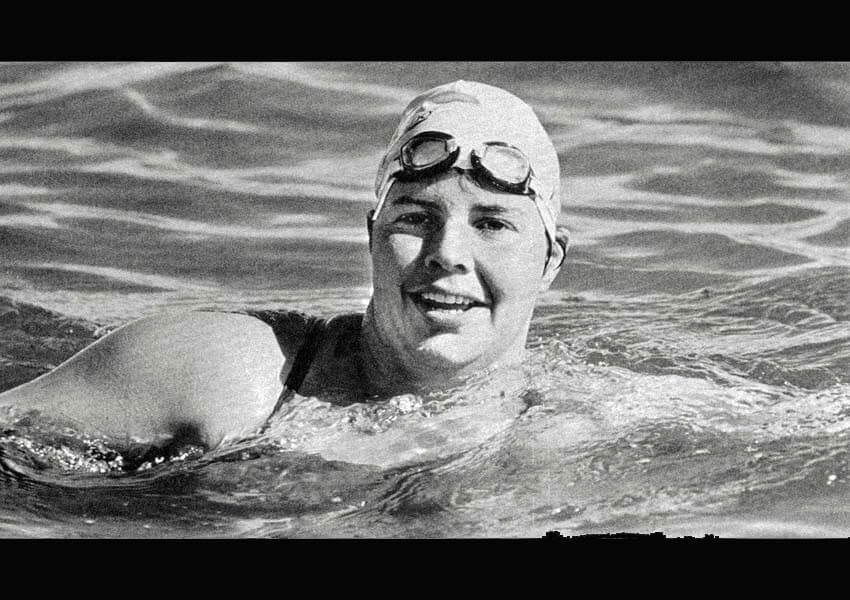
Have you ever wondered why is the International Swimming Hall of Fame is so important?
The answer is simple. It is the only entity that archives important aquatic related memorabilia in order to preserve history and educate the next generation. Nothing demonstrates this fact more than the recent Travel Channel’s show Mysteries at the Museum. The episode was filmed at the International Swimming Hall of Fame and documented the journey of Lynne Cox, who was the first swimmer to swim the Bering Strait from Alaska to the Soviet Union in the summer of 1987. Her swim demonstrated how close the Soviet Union and the United States were to each other and was instrumental in ending the Cold War between the two super powers.
“I wanted to open the border so we could become friends,” says Cox, who first conceived of the idea of the swim in 1976 and spent years lobbying Soviet officials for permission to enter their waters.”The difficulty was that nobody believed it could happen.” – Not just swimming in freezing water, but to bring an end to the cold war.
After being ignored at every turn, Cox finally decided to use “every last penny” of her savings to do her swim. On the eve of the swim, there was still no word from Moscow, and the military on both sides of the Cold War were jittery.
But at the last minute, the Soviets had sent a top-level delegation, including KGB officials and sports stars. They had even prepared a small beach party. The swim turned Cox into a Cold War celebrity in the United States and the Soviet Union.
When President Gorbachev traveled to Washington to sign a nuclear weapons treaty later that year, he and President Reagan raised a glass to toast the swimmer.
“She proved by her courage how close to each other our peoples live,” Gorbachev said.
Lynne Cox was inducted into the International Swimming Hall of Fame in 2000. Support the International Swimming Hall of Fame by becoming a member
Read Lynne Cox’s ISHOF Honoree bio here:
Lynne Cox
Country: USA
Honoree Type: Open Water Swimmer
FOR THE RECORD: First crossing of the Catalina Island Channel (1971) 12:36 hrs.; Women’s and men’s record crossing of the English Channel (1972) 9:57 hrs.; Women’s and men’s record crossing of the English Channel (1973) 9:36 hrs., Catalina Island Channel crossing record (1974) 8:48 hrs.; Cook Straits between North and South Islands of New Zealand (1975) 12 hrs., 2 min.; Straits of Magellan (Chile), Oresund and Skagerrak (Scandinavia) (1976) 1 hr., 2 min.; Aleutian Islands (three channels) 1977; Cape of Good Hope (S. Africa) 1979; Around Joga Shima (Japan) 1980; Across three lakes in New Zealand’s Southern Alps (1983); Twelve difficult “Swims Across America” (1984); “Around the World in 80 Days”, 12 extremely challenging swims totaling 80+ miles (1985); Across the Bering Strait, U.S. to Soviet Union (1987) 2 hr., 6 min.; Across Lake Baikal, Soviet Union (1988); Across the Beagle Channel between Chile and Argentina (1990); Across the Spree River between the newly united German Republics (1990); Lake Titicaca Swim (1992).
Lynne Cox became the best cold water, long distance swimmer the world has ever seen. Her 5 foot 6 inch, 180-pound frame of a body was at one with the water. With a body density precisely that of sea water, her 36% body fat (normal is 18% to 25%) gave her neutral buoyancy. Her energy could be used all for propulsion and not to keep afloat. Propelling though the most treacherous waters of the globe is what Lynne Cox did best.
When her parents moved the family from New Hampshire to Los Alamitos, California in 1969 so that Lynne and her older brother and two sisters could receive better swim coaching, Hall of Fame coach Don Gambril, at the Phillips 66 Swim Club, took her under his guidance. What he saw was a large-boned girl with boundless energy and great upper body strength who could slice through the water like a porpoise. When she was 14 and already tired of “going back and forth in the pool and going nowhere”, Gambril urged her to enter a series of rough water swims near Long Beach. As a result in 1971, at age 14, she swam the 31-mile Catalina Channel in Southern California with four other friends. She loved it. The chill, the chop, the solitude, and the liberation were all exhilarating to Lynne. “Everything opened up. It was like going from a cage to freedom.”
For the next two decades, Lynne competed against the elements in swims which took her to all the major bodies of water in the world, many of which had not been crossed before and most of which had not been done by a woman. Her study of history at the University of California Santa Barbara may have been a catalyst in choosing which swims to pursue. It became her desire to use her swims to help bring people together, to work toward a more peaceful world. This realization was sparked during her 1975 swim as the first woman to swim the 10-mile Cook Straits in New Zealand in 12 hours 2-1/2 minutes. During this difficult swim, the outcry of support from the New Zealand people was all she needed to finish this 50 degree Fahrenheit swim, even when the tides and current had taken her farther away from the starting point after the first five hours of the crossing.
Her most famous swim was in 1987, eleven years after her father had planted the seed in her head. Lynne completed 2.7 miles in the Bering Straits, 350 miles north of Anchorage, Alaska where the water temperature ranges from 38-42 degrees Fahrenheit. Perhaps the most incredible of cold water swims, her 2 hours, 16 minutes from Little Diomede (USA) to Big Diomede (USSR) astonished the physiologists who were monitoring her swim. It marked one of the coldest swims ever completed. One can’t get much colder. After this temperature, the water turns to ice. It was a swim that brought the United States and Soviet Union together in an exchange of glasnost and perestroika. In Washington, Presidents Reagan and Gorbachov toasted Lynne’s swim saying that she “proved by her courage how closely to each other our peoples live”. Before this time, at the start of the Cold War, the families of the Diomede Islands had been split and had not been permitted to see one another since 1948.
Lynne is the purist of marathon swimmers. She does not wear a wet suit in frigid water and does not use a cage in shark infested waters. Her swims in Iceland’s 40 degree F Lake Myzvtan and Alaska’s 38 degree F Glacier Bay, where the lead boat had to break a path in the one quarter inch ice, were done wearing only a swim suit, cap and goggles. She wanted to do more than just achieve times and set records. And she did. But in the process, she became the fastest person to swim the English Channel (1972 and again in 1973), the first person to swim the Straits of Magellan (Chile) 4-1/2 miles, 42 degree F (1976), Norway to Sweden, 15 miles 44 degree F (1976), three bodies of water in the Aleutian Islands (USA) 8 miles total, 44 degree F (1977) and around the Cape of Good Hope (South Africa) 10 miles, 70 degree F which attracted sharks, jellyfish and sea snakes (1978). Many other swims included Lake Biakal in the Soviet Union (1988), the Beagle Channel of Argentina and Chile (1990) and around the Japanese Island of Joga Shima. In 1994 at the age of 37 years, she swam the Gulf of Aqaba in the Red Sea joining the 15 miles of 80-degree water between Egypt, Israel and Jordan. She has swum Lake Titicaca in the Andes Mountains, the world’s highest navigable lake.
Lynne works as an author, motivational lecturer, and teaches swimming technique both in the pool and open water.
The information on this page was written the year of their induction
ISHOF becomes new home to a 100-year-old treasure; personal scrapbook of Gertrude Ederle, the first woman to successfully swim the English Channel (August 6, 1926)
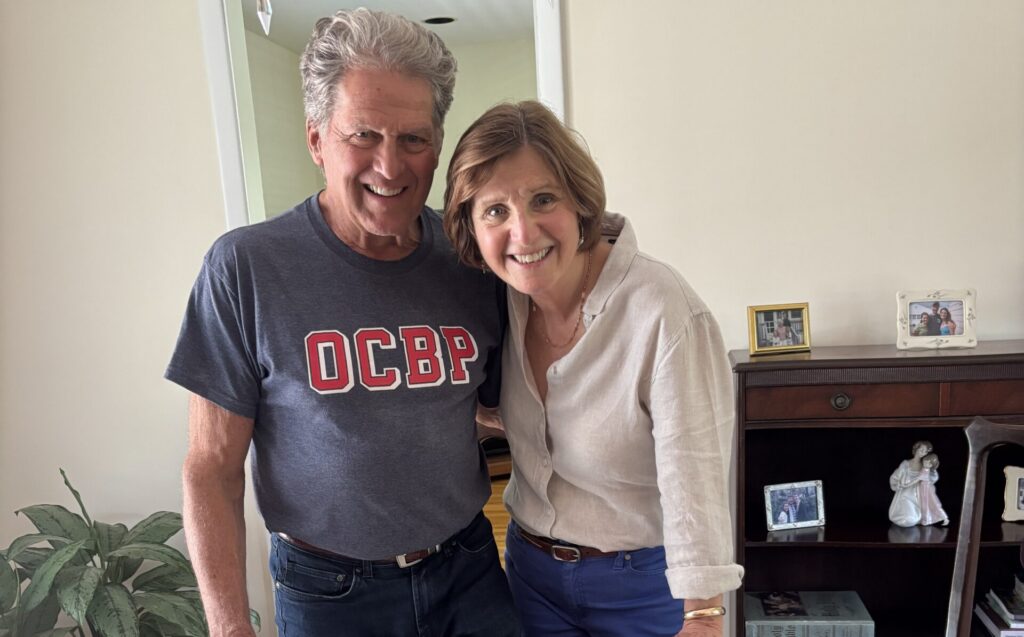
The family of Gertrude “Trudy” Ederle decided to personally entrust the swimmer’s 100-year-old original scrapbook to ISHOF into the care of Historian Bruce Wigo — a milestone on the road to the centennial swim on August 6, 2026. Trudy had a long history with ISHOF, giving some of her most cherished possessions to the museum, while she was alive and keeping a close friendship with original founding Executive Director, Buck Dawson and Curator Bob Duenkel for many years.
“It is one of the most significant private documents in the history of swimming”, said Tobias Kolesnyk, Director Strategic Communication of the Trudy Ederle Foundation.
Earlier this month, Mary Ederle Ward, Trudy’s niece, officially presented Ederle’s original scrapbook to the International Swimming Hall of Fame (ISHOF) into the hands of Bruce Wigo, ISHOF Historian and the institution’s longtime President and CEO (2005–2017), together with his wife Janet. The couple traveled from Florida especially for the occasion — to the place where the scrapbook’s journey into the heritage of world swimming now begins.
The large-format album, bound in black leather, bears a gold-embossed inscription: “Gertrude ‘Trudy’ Ederle — World’s Champion Swimmer — Conqueror of the English Channel — August 6, 1926.” It holds original newspaper clippings and documents from the days when a 19-year-old New Yorker made history.
On August 6, 1926, Trudy Ederle became the first woman to successfully cross the English Channel. Her time: 14 hours and 34 minutes — roughly two hours faster than the men’s record of the day. She returned home to America to the largest ticker-tape parade to fill to streets of lower Manhattan. Two million people lined the “Canyon of Heroes” to get a glimpse of Ederle and to celebrate her milestone. It was the first time a tickertape was celebrated for a woman. And now 100 years on, we will once again celebrate Trudy.
https://www.youtube.com/watch?v=84fYnCEVfJI
As for the scrapbook, for nearly a century, the Ederle family kept this album in private hands. That it now passes to the world’s leading institution for swimming heritage — just weeks before the 100th anniversary — is sheer coincidence. “The family entrusting this treasure to ISHOF is more than a gift. It is a promise to the future: Trudy’s story belongs to the world,” said Tobias Kolesnyk, Director Strategic Communication of the Gertrude Ederle Foundation. ISHOF plans to highlight this treasure in our new museum (opening late 2028) as one of the most culturally significant artifacts of the women’s rights movement of the early 20th century.
ISHOF and The Foundation will share further details about the legendary scrapbook, its contents, and its plans for the 100th anniversary of the Channel crossing at a later date. Both ISHOF and the Foundation plan to be in Dover, England on the 100th Anniversary of Trudy’s Crossing (August 6, 1926) to celebrate the remarkable achievement.
ISHOF also plans to be in Highlands, New Jersey for “Trudyfest”, along with Mary Ederle Ward to celebrate “Trudy” which will be celebrated on August 15, 2026.
Stayed tuned for all things “Trudy”.