
5hrs#Beijing2026 │ A look at some of the World Records at stake
Written by:World Aquatics Communication Department
Image Source: David Balogh/ Getty Images
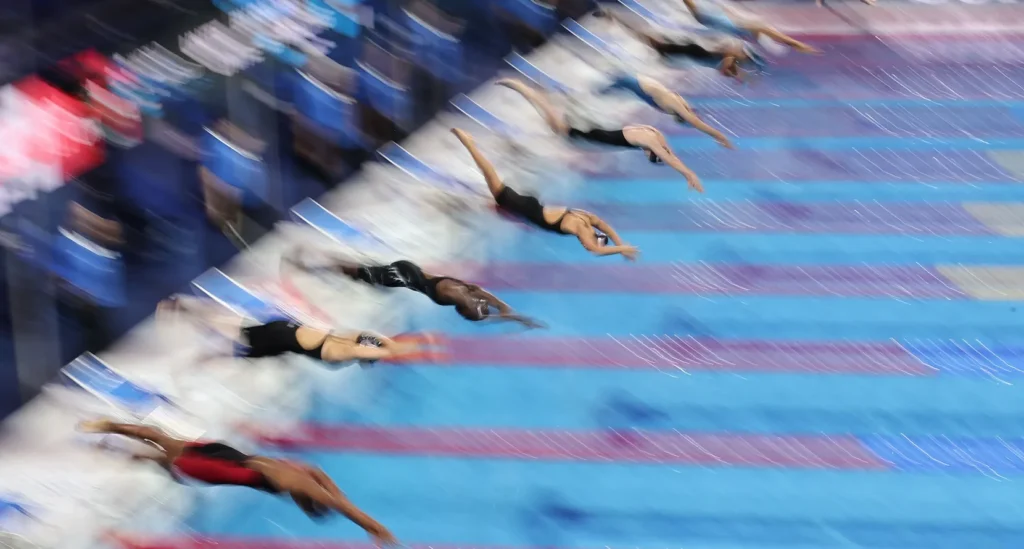
When the best swimmers in the world face off at the World Aquatics Swimming Championships (25m) in Beijing from 1-6 December, they will do so on a wave of record-breaking momentum.
Budapest 2024 set the bar at a staggering 30 World Records across 45 medal events, with 985 athletes representing 195 countries competing in the Hungarian capital.
Six of those came in relays, alongside 13 World Junior Records, 46 Championship Records and 63 Continental Records.
With a number of World Records broken in the lead-up to the Championships, more incredible performances can be expected in Beijing.
The World Cup sets the pace
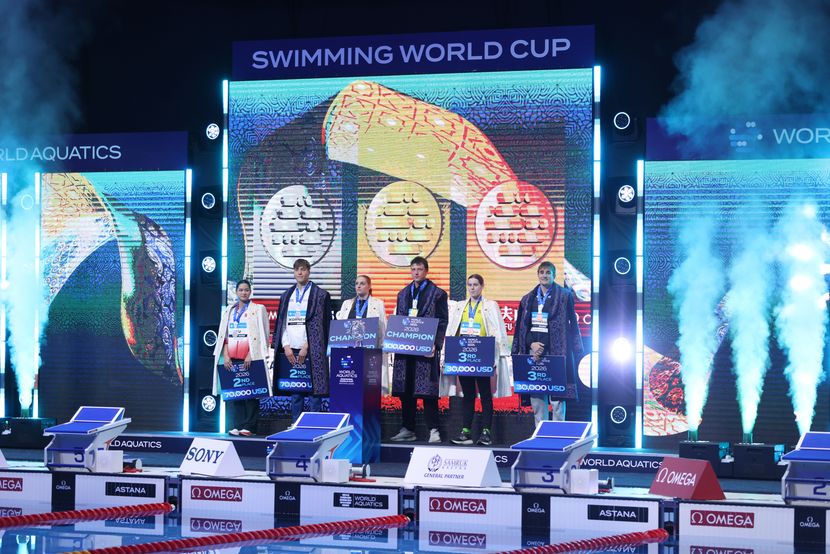
The Swimming World Cup has already delivered. In Baku, Russia’s Egor Kornev matched the Men’s 100m Freestyle World Record at 44.84. In Tashkent, he went one better, finishing in 21.28 to set a World Record in the Men’s 50m Butterfly.
Tashkent also produced a first World Record for South Africa’s Pieter Coetze, the eventual Swimming World Cup winner, who swam 22.09 in the Men’s 50m Backstroke, lowering Kliment Kolesnikov’s 22.11 from 2022.
Record-breaking dress rehearsals
There have been a further seven short course World Records broken this year ahead of Beijing 2026.
In Japan, Tomoyuki Matsushita made his mark at the National Championships on 11 October, clocking 3:54.33 in the Men’s 400m Medley.
At the US World Championships Trials from 28-31 October in Westmont, Illinois, there were six World Record performances.
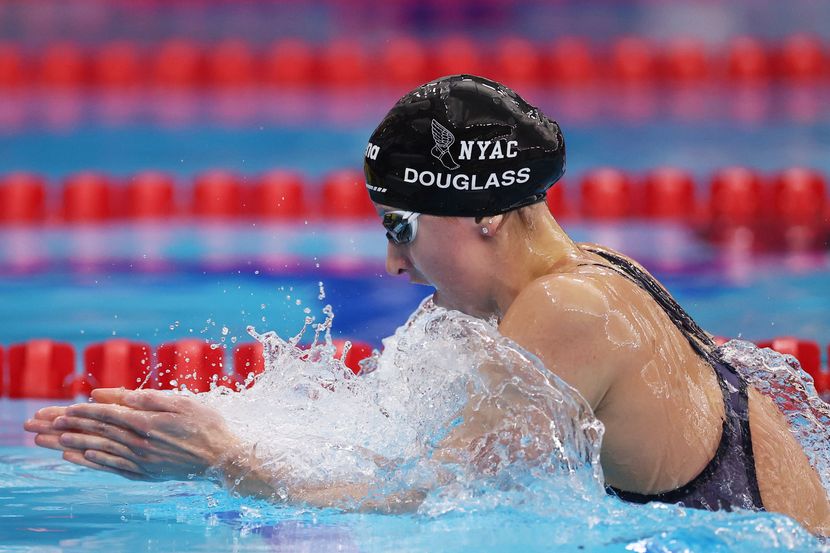
Kate Douglass equalled the Women’s 50m Freestyle World Record with 22.75, then lowered her own 100m Freestyle mark to 49.64, down from the 49.93 with which she became the first woman under 50 seconds.
Jack Alexy clocked 44.64 in the Men’s 100m Freestyle – taking 0.20 off the 44.84 mark held jointly by Kyle Chalmers and Kornev.
Claire Curzan claimed her first individual World Record, 53.92 in the Women’s 100m Backstroke, lowering Regan Smith’s 54.02. She also added an American Record of 1:57.65 in the 200m Backstroke.
Katharine Berkoff went 25.21 in the Women’s 50m Backstroke, shaving two-hundredths off Smith’s 25.23.
And finally Van Mathias stopped the clock at 55.14 in the Men’s 100m Breaststroke, breaking Ilya Shymanovich’s 55.28.
What’s still out there
Plenty of Budapest marks remain on the books.
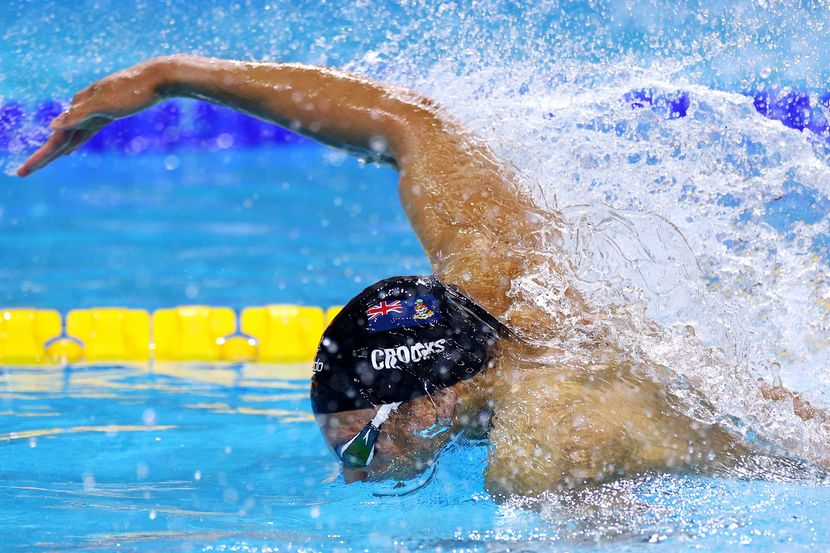
The Men’s 50m Freestyle (Jordan Crooks (CAY), 19.90) and 200m Freestyle (Luke Hobson (USA), 1:38.61) stand as benchmarks, while the USA’s relay records, including the Men’s 4x100m Freestyle (3:01.66) and the Women’s 4x100m Medley (3:40.41), will be tested by teams brimming with fresh record-holders.
Summer McIntosh’s (CAN) Budapest marks in the Women’s 400m Freestyle (3:50.25), 200m Butterfly (1:59.32) and 400m Medley (4:15.48) remain a daunting challenge. So do Gretchen Walsh’s (USA) 100m Butterfly (52.71) and 100m Medley (55.11), and Douglass’s 200m Breaststroke (2:12.50) and 200m Medley (2:01.63). With Walsh and Douglass in this form, expect more scintillating speed.
The Mixed and Men’s medley relays, set by Neutral Athletes B in 2024, will also be ones to watch.
The Water Cube awaits
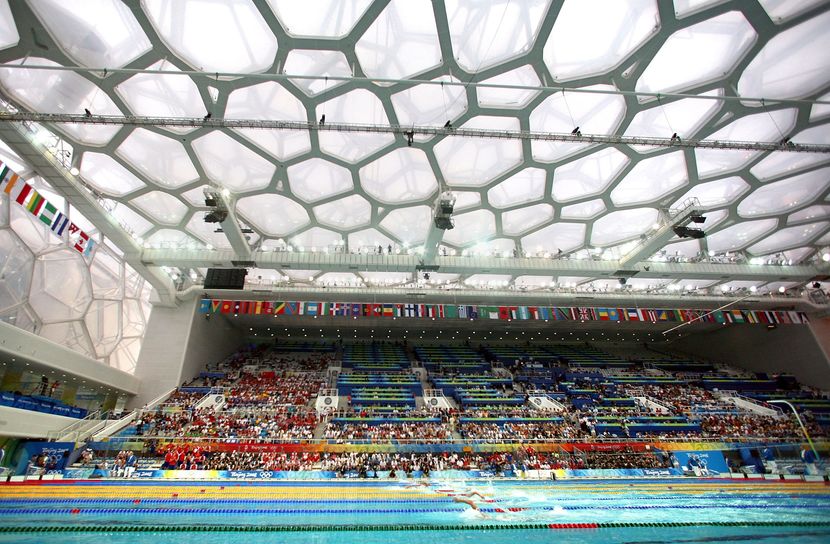
The 18th edition of the Championships is rapidly approaching. The Beijing National Aquatics Centre, also known as the Water Cube, hosted swimming at the 2008 Olympic Games and curling at the 2022 Winter Games, making it one of the few venues to have staged both summer and winter Olympic competition.
Heats start at 10:00 local time each day, with semi-finals and finals from 19:00. On the final day, 6 December, the evening session begins earlier, at 18:00.