
Friends we’ve lost in 2024

Dr. Ron O’Brien – November 19, 2024
The Sport of Diving loses a Legend: Dr. Ron O’Brien dies at age 86 at home in Naples, Florida
Casey Converse – August 10, 2024
Passages: The Gift of Casey Converse; Distance Legend Passes Away at 66
Paul W. “Buddy” Bucha July 31st, 2024
Passings: ISHOF loses 1997 Gold Medallion Recipient, Paul W. “Buddy” Bucha ~ longtime ISHOF friend
Carolyn Schuler Jones – July 22, 2024
Passages: Carolyn Schuler Jones, Two-Time Olympic Gold Medalist Dies at 81
Brent Rutemiller – June 17, 2024
David Wilkie – May 22, 2024
Great Britain and the ISHOF family lose a great one: David Wilkie loses his battle with cancer…..
Jon Urbanchek – May 9, 2024
Passages: ISHOF Honor Coach Jon Urbanchek, Iconic Olympic, Michigan Coach Dies; Legacy Will Endure
Judith McGowan – March 10, 2024
Giuseppe D’Altrui – February 22, 2024
The world of water polo loses a great: Giuseppe D’Altrui
Eddie Sinnott – February 20, 2024
Lance Larson – January 19, 2024
Passages: Lance Larson, 1980 ISHOF Honoree Controversially Denied Olympic Gold, Dies at 83
Making waves in August with “Every Child A Swimmer”

Every Child a Swimmer: Making Waves in Water Safety and Drowning Prevention
The Every Child a Swimmer (ECAS) team has had a busy month, attending several key events to strengthen our mission and expand our outreach. We were excited to participate in the Heritage Business Development Workshop
Gorman Company Customer Appreciation BBQ
and the FSPA East Central Chapter Baseball with the Daytona Tortugas event.
These gatherings provided incredible opportunities to network with industry leaders and forge new partnerships, bringing us closer to our goal of making water safety a priority for all.
Additionally, Casey recently flew to Dallas, Texas, to participate in not one, but two episodes of the Pool Nation Podcast. The first episode shared Casey’s personal story, highlighting how the pool industry can support the ECAS mission. During this podcast, Todd Pieri from AquaStar Pool Products called in with an extraordinary announcement—AquaStar has committed $10,000 to support ECAS’s efforts. Following this, Todd Pieri and Steve Barnes scheduled a second podcast to further discuss collaborative strategies on how we can maximize our impact together. On August 3rd, Todd, Steve, Casey and the Pool Nation team met again for Part 2 of the Pool Nation Podcast to discuss the importance of having a conversation about water safety with your clients. Together, we can move the needle and save many lives together!
We were also honored to participate in the National Drowning Prevention Alliance (NDPA) – United to End Drowning event on August 6th held at the iconic International Swimming Hall of Fame pool. This event was a vital part of our continued efforts to address Florida’s public health crisis related to childhood drowning. We understand that there is much more to be done to make meaningful progress in saving lives, and we are steadfast in our commitment to this cause.
Why We Do What We Do:
Drowning is a global health issue that claims an estimated 236,000 lives annually. The highest rates are seen among children aged 1-4 years, followed closely by children aged 5-9 years. In the United States alone, approximately 3,960 unintentional drowning fatalities occur each year, which equates to about 11 deaths every day. Non-fatal drowning incidents are equally alarming, accounting for over 8,000 emergency department visits each year.
There are also stark racial and socioeconomic disparities when it comes to drowning. African American children aged 5-19 are 5.5 times more likely to drown in swimming pools than their white counterparts, often due to limited access to swimming lessons and safe swimming environments.
However, there is hope. Research shows that participation in formal swim lessons can reduce the risk of drowning among children aged 1-4 by as much as 88%. That’s where ECAS steps in—by providing swim lesson scholarships to children from low-income families, we are breaking down the economic barriers that prevent many from learning essential, life-saving skills.
Our Mission Continues
We are proud to collaborate with high-quality swim schools that share our mission to create a generation of swimmers. Together, we can significantly reduce drowning rates and promote water safety among vulnerable populations. By working hand in hand with dedicated partners and sponsors, ECAS is making a difference—one swimmer at a time.
149 Years ago today, Capt. Matthew Webb was the first person to successfully cross the English Channel
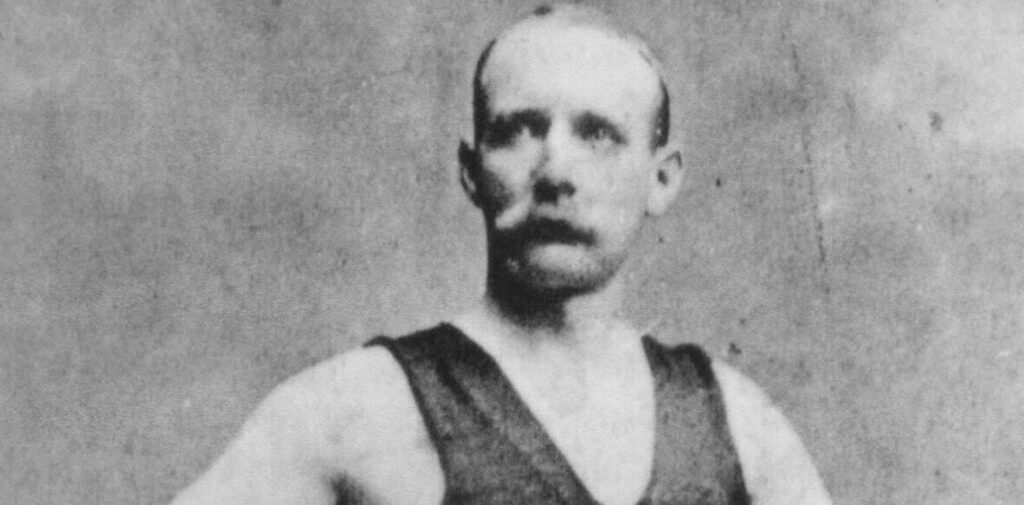
Captain Matthew Webb (GBR)
Honor Swimmer (1965)
The information on this page was written the year of their induction.
FOR THE RECORD: First swimmer to cross the English Channel, 1875.
Immortality doesn’t come often and once is enough for most swimmers, but not for Captain Matthew Webb, who was first to swim the English Channel in 1875. This feat was an accomplishment of the impossible, according to all estimates up to that time. Many tried but it was 36 years before anyone else (Burgess, 1911) ever made it across the Channel. But Webb was not around to greet No. 2. Webb’s feat lasted 28 years longer than he did. In an effort to bolster lagging attendance for his vaudeville act in 1883, just 8 years after his Channel swim, Captain Webb decided to try for immortality a second time by swimming across the rapids just above Niagara Falls. Once again considered opinions said, “impossible” and this time they were right. Webb is buried at Niagara Falls, Ontario.
But enough of Webb’s failure and on to his accomplishment, a swimming record that stood 59 years until 1934. It all started in 1862 when merchant seaman William Hoskins rode a bundle of straw from Griz Nez to South Foreland. Captain Matthew Webb decided to try it without artificial bouyancy. His first attempt failed, but as his fatigue faded, he planned again. On August 25, 1875, he was successful. The start was from Admiralty Pier at Dover; the time 4 minutes to one on Tuesday, August 24th. With the southwesterly stream running at considerable speed, he ran into difficulty from the start. Although ships had navigated the Channel for centuries, swimming it was a different proposition. Tidal calculations, accurate enough for ship navigation, were by no means accurate for man navigation. Therefore, in comparing Webb’s effort with more recent ones, one great point must be constantly appreciated. Not only was the swimmer attempting a new and colossal task, but so were the boatmen and pilots. The present specialized knowledge has been built on the experience of the preceding years. So, as a result of combined inexperience at that time, Webb was last seen from the English shore being swept vigorously westwards into the main English Channel.
For the main part of the passage, he swam breaststroke at 26 strokes a minute. At one period in mid-Channel, a jellyfish sting temporarily slackened his pace. And for the last two and a half hours he was so exhausted that his stroking became weak and irregular; indeed, much anxiety was felt about his ability to finish at all. His cross-Channel diet was beer, brandy and beef tea. Lack of modern knowledge was in some little way compensated by the lack of modern rules. For instance, he had an attendant lugger and two rowing boats throughout. And at the finish an outsize rowing-boat accompanied him on the weather side to keep the cresting waves from getting at him.
Webb finally reached the Calais sands at 19 minutes to eleven on Wednesday, August 25th. A crowd of thousands massed on the French beach. They gave him a rousing welcome as he was assisted into a horse-drawn vehicle in shallow water and taken to recuperate. In England, of course, he became one of the greatest heroes that has ever arisen in peacetime. The whole nation was depressed 8 years later when, at the age of 35, Captain Webb drowned. He went over Niagara Falls, but not successfully.
Note: A special thanks to Cdr. Gerald Forsberg for excerpts from his book, Long Distance Swimming.
Swedish Olympian Glen Christiansen to be inducted into MISHOF

This lifelong swimmer was very reluctant to water at first, and then other interests delayed him fully immersing himself in the sport until he was 13, but within a few months he was demonstrating his full potential.
Glen Christiansen was coached by 1960 Olympian, Berndt Nilsson and once together, his talents grew. Within a few years, he was competing at national championships, setting national records and eventually he made the Swedish National Team, competing in European and World Championships, until ultimately, the 1980 Olympic Games in Moscow, where he finished 11th in the 200-meter breaststroke. The following year, 1981, Glen posted the fastest Short Course Meters time in the world in the 100 breaststroke in 1:01.60.
Just three years after leaving elite swimming, he returned to his winning ways as a Masters swimmer. He competed in the very first FINA Masters World Championships, in Tokyo, walking away with three gold medals and a world record in the breaststroke events. Over the course of nine age groups, 25 to 69, Glen’s Masters resume has been outstanding.
Since 1986 he has set 24 Masters world records, winning 15 gold medals in FINA World Championships. In 2000, the men’s high point award at the Swedish Masters Championships was named after Glen’s honoring his success as a Masters swimmer.
In 2013, Glen’s Masters career was interrupted by a stroke he experienced which caused him to fall down a flight of stairs, only to awake three weeks later in the hospital. Paralyzed on the left side, he had to re-learn how to speak, eat, and do everything again properly. Of course, swimming became Glen’s measure of recovery and just six months later he won a 2.5km open water race.
In 2022, Glen won his first international title in the 200 butterfly at the European Masters Championships. “New world records are coming slowly” Glen says, but he is “just happy to be alive and back into swimming.”
Today, Glen runs his “Swimmers without Borders” camp on the beautiful island of Tenerife, coaching and spreading his swimming wisdom to people of all ages. Christiansen will be inducted, Friday, October 4, 2024 in Fort Lauderdale at the Westin Fort Lauderdale Beach, during the ISHOF Honoree Induction weekend. If you cannot join us, please consider making a donation.
To make a donation, click here: https://ishof.org/donate/
The Masters International Swimming Hall of Fame Class of 2023 Honorees include:
HONOR SWIMMERS:
Clary Munns (AUS)
Glen Christiansen (SWE)
Tom Wolf (USA)
HONOR DIVER: Tarja Liljestrom (FIN)
HONOR SYNCHRONIZED SWIMMER: Lizzi Jakobsen* (USA)
HONOR WATER POLO: Jose Luis Martin Gomez (ESP)
HONOR CONTRIBUTOR: Nadine Day (USA)
The Masters International Swimming Hall of Fame Class of 2024 includes:
Honor Swimmers:
Lars Frölander (SWE)
Daniel Gyurta (HUN)
Dana Vollmer (USA)
1976 Women’s 4×100 Freestyle Gold Medal Relay Team (USA)
(Includes Shirley Babashoff, Wendy Boglioli, Kim Peyton*, Jill Sterkel)
Honor Divers:
Alexandre Despatie (CAN)
Yulia Pakhalina (RUS)
Wu Minxia (CHN) 2023
Honor Artistic Swimmer:
Virginie Dedieu (FRA)
Honor Water Polo Players:
Carmela “Lilli” Allucci (ITA)
Vladimir Akimov* (USSR)
Honor Coach:
Dennis Pursley (USA)
Honor Contributor:
Dale Neuburger (USA)
ISHOF 59th Annual Honoree Induction weekend
~ HOTEL INFORMATION ~
Host Hotel: Westin Fort Lauderdale Beach Resort & Spa
To make reservations click here: https://book.passkey.com/e/50757008
321 North Fort Lauderdale Beach Blvd., Ft. Lauderdale, FL 33316 (954) 467-1111. Special ISHOF Guest Rate of $229 per night,
Additional Hotel Option:
Courtyard Marriott Fort Lauderdale Beach
Book your group rate for Honoree Ceremony
440 Seabreeze Blvd., Ft. Lauderdale, FL 33316 (954) 524-8733
Special ISHOF Guest Rate of $169 – $199 per night
~ TICKET INFORMATION ~
Friday, October 4, 2024: Includes:
The Masters International Swimming Hall of Fame (MISHOF) Induction Ceremony
The ISHOF Aquatic Awards presented by AquaCal and
The ISHOF Specialty Awards
Click here to purchase tickets: MISHOF/AWARDS
Saturday, October 5, 2024: Includes
The 59th Annual International Swimming Hall of Fame Honoree Induction Ceremony
The Al Schoenfield Media Award and
The 2024 ISHOF Gold Medallion Award
Click here to purchase tickets: INDUCTION
#ISHOF #WorldAquatics #CityofFortLauderdale #USMS #Masters #USASwimming #AquaCal #Olympics #SwimmingHallofFame #SwimmingWorld #2024Paris
ASCA Announces Finalists for Coach of the Year Award

by DAN D’ADDONA — SWIMMING WORLD MANAGING EDITOR
21 August 2024, 02:18pm
Five coaches who had numerous medalists at the 2024 Paris Olympics have been named finalists for the prestigious ASCA George Haines Coach of the Year award. They are Bob Bowman, Todd DeSorbo, Dave Durden, Greg Meehan and Anthony Nesty.
This award is presented annually to the individual whose coaching effectiveness has contributed the most towards American swimming excellence on the World stage. Only coaches whose American athletes achieved medals at the 2024 Paris Olympics were considered for this award. The last three winners are Dave Durden, Anthony Nesty and Gregg Troy.
The 2024 ASCA George Haines Coach of the Year winner will be revealed on September 5 at the Hall of Fame Induction and Awards Celebration during the ASCA World Clinic at the Rosen Centre Resort in Orlando, Florida.
Team GB athletes unveil Golden Train in time for Paris 2024
About the ASCA finalists:
Bob Bowman, Director of Swimming and Head Coach of the Men’s Team at the University of Texas.
Todd DeSorbo, Head Coach at the University of Virginia, was the head coach of the Women’s US Olympic team.
Dave Durden, Head Coach at the University of California Berkeley, was an assistant coach for the US Olympic Team.
Greg Meehan, Head Coach of the Women’s Team at Stanford University and assistant coach for the US Olympic Team.
Anthony Nesty, Head Coach at the University of Florida, was the head coach of the Men’s US Olympic team.
The ASCA Coach of the Year has been awarded since 1961. The award is named after coaching great, George Haines, and has been awarded to other trailblazers in the profession such as Doc Counsilman, Eddie Reese, Bob Bowman, Jon Urbanchek and many others.
— The above press release was posted by Swimming World in conjunction with ASCA. For press releases and advertising inquiries please contact Advertising@SwimmingWorld.com.
The Olympics Are Over: Where Will the World’s Top Swimmers Compete Next?

22 August 2024, 09:36am
The Olympics Are Over, So Where Will The World’s Top Swimmers Compete Next?
The 2024 Olympic Games are over. For three years, swimming fans waited to watch some of the biggest stars in the sport battle it out in the iconic La Défense Arena, and the results were certainly worth the wait. Fortunately, the swimming action will continue in just a few days with Paralympic swimming, but once the Paralympics are over, when is the next time that we will see the world’s top swimmers compete on the national or international stage?
Here are the next high-level meets taking place domestically and worldwide for the remainder of 2024 and the entirety of 2025.
2024
World Aquatics Swimming World Cup (SCM)
Stop One
Location: Shanghai, China
Date: October 18th–20th, 2024
Stop Two
Location: Incheon, South Korea
Date: October 24th–26th, 2024
Stop Three
Location: Singapore, Singapore
Date: October 31st–November 2nd, 2024
The World Cup is the first big international meet after the Paris Olympics, and multiple high-profile swimmers will compete. The World Cup will feature a short-course meters format, and consist of three “stops” or meets that will take place in Eastern Asia. Swimmers will compete at each stop for three days before moving onto the next location. Heats will be held in the morning session, and finals will be held in the evening session at all three stops.
Toyota U.S. Open (SCY)
Location: Greensboro, North Carolina
Date: December 4th–7th, 2024
The Toyota U.S. Open is one of the more unique meets on the 2024 schedule. This meet is different, as swimming fans can watch their favorite professional swimmer compete in short-course yards instead of the traditional long-course meters. National and international swimmers are known to race at this meet, which will be held in Greensboro, North Carolina, at the beginning of December.
World Aquatics Swimming Championships (SCM)
Location: Budapest, Hungary
Date: December 10-15, 2024
The upcoming World Aquatic Swimming Championships are slated to take place in Budapest, Hungary, at the famous Duna Arena. This meet will also be the first time that Hungary will host the World Championships in a 25-meter pool. The championships will last six days, with heats in the morning session and semifinals and finals in the evening session.
Speedo Winter Junior Championships (SCY)
Location: East–Greensboro, North Carolina; West–Austin, Texas
Dates: December 11-14, 2024
The fastest 18-and-under athletes will race at the Speedo Winter Junior Championships in the middle of December. These young swimmers will look to leave their mark on the national stage and be recognized as upcoming stars. This meet will have two locations: the Eastern United States will race in Greensboro, North Carolina, while the Western half will race in Austin, Texas.
2025
TYR Pro Swim Series (LCM)
Stop One
Location: Westmont, Illinois
Date: March 3rd-8th, 2025
Stop Two
Location: Sacramento, California
Date: April 2nd-5th, 2025
Stop Three
Location: Fort Lauderdale, Florida
Date: April 30th-May 3rd, 2025
The 2025 season kicks off with three TYR Pro Swim Series stops. The electric Westmont, Illinois, stop is up first at the beginning of March, followed by a stop in Sacramento, California, at the beginning of April, and the final stop in Fort Lauderdale, Florida, to close out April and kick off May. Many national and international swimming stars are expected at the TYR Pro Swim Series meets.
National Championships (LCM)
Location: To be determined
Date: June 3rd-7th
The National Championships are back in 2025. This meet is nearly as competitive as the U.S. Olympic Trials. American swimmers will compete for a spot to represent Team USA at the World Aquatics Championships later in the summer. This meet is set to take place from June 3rd-7th, 2025, but the location is yet to be determined.
2025 World Aquatics Championships (LCM)
Location: Singapore
Date: July 11th-August 3rd, 2025
The 2025 World Aquatics Championships will be one of the most anticipated meets of the 2025 season, especially since this meet takes place a year after the Paris 2024 Olympics. This meet may feature new, rising swimmers or well-known veterans and give the world a perspective on where some top athletes stand in their careers. These World Championships will take place in Singapore and will feature water polo, diving, artistic swimming, open water swimming, and high diving as well.
Speedo Junior National Championships (LCM)
Location: Irvine, California
Date: July 30th-August 3rd, 2025
The summer Speedo Junior National Championships feature long-course racing instead of short-course yards. The meet will be held in Irvine, California, beginning at the end of July and concluding at the beginning of August. Summer Juniors is highly competitive, and because this meet is contested in the traditional Olympic pool, young swimmers have a chance to show their skills early in the next quad.
TYR Pro Championships (LCM)
Location: Irvine, California
Date: August 5th-8th, 2025
The TYR Pro Championships will close the summer 2025 season. It will occur shortly after the Speedo Junior National Championships and be located in Irvine, California, which has hosted numerous international and national meets. Many professional and collegiate swimmers will be present at this meet.
Toyota U.S. Open (SCY)
Location: To be determined
Date: December 4th-7th, 2025
In December 2025, the world’s fastest swimmers will have another chance to showcase their short-course swimming. The Toyota U.S. Open is back and will continue to be one of the most unique meets on the schedule. The location of the meet is yet to be determined.
Speedo Winter Junior Championships (SCY)
Location: To be determined
Date: December 10th-13th, 2025
Again, the fastest 18-and-under athletes can compete at the Speedo Winter Junior Championships in 2025. The locations for the meet have yet to be determined, but they will take place in the middle of December, just like in 2024. These meets are excellent opportunities for young swimmers to race against the best and gain attention from the swimming world to see who has the potential to be the next rising star.
After Olympic Dominance, Leon Marchand and Summer McIntosh Secure in Positions as World’s Best

Leon Marchand — Photo Courtesy: Giorgio Scala / Deepbluemedia / Insidefoto
by DAVID RIEDER – SENIOR WRITER
19 August 2024, 05:06am
After Olympic Dominance, Leon Marchand and Summer McIntosh Secure in Positions as World’s Best
Hundreds of swimmers competed over the nine days at La Défense Arena, all of whom had poured years of training and focus into ensuring they would be at their best for the Paris Olympics. Fifty-seven departed with at least one piece of individual hardware to commemorate a top-three finish, but all carried a sense of finality. The Olympics had been the target, not a stepping stone to some other competition, and the long buildup was over.
Of course, most will return to training soon enough for further cracks at international competition, but it will be four more years until another event comes around with the prestige of the Olympics. History tells us at least half of the headliners from Paris will have declined precipitously by the time the Games of the 34th Olympiad open in Los Angeles while younger swimmers who were not in contention or not even qualified for this year’s Olympics will be winning medals.
At the Olympics, more than any other meet in the world, results matter. Slow pool, lackluster winning times, fewer world records than expected? Who cares? Show up to perform, and your legacy in the sport is secure forever. Whereas World Championships performances can be scrutinized to project swimmers’ results in future years, the Olympics is the endgame.
Such circumstances breed pressure, and the swimmers who most successfully navigated that pressure deserve credit as the best swimmers of the Olympics and best swimmers in the world. Indeed, no one with even a rudimentary understanding of the sport would deny that Leon Marchand and Summer McIntosh are the clear No. 1 choices for their respective genders right now.
Marchand, 22, captivated France and the world with his four-gold-medal performance, becoming only the third man and fourth swimmer overall to win that many individual events in a single Olympics. He was just short of his own world record in a dominant 400 IM triumph while he became the second-fastest performer ever in his three other races. Marchand then added a fifth medal when his breaststroke split helped France to the country’s first-ever medal in the men’s 400 medley relay.
Summer McIntosh — Photo Courtesy: Giorgio Scala / Deepbluemedia / Insidefoto
Unlike her French counterpart, McIntosh was not perfect individually, coming in just behind Ariarne Titmus in the 400 freestyle before dominating the 400 IM and defeating stellar competition to win the 200 butterfly and 200 IM. McIntosh was unable to add any relay medals as all three Canadian women’s relays that she anchored fell to fourth. Still, she secured her swimmer-of-the-meet status with a win over two other individual gold medalists, Kate Douglass and Kaylee McKeown, in the 200 IM on day eight of competition.
Notably, the argument is not that McIntosh has the top résumé of any female swimmer who competed in Paris. That distinction still belongs to American freestyle great Katie Ledecky while Swedish sprinter Sarah Sjostrom is not far behind, but in the women’s meet this time around, McIntosh’s supremacy could not be questioned, particularly after her dramatic final victory.
Post-Paris, the contenders will be coming for perches atop the sport currently occupied by Marchand and McIntosh… but not yet. Not as most competitors enjoy their vacations and celebrations while only beginning to plot their returns to training. Not with the first opportunity to dethrone the current king and queen of the sport a long way off.
Yes, there will be other meets of significance in the coming months. Select 18-and-under swimmers will continue their quest toward Los Angeles this week as the Junior Pan Pacific Championships get underway in Canberra, Australia. A collection of experienced and fresh talent will gather in Budapest in December for the Short Course World Championships, with further international gold medals on the line. As usual with Short Course Worlds, particularly when held so close after the Olympics, we will not know which Olympic stars will choose to jump back in so soon.
Budapest will surely produce some exceptional performances, but because of the likely-limited participation roster and the 25-meter format, we will not use the meet to judge the best swimmers in the world. No, Marchand and McIntosh will remain in those positions all winter and spring, at the very least until the next global long course competition, with the World Aquatics Championships in Singapore scheduled for July 2025.
That’s the next meet when results will truly be judged for their placements, rather than as a lead-in to something bigger. The top swimmers in Singapore will then become the world’s best for that moment, even if World Championships medals and golds lack the prestige provided in the Olympics. From that moment on, the chase will be on for Los Angeles.
2007 ISHOF Honoree, Ratko Rudic documentary premiers at the OLY House Film Festival in Paris

“It Happened – Ratko Rudić premiered recently at the OLY House Film Festival in Paris. This is the true life story of Hall of Fame coach Ratko Rudic, produced by Dejan Aćimović.
The 115-minute film tells about the journey of the most trophy-winning water polo expert in the world, from his beginnings as a player in Zadar to his fantastic coaching results. He played his first matches for Zadar, won his first trophy under the cap of Split’s Jadran, and also marked a significant part of the Belgrade Partizan era. Rudić made 297 appearances for the water polo national team of Yugoslavia and won seventeen club titles and nine national team medals.
However, as a coach whose career spanned 39 years, he was even more successful. He won as many as 39 medals, 16 of which were gold, which makes him the best Croatian coach of all time in all sports. He is also the second most successful coach in the history of all sports after Brazilian volleyball specialist Bernardo Roche de Rezende, who has 52 medals.
At the Olympic Games, world and European championships, he won 16 medals, ten of which were gold. He won medals leading five different national teams – Yugoslavia, Italy, USA, Croatia and Brazil. He is the only water polo coach who won four Olympic gold medals and the only one who won a medal at the Olympic Games four times in a row, three times in a row.
With Yugoslavia, he won two Olympic and one world gold. He was an Olympic winner, European and world champion with Italy. He repeated the same with the Croatian national team. He led the USA national team to gold at the Pan American Games, and Brazil to silver at the same competition.
Currently the film is viewable online on the e-OLY House platform, which is open only to Olympians. An english language and USA release date will be announced in the future.
Decades-long Volunteer and Masters Superwoman, Nadine Day to be inducted into IMSHOF’s Class of 2023 as Honor Contributor

Nadine Day has devoted the last 25 years of her life to Masters swimming. Her volunteer work began in 2001 when she became the Illinois Local Masters Swimming Committee (LMSC) Sanctions Chair. Attending her first USMS convention a year later, she soon joined several USMS committees, all the while continuing to take on more responsibility within her local MSC. Nadine served as her LMSC’s Vice Chair and subsequently its Chair in addition to balancing the demands of multiple USMS Committee assignments.
In 2005, Nadine was elected to the USMS Board of Directors for the first time. After serving two terms as the Great Lakes Director, she was elected Vice President of Community Services. In 2012, Nadine was elected the youngest President in the history of United States Masters Swimming. During her 16 years as a leader on the USMS Board, Day was involved in numerous task forces and committees. In the late twenty-teens, Nadine was named the United States Aquatic Sports Convention Chairperson, which is no small undertaking. Day and her committee took it over flawlessly from a crew that had been running it for years and years.
Nadine continued serving in leadership positions on committees and international organizations, once off the USMS board. In Nadine’s own words: “To me it’s about giving back to a sport I love and encouraging other adults to love swimming—it’s about providing opportunities for others. Making sacrifices for others is easy when you want our sport to be successful”. Nadine’s contributions to USMS have touched countless lives and helped USMS to grow and evolve.
Nadine has received numerous awards through the years, showing her continued dedication to Masters swimming. She won the USMS Dorothy Donnelly Service Award; in 2015, USMS, gave her the Ted Haartz Staff Appreciation Award and in 2016, she received USMS’s highest honor, the Capt. Ransom J. Arthur M.D. Award. In 2018 Swimming World Magazine named her “One of the 10 Most Impactful People” in Swimming. And lastly, in 2020 United States Aquatic Sports presented Nadine with the Women in Swimming Award.
Nadine Day will be inducted, Friday, October 4, 2024 in Fort Lauderdale at the Westin Fort Lauderdale Beach, during the ISHOF Honoree Induction weekend. If you cannot join us, please consider making a donation.
To make a donation, click here: https://ishof.org/donate/
The Masters International Swimming Hall of Fame Class of 2023 Honorees include:
HONOR SWIMMERS:
Clary Munns (AUS)
Glen Christiansen (SWE)
Tom Wolf (USA)
HONOR DIVER: Tarja Liljestrom (FIN)
HONOR SYNCHRONIZED SWIMMER: Lizzi Jakobsen* (USA)
HONOR WATER POLO: Jose Luis Martin Gomez (ESP)
HONOR CONTRIBUTOR: Nadine Day (USA)
The Masters International Swimming Hall of Fame Class of 2024 includes:
Honor Swimmers:
Lars Frölander (SWE)
Daniel Gyurta (HUN)
Dana Vollmer (USA)
1976 Women’s 4×100 Freestyle Gold Medal Relay Team (USA)
(Includes Shirley Babashoff, Wendy Boglioli, Kim Peyton*, Jill Sterkel)
Honor Divers:
Alexandre Despatie (CAN)
Yulia Pakhalina (RUS)
Wu Minxia (CHN) 2023
Honor Artistic Swimmer:
Virginie Dedieu (FRA)
Honor Water Polo Players:
Carmela “Lilli” Allucci (ITA)
Vladimir Akimov* (USSR)
Honor Coach:
Dennis Pursley (USA)
Honor Contributor:
Dale Neuburger (USA)
ISHOF 59th Annual Honoree Induction weekend
~ HOTEL INFORMATION ~
Host Hotel: Westin Fort Lauderdale Beach Resort & Spa
To make reservations click here: https://book.passkey.com/e/50757008
321 North Fort Lauderdale Beach Blvd., Ft. Lauderdale, FL 33316 (954) 467-1111. Special ISHOF Guest Rate of $229 per night,
Additional Hotel Option:
Courtyard Marriott Fort Lauderdale Beach
Book your group rate for Honoree Ceremony
440 Seabreeze Blvd., Ft. Lauderdale, FL 33316 (954) 524-8733
Special ISHOF Guest Rate of $169 – $199 per night
~ TICKET INFORMATION ~
Friday, October 4, 2024: Includes:
The Masters International Swimming Hall of Fame (MISHOF) Induction Ceremony
The ISHOF Aquatic Awards presented by AquaCal and
The ISHOF Specialty Awards
Click here to purchase tickets: MISHOF/AWARDS
Saturday, October 5, 2024: Includes
The 59th Annual International Swimming Hall of Fame Honoree Induction Ceremony
The Al Schoenfield Media Award and
The 2024 ISHOF Gold Medallion Award
Click here to purchase tickets: INDUCTION
#ISHOF #WorldAquatics #CityofFortLauderdale #USMS #Masters #USASwimming #AquaCal #Olympics #SwimmingHallofFame #SwimmingWorld #2024Paris
Tom Daley Retires After Olympic Career Spanning 16 Years & A Full Set Of Medals

Tom Daley & Noah Williams: Photo Courtesy: Deepbluemedia
by Liz Byrnes – Europe Correspondent
12 August 2024
Tom Daley Retires After Olympic Career Spanning 16 Years & A Full Set Of Medals
Tom Daley has retired from diving after a senior international career that spanned 16 years and brought Olympic, world, European and Commonwealth titles.
The 30-year-old has been winning national titles since 2007 and in March 2008, Daley became the youngest person to win gold at the European Championships in Eindhoven when he claimed the 10m platform title aged 13.
He made his Olympic debut later that year before becoming world champion aged 15 in Rome in July 2009.
Tom Daley: Photo Courtesy: Jim Thurston
Since then, Daley amassed a further three world titles among seven medals, four more European golds and as many Commonwealth titles.
With his appearance at Paris 2024, Daley became the first diver from Great Britain to compete at five Olympics.
There he won silver alongside Noah Williams in the men’s 10m synchro as he claimed his fifth Olympic medal.
The pair replicated their finish at the World Championships in Doha where Daley also won gold as part of the team event.
Olympic Roll Call
Gold: 10m synchro, Tokyo 2021
Silver: 10m synchro, Paris 2024
Bronze: 10m platform, London 2012
Bronze: 10m synchro, Rio 2016
Bronze: 10m platform, Tokyo 2021
Daley has now brought his career to a close, telling Vogue that he’d already made his decision ahead of the Games: “It was emotional at the end, up there on the platform, knowing it was going to be my last competitive dive. But I have to make the decision at some point, and it feels like the right time. It’s the right time to call it a day.”
He also posted to social media, saying: “Thank you, diving ❤️ over and out ❤️”