
(formerly the ISHOF Paragon Awards 1992-2022)
The ISHOF Aquatic Awards, presented by AquaCal are presented for outstanding service and contributions toward advancing the aquatic disciplines of Competitive Swimming, Diving, Artistic/Synchronized Swimming, Water Polo, Recreational Swimming and Aquatic Safety.
Each year, the ISHOF Aquatic Award committees select an individual or company that they feel best meets the criteria of this award. The awards are then presented on the evening before the Honoree induction, as the kick off event to the weekend. The award was originally named the ISHOF Paragon Awards, beginning with the first year the awards started in 1996, and after almost a 30 year relationship, Paragon/Pentair decided to move on. ISHOF decided to change the name to the ISHOF Aquatic Awards and in turn, gained a fabulous new sponsor that same year, 2023, our new partner, AquaCal. We hope to continue our relationship with the wonderful people at AquaCal for possibly the next 30 years of the award. In addition, we thank Paragon and Pentair for their many years of support.

AquaCal® has been the leading swimming pool heat pump manufacturer since 1981, offering a full range of units to meet any heating need. AquaCal® can maintain anything from small above ground pools up to very large commercial facilities. (Currently heating and chilling the City of Fort Lauderdale’s Aquatic Center pools) The chillers, as well as the heat and cool units, can be used to create cold plunge pools for therapy too. Whatever your pool heating/cooling needs, AquaCal® can help!
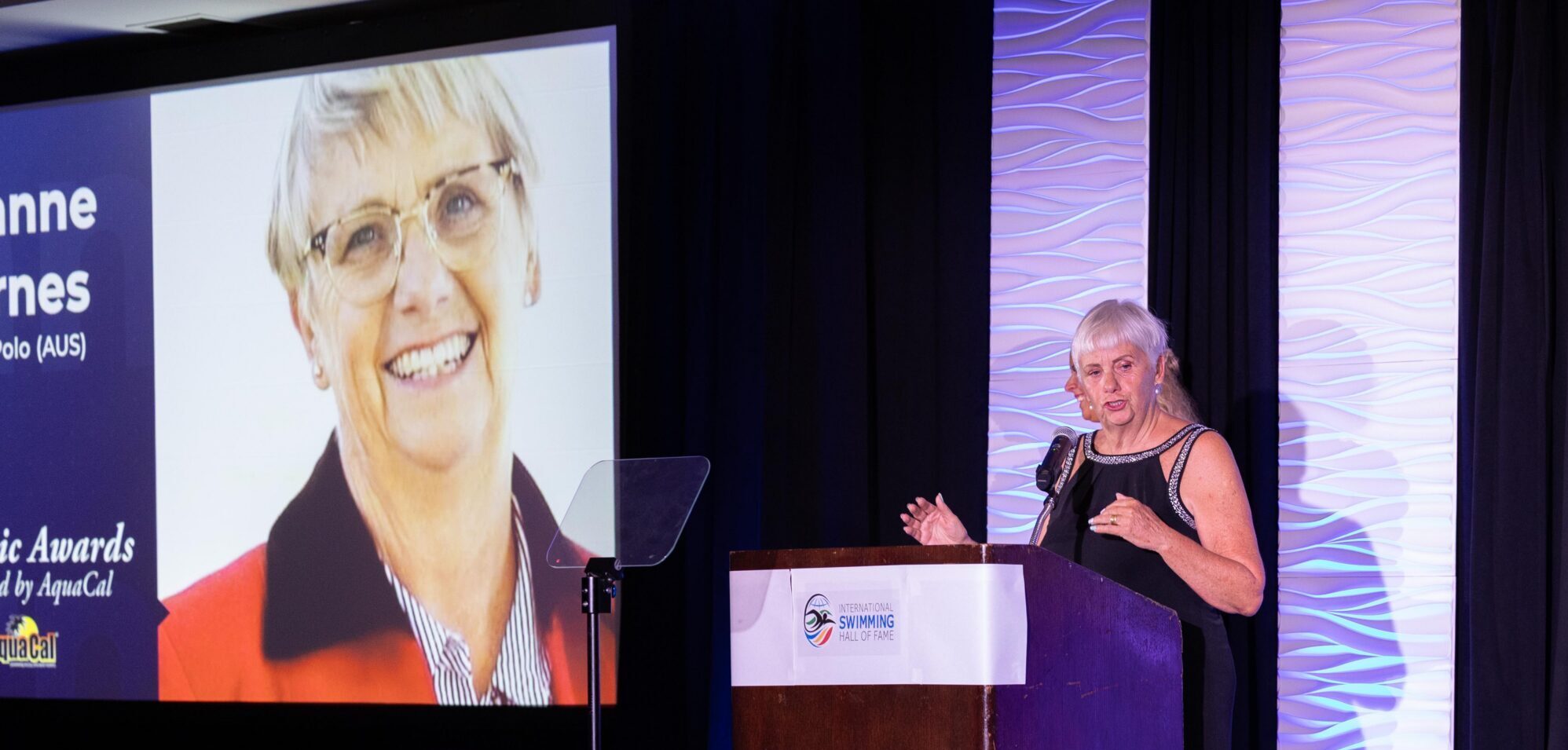
Leanne Barnes commenced playing water polo at the University of Melbourne in 1973 representing her State as player, captain, coach and manager over a period of 13 years. Leanne was selected in the Australian University Team for 5 years, the National Women’s Water Polo team from 1978 to 1982 attending World Swimming Championships in Berlin, the first official Women’s World Water Polo Cup in Merced California in 1979 and World Cups in Bredathe, Netherlands, Brisbane, Australia and a second World Swimming Championships in 1982 in Guayaquil, Ecuador where she also stepped in as coach.
As a player Leanne was recognised with Best and Fairest Player awards at University, State and National levels. She was awarded Blues from both University of Melbourne and Monash University and in 1990 named as one of the University of Melbourne Sporting Champions. On her retirement from the National Team Leanne took on roles as manager of the Australian team from 1983 to 1991. Leanne also managed the Junior National Team at the World Championships in 1999, was head of delegation for the 1999 Women’s Water Polo World Cup and for the Australian Swimming Team (all sports) at World Swimming Championships 2007, Melbourne. It was in 1980 that the fire was lit to work with other international leaders in the sport to gain Olympic representation for women’s water polo
Leanne joined passionate international leaders including Thea de Wit, Jane Hale, Sandy Nitta, Paul Gair, Claude Lavoire, Richard Foster, Olga Pinciroli and others to commence the campaign to achieve inclusion. This group worked tirelessly from 1981with finally the formal establishment of the FINA Technical Water Polo Committee for women’s water polo was established in 1988. Leanne was appointed to represent Oceania. Meetings, deputations, petitions and formal requests were progressed with optimism for inclusion in the 1996 Atlanta Olympics due to the growing recognition of the right of gender equity in sport. When unsuccessful the Australian approach led by Leanne and the in fatigable Pat Jones took up the flame. With support from Water Polo Australia, the Australian Olympic Committee and the organising committee for the Sydney Olympics the work progressed. Demonstrations at airports, meetings, press conferences and finally in 1997 a formal announcement that after 100 years women’s water polo would join the Olympic program. The rest, as they say is history, with Australia winning that first gold medal. Leanne was Head of IOC Relations and Protocol for Water Polo for the Sydney Olympic Games.
Leanne has also made great contributions to the organisational advancements of WPA serving on the Board as Vice President for 14 years, chairing committees, including gender equity, nominations, and history and traditions. Leanne also chaired the inaugural Women’s High- Performance Committee for the 2000 Olympics and the same committee for men and women to 2008. She continues to serve WPA as a long-standing member and current chair of its Hall of Fame Committee.
Leanne has been inducted into the WPA Hall of Fame, was made a Life Member in 2021, received the Harry Quittner Award for Services to water polo in 2010. In the Australian Government Honours she was awarded the Order of Australia Medal for her services to women’s sport, water polo in Australia and internationally and a Public Service Medal for her services to local government particularly in emergency services and resilience. Leanne has had outstanding support from friends and particularly family in this journey with husband Dennis and daughter Amy there every step of the way.
The New Jersey Swim Safety Alliance was formed around a simple but urgent belief: drowning is preventable, and every life is worth protecting. What began as a call to action to open aquatic facilities during the COVID pandemic has grown into a powerful statewide movement. In just a brief time, NJSSA has mobilized more than two hundred partners, launched coordinated seasonal safety campaigns, and published a statewide water safety strategy to reduce drowning deaths in New Jersey by 30% by 2030.
The Founding NJSSA Board Members, all coming from different disciplines in the aquatics industry quickly realized that by joining together outside of each of their silos, could be a more powerful force in making learning to swim a priority once again in New Jersey and to make access to aquatics essential to the lives of all our residents and visitors.
Their mission then became creating an organization that could unify all aquatic organizations into one cooperative, collaborative family. The NJSSA now serves by advocating for viable, safe conduct and enjoyment of the critical life skill of swimming. Their goal is to equip New Jersey residents with information and tools to help keep them and their loved ones safer in and around the water.
Little did the founding Board know that this grass roots effort would turn into a powerful force for legislative efforts and become recognized as the voice of water safety in the state.
NJSSA has been successful in their legislative efforts including the passage of a Every Child A Swimmer Bill, May is Water Safety Month legislation and is close to a bill that would require water safety information to be shared with new parents in hospitals and pediatrician’s offices. Members have been called upon to testify to issues such as life jackets and other aquatic safety issues. NJSSA has taken the lead role in reviewing and revamping the state’s Recreational Bathing Code as well.
Built through strong volunteer leadership and lean operational capacity, the Alliance demonstrates the power of collective action in protecting lives and expanding equitable access to water competency. The Alliance is building not just programs — but infrastructure for lasting change.
The result of three Garden State Water Safety Summits resulted in the New Jersey Water Safety Strategy, making New Jersey the third state in the county to do so. The launch of this Strategy made all the regional news sources further fueling the work of the Alliance statewide.
A remarkable collaboration between the NJ Recreation and Park Association, NJ Swim Safety Alliance and Dolfin Swim Wear has resulted in record numbers of bathing suits and goggles collected statewide and distributed to agencies that provide free and reduced fee swim lessons to children. This grass roots effort has involved waterparks, municipal pools, swim clubs, Y’s, Boys & Girls Clubs, and local non-profits bringing the campaign to a high of over 10,000 bathing suits collected in 2025!
Other programs on the horizon include beach water safety cards, child water safety cards, and backyard pool safety information in multiple languages. Webinars, newsletters, and swim lesson locations finders are all in development by this small but mighty group.
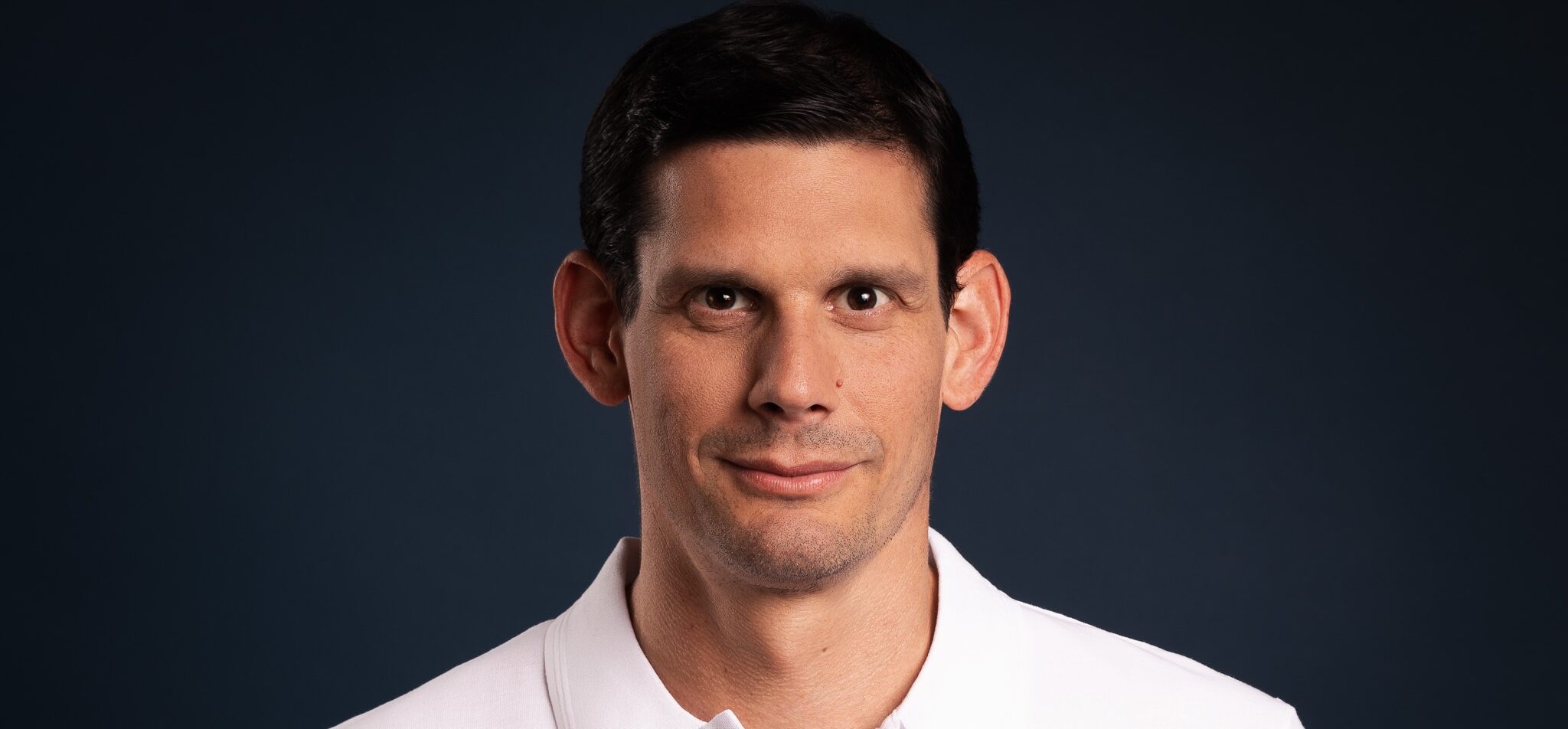
The “man of ideas”, David Szanto has been involved in swimming for nearly four decades now. A former junior national champion swimmer, he transitioned to media at a very young age and quickly became one of Hungary’s favorite commentators and presenters, renowned for his unique tone, attention to detail and creative approach.
He carried over these qualities to his career in sports management. After being Sports Director of the highly successful and innovative 2017 FINA World Championships in his hometown of Budapest, he took over as leader of the International Department of the Hungarian Swimming Federation. Known for his bright character and creative ideas, he has been a well-respected and hard-working leader of the organizing committees for several major international aquatic events, including World and European Championships.
His most remarkable professional achievement came in 2022, when he led the Organizing Committee of the 19th FINA World Championships in Budapest. With only four months to prepare following an unprecedented last-minute relocation of the event, he successfully brought together all key stakeholders – from government partners and national federations to broadcasters and athletes – to deliver a truly world-class championship. The event was completed on time, at the highest professional standard, and widely praised for its organization – a testament to David’s leadership, decisiveness, and operational excellence.
He has showcased his “athletes first” philosophy and innovative vision at several other events, most recently at the very successful and memorable 2024 World Aquatics Swimming Championships. He has gained worldwide recognition for being a thoughtful, creative and attentive leader, who also served on ‘European Aquatics’ Integrity Council and is a frequent speaker at various aquatic-related events. A proud father of Benjamin, Szonja and Domokos Szanto, and married for almost twenty years to his university sweetheart Dora, he is already preparing with his team for the 2027 World Aquatics Championships in Budapest, with the ambition to deliver one of the most memorable events in the history of aquatics.
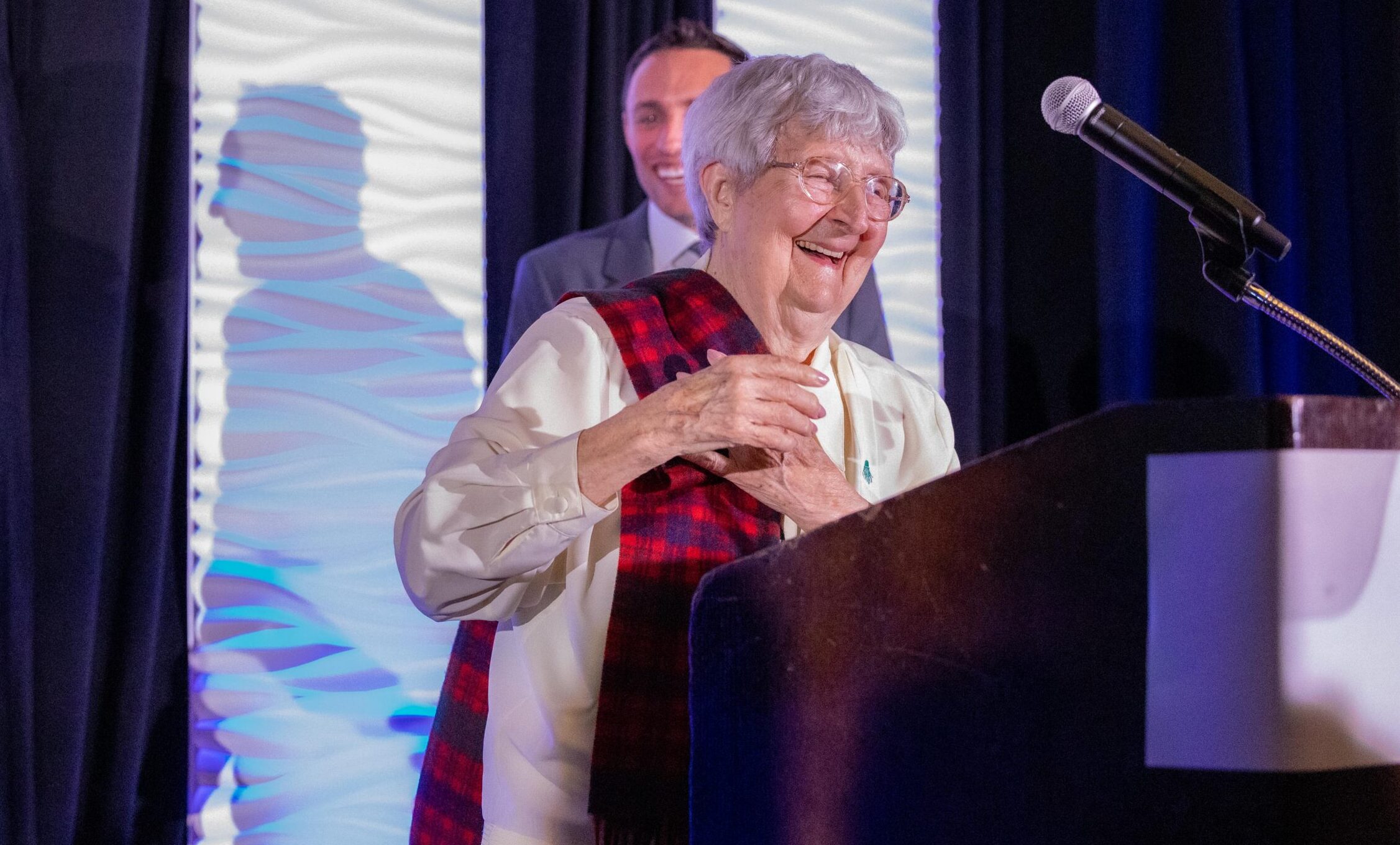
Growing up in the industrial shipbuilding town of Clydebank, Scotland, in the 1930s and ’40s, Mary Black developed a passion for swimming to music inspired by Esther Williams and other Hollywood swimming stars of the era.
At the time, synchronized swimming wasn’t well known in the UK, but Black attended courses at Crystal Palace in London led by English swimmers Dawn Zajac and Jackie Brayshaw. Taking that new knowledge back to her teammates at the Clydebank Ladies Amateur Swimming Club, Black helped found a rhythmic swimming team in the late 1950s that would eventually become the Marlins – Scotland’s first synchronized swimming team.
While the Marlins performed around the country at local and national swim meets, called galas, Black began serving as the first-ever convenor for synchronised swimming for Scotland on behalf of the Scottish Amateur Swimming Association.
The Marlins gained notoriety in the UK and abroad, performing at the Commonwealth Games in Edinburgh in 1970 and at the Six Nations Water Polo tournament in Malta. There, thousands of spectators watched from the citadel walls as the Marlins performed in Valletta Harbour.
Around the same time, Black got more involved in administration of synchronized swimming, attending a seminar in conjunction with the Mexico City Olympics in 1968. Delegates to that session began the lengthy process of influencing FINA and the IOC to include synchro in the Olympic program, and by 1974 Black had become chair of the International Synchronised Swimming Coaching Panel.
A perpetual volunteer, Black supported the development of synchronized swimming in many ways. With the help of her husband, Bill, Black penned the Judges’ Evaluation criteria document, which evolved into the Synchronized Swimming Operation Manual used at all international competition. She also served as a judge at numerous national and international events including regional and national championships and Commonwealth and Pan American Games and an event referee at three Olympic Games – 1984, 1988 and 1992. A near-continuous member of the FINA Technical Synchronised Swimming Committee from 1984 through 1996, Black became the first female president of the Scottish Amateur Swimming Association and the first person to serve two terms.
Outside of the pool, Black taught in the physical education department of the local college in Clydebank and worked with local youth groups. And, for more than 40 years, she taught girls and young women to swim every Tuesday in Clydebank.
Black enjoyed many adventures while traveling for synchronized swimming. She survived an earthquake in Tokyo, an “abduction” in Manilla, and a salsa lesson in Colombia. And no matter how far-flung the destination, she always seemed to bump into someone she’d taught to swim years before.
Black’s love of synchro has provided her a lifetime of lasting joy and warm friendships with colleagues and competitors around the world, all sharing in the common goal of bringing artistic swimming to a wider audience.
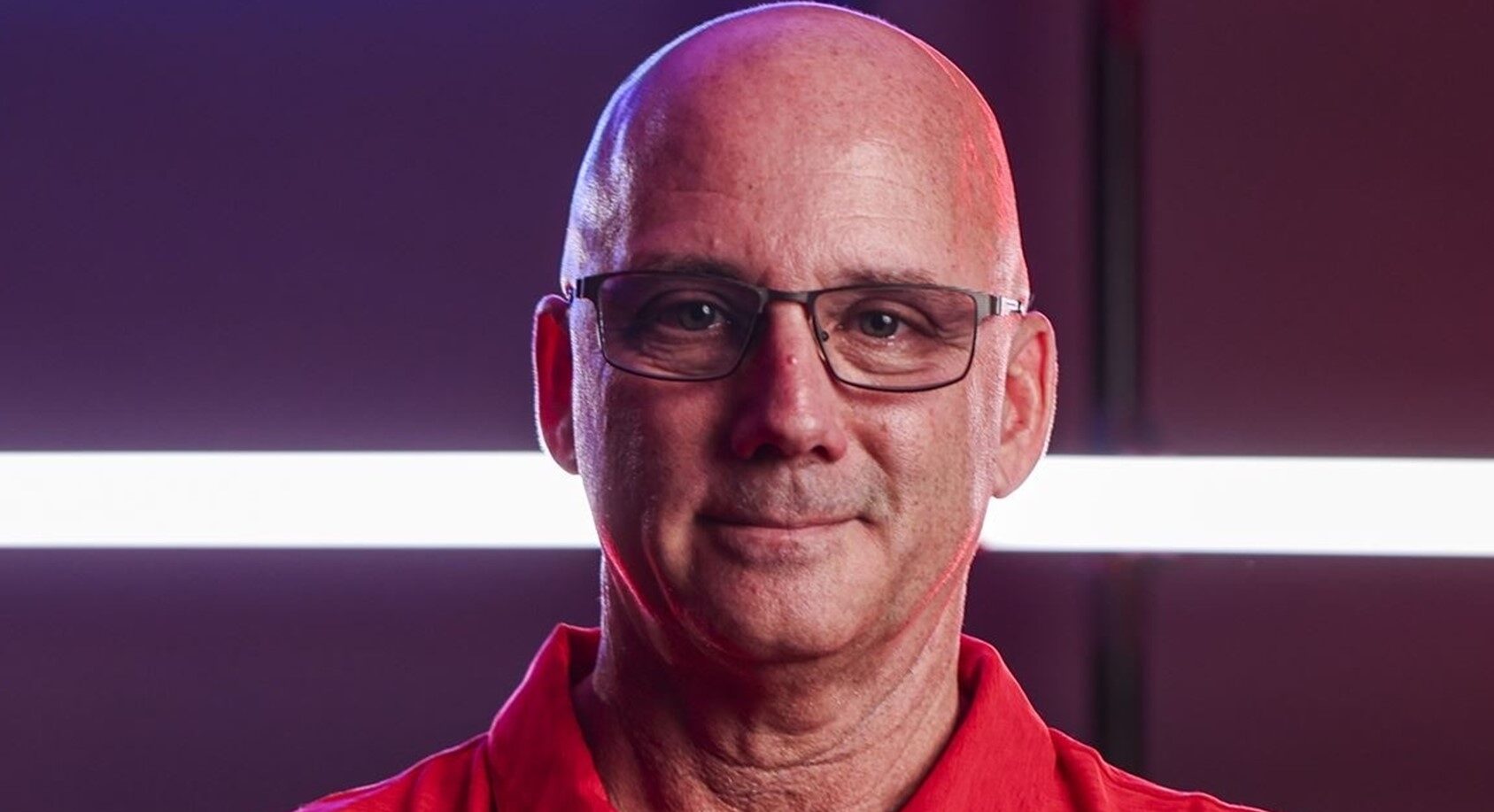
As the architect of one of the most dominant eras in American diving history, Drew Johansen has established himself as a premier figure in the sport on both the collegiate and international stages. Currently the Head Diving Coach at Indiana University, Johansen’s career is defined by his unique ability to develop elite talent and lead Team USA at the highest level of competition.
Olympic Leadership:
Johansen holds the rare distinction of serving as the Head Coach for the U.S. Olympic Diving Team for four consecutive Olympic Games. Under his guidance, Team USA re-emerged as a global powerhouse, securing numerous medals and ending long-standing podium droughts.
Collegiate Excellence at Indiana University:
Since taking the helm at Indiana University in 2013, Johansen has transformed the Hoosiers into a perennial national title contender. His tenure in Bloomington has been marked by a relentless collection of hardware:
A Legacy of Development:
Before his tenure at Indiana, Johansen built successful programs at Duke University, Illinois State, and Florida Atlantic. He is also the founder of the Johansen Diving Academy, where he and his wife, two-time Olympian Jenny Johansen, mentor the next generation of elite divers.
With a coaching philosophy rooted in technical precision and mental resilience, Drew Johansen remains the gold standard for diving excellence in the United States.

The dream of becoming an artist and dancer began in Ana Maria Lobo’s childhood, as music and dance had always been a part of her life. During vacations at her grandmother’s house in the countryside of Minas Gerais, Brazil, she had the freedom to explore her artistic talents and express herself through dance and singing.
Lobo’s sporting journey began in swimming, at Fluminense Football Club, in Rio de Janeiro, as a treatment for asthma. At the age of 15, she witnessed an event that would change her destiny: a pianist played while an athlete performed graceful movements in the pool. In that moment, Ana Maria discovered her vocation for what is now known as Artistic Swimming.
As an athlete, Lobo won a bronze medal at the 1963 Pan American Games, marking the first international participation of a Brazilian team in synchronized swimming. More than a personal achievement, this journey allowed her to introduce the sport to Brazil, coaching top-level teams at Clube de Regatas do Flamengo, Clube Paineiras do Morumby. She would eventually serve as the first coach of the Brazilian national team. Her knowledge and dedication to the sport was so prolific, she was invited by the Brazilian Aquatic Federation to restructure Artistic Swimming in her country. Her coaching credentials extend back to 1964 and even today Lobo is coaching a Masters Artistic Swimming team at Clube de Regatas do Flamengo.
Later, Lobo became a judge for the International Swimming Federation, officiating at the Pan American Games (1989-2005), CONSANAT- Confederación Sudamericana de Natación (1983-2005), FINA/World Aquatics (1991-2005), five editions of the Olympic Games, as well as numerous world and South American championships.
Lobo was a member of the Artistic Swimming Technical Committee at CONSANAT(1991-1998) and was also a member of the World Aquatics Artistic Swimming Technical Committee (1992-1996).
This passion for the sport also influenced her family, with Lobo’s daughter and granddaughter, Cristiana and Maria Clara Lobo, becoming Olympic athletes.
Throughout Ana Maria Lobo’s career as a coach and judge, she has consistently pursued innovation and excellence, and has come to understand the processes, protocols, and hierarchies that govern the sport both in Brazil and internationally, hoping to contribute to the growth and development of Artistic Swimming in the country and around the world.

Craig Hunter was taught to swim by his two elder brothers during a family holiday in the mid-1960s. His maternal grandmother was a keen swimmer and swam with ISHOF Inductee Jack Hatfield in Middlesbrough, England.
Hunter soon joined the local swimming club where he started his competitive career but only in the summer months. His first medal was won in the boys under 14 years 220yds butterfly at the local championships, when he was just 10 years old.
Some years later when competing in an inter-club competition Hunter was placed second in a race, he and others felt he had clearly won. Complaining to the referee, she told him he was not important in the decision-making process, something he was not happy about! He was encouraged by his father to “get involved”. In 1981 he qualified as a judge, starter and timekeeper, and by 1984 was the youngest nationally qualified referee in Great Britain.
Having gained committee experience in his swimming club, he joined the executive committee of his local county association where he soon became the swimming secretary and team manager.
A diagnosis of testicular cancer in 1986 made Hunter more determined to get involved and make a difference in swimming, sports management and leadership.
In 1989 he undertook his first international team management role (as GB team manager) at the FINA Swimming World Cup, the team featured Olympic medallists and swimmers older than he was! This was the start of his British team management career which spanned 18 years becoming the first professional manager taking teams to Olympic Games in 2000 and 2004 as well as numerous World and European Championships. During this time, he was also the secretary of the technical swimming committee for Great Britain.
In 2007 he joined the Board of British Swimming as an independent director, a role he held until 2017. He was responsible for leading the review of the British swimming team’s disappointing performance at the London 2012 Olympic Games, working with Hall of Fame coach Bob Bowman.
Recognising his organisational and leadership skills, the British Olympic Association appointed Hunter as the programme director of Britain’s Olympic Ambition 2012 preparing athletes and coaches from all sports for the London 2012 Olympic Games. Following the successful roll-out of the programme in Beijing 2008, he was asked to take on the role of Chef de Mission of the England team for the 2010 Commonwealth Games with a team of 500 athletes and support staff. This proved to be one of the most challenging sporting events ever held and at the same time, truly memorable.
Hunter was appointed the Chef de Mission of the British Paralympic team for London 2012. Leading Britain’s largest-ever Paralympic team, he introduced Olympic ideals and standards into Paralympic sport with the team winning 120 medals, finishing third in the medal table.
During this time, he had joined the European Aquatics (formerly LEN) technical swimming committee as well as re-joining the FINA swimming referees list which saw him regularly refereeing championships in Europe and officiating on the world stage. He became the Vice Chairman in 2016 and became Chairperson in 2020, a role he continues to hold.
Following his role as an international technical official at the Rio 2016 Games, Hunter was appointed to the World Aquatics (formerly FINA) technical swimming committee as a member in 2017. He was a referee at the Tokyo 2020 Games, following which he became Vice Chair of the TSC. In 2022, following the retirement of Carol Zaleski, he became the TSC chairperson, a role he currently holds.
He is passionate about fairness for athletes, encouraging the wider use of video judging at elite swimming competitions, as well as encouraging and mentoring swimming officials to be the very best.
Hunter has been with his supportive and understanding partner Nick for over 35 years enjoying life in both London and skiing in the French Alps.

Bret B. Bernard and his twin sister, learned to swim via the American Red Cross in Newport Beach, California, where they grew up. More interested in surfing, sailing and just having fun, Bret did not compete in swimming until his freshman high school year, when something called water polo caught his attention.
As a player Bernard was a multi-time USA Water Polo, AAU, NCAA and High-School All-American, on a Championship team at all levels. As captain of Corona del Mar high school, it was the only team to ever to win three aquatics (water polo, swimming relays and swimming) championships in the same academic year, his senior year. In college, while at the University of California at Irvine, his water polo team won one NCAA Championship and placed second three times. Bernard played for the Men’s USA National Team for nearly a decade and was an alternate to the 1972 Olympic Games, retiring in 1980 with the boycott of the Moscow Games.
Bernard has been called upon to whistle every major water polo championship in existence, from three editions of the Olympic Games to World Championships, World Cups, to Junior Worlds, and everything in between. Domestically, Bernard has worn the whites for every conceivable USA Water Polo Championship, including Junior Olympics and National Championships. He also officiated numerous collegiate men’s and women’s championships, including an incredible 14 straight Men’s NCAA Championship (final) games and 10 straight for the women.
He has also made great contributions to the organizational advancements of USWP serving and chairing a variety of committees, including finance, law and legislation, and national referees amongst others. Bernard served on USA Water Polo’s Executive Committee for 15 years, served as its Treasurer from 1988-90, Vice-President from 1990-96 and President from 1996-2001. He continues to serve USWP as a long-standing member of its Hall of Fame Committee and special advisor. He has served on the USOC Board of Directors for 14 years, its Finance Committee for six years, and its restructuring committee.
Internationally Bernard was the first and only non-European President of the International Water Polo Referees Association and served for six years as its Vice-President and on its Executive Board for ten years. He also served on the FINA Technical Water Polo Committee for five years.
Bernard was the first director of water polo officials for the NCAA, formulating and serving in that position for five years. Since he has continued to serve water polo as a member of the USWP Technical Committee as well as assisting every men’s and women’s collegiate water polo conference as a TC member and referee’s evaluator for over the last 18 years.
Bernard has been inducted into numerous Halls of Fame, including USA Water Polo, as well as his high school and college, and was honored many years ago with the Bill Smith Award. In recognition of his many contributions to Water Polo officiating, USWP’s highest award (for outstanding refereeing at elite competition levels) was named in honor of him.
Bernard had spent the last two decades in service to non-aquatic endeavors focusing on his two sons, Tanner and Hunter, who he calls “his greatest achievements” and what they have accomplished, the memories they have created and who they have become ~ it’s what he is most proud of.

In 1972, Sue and her husband, Mick, embarked on a remarkable journey by founding their swim club and constructing an indoor facility in Danville, Illinois. Their vision expanded in 1974 with the creation of Nelson’s Swim Supply, a thriving retail and wholesale business specializing in pool, spa, and aquatic equipment.
By 1982, they took another bold step by establishing NSS Inc., a company that provided design, construction, and consulting services to the aquatic industry. In 1994, they achieved a groundbreaking milestone by launching WaterWay Therapy Inc., one of the nation’s first privately owned and Medicare-approved outpatient aquatic physical therapy centers. Their commitment to wellness continued in 2001 with the opening of the Poolside Health & Wellness Center. This vibrant hub housed the USA Swim Club, WaterWay Therapy, and the Swim America learn-to-swim program, serving as a vital community hub for health and wellness.
In 2004, USA Swimming hired the Nelsons to establish a facilities department to support its membership in building new aquatic centers, renovating existing pools, and programming facilities to achieve financial sustainability. They moved to Colorado Springs in June 2004. Sue began working as a Programming Specialist, providing resources and information for members. Mick became the Club Facilities Development Director. There, they created the concept of “The 4 Pillars of a Sustainable Aquatic Facility. In 2005, they created the Build A Pool Conference to help others figure out “what they needed to know” about building and operating an aquatic facility.
In 2020, Mick and Sue retired from USA Swimming and formed Total Aquatic Programming LLC. Recognized in Aquatics International’s “Top Professionals Issue “2022, and they are both CMAHC Ambassadors.
An important role Mick Nelson has also worked on to benefit all of us in aquatics is collecting drowning data from across the country, as part of a longstanding partnership with the National Drowning Prevention Alliance. Mick realized, while attending the NDPA conventions, just how vital drowning statistics were, and that the only place that had the statistics was the CDC. However, unfortunately, the data was already two years old at the time of release. The process of updating this data involves approximately 1,100 person-hours per year, plus the cost for programs and support. New drowning statistics are posted at the beginning of every month, and all data is housed online and is accessible 24/7. Sue says, “It’s also a tool for aquatic programming that we use to show the value of providing adult swim lessons,” noting that adults account for at least 63% of drowning victims. “We can take these statistics to the community to show them that it’s worth spending tax dollars and bonds on supporting aquatics facilities.”
Mick and Sue Nelson have not only influenced the sustainable development of hundreds of pool projects, but their “Save-A-Pool” efforts have kept aquatic facilities in danger of closing viable, increasing the opportunity for recreational swimming across the United States. They provide expert advice to individuals, municipalities, private businesses, and even major public-private projects. The scope of projects they have been involved in is unmatched by anyone in the industry.
The Nelsons have mentored numerous individuals in the industry, held volunteer leadership positions on several boards and advisory councils, presented at dozens of aquatic industry conferences, and consistently nominated others for awards. Their knowledge, wisdom, and guidance are immeasurable. They have continually given back to the aquatic community, and now we are grateful to them.

Lisa Zarda is a passionate advocate for water safety and a transformative leader in the learn-to-swim industry. Since 2017, Zarda has served as Executive Director of the United States Swim School Association (USSSA) and during that time, she has made significant progress in promoting drowning prevention, raising awareness, and advancing the profession of swim education across the country.
Under Zarda’s leadership, USSSA has experienced remarkable growth, but her impact goes far beyond numbers. She has been at the forefront of building national partnerships that elevate the visibility and credibility of swim schools as essential community resources. Her efforts led to the USSSA member directory being featured on high-profile platforms such as the American Academy of Pediatrics (AAP), the Centers for Disease Control and Prevention (CDC), and WebMD—amplifying the reach of vital water safety information to families nationwide.
A champion advocate, Zarda implemented a government relations strategy that united volunteers and lobbyists to support legislative efforts in water safety education. One of her most meaningful accomplishments was working with members of the New York Water Safety Coalition to successfully pass a first-of-its-kind bill to educate new parents on water safety, marking a critical step toward reducing childhood drowning rates.
Zarda, together with numerous volunteers, led the development and launch of a pioneering swim instructor certification program, raising the bar for teaching standards and ensuring instructors are equipped with the skills and knowledge needed to create safer learning environments. She has overseen the delivery of impactful conferences, workshops, and virtual training programs to support continued education and professional development for swim school owners and instructors alike.
She built a professional, transparent, and accountable organizational culture to optimize operations and better serve members. Along with a strong team of board members, this has enabled the Association to remain agile, member-focused, and highly effective—even while operating virtually.
Zarda’s dedication to water safety extends beyond her role at USSSA. She has contributed to national coalitions such as the Aquatics Coalition and Water Safety USA, collaborating with peer organizations to come together on drowning prevention and aquatic education issues. In 2021, she was honored with the Guiding Light Award from USSSA, recognizing her exceptional leadership and lasting contributions to the industry.
She holds a Certified Association Executive (CAE) designation and is a Certified Nonprofit Accounting Professional (CNAP). She earned a Bachelor of Arts in Exercise & Sports Science from Carthage College with an emphasis in Recreation Management and a minor in Business Administration.
Zarda has served in volunteer leadership roles with the American Society of Association Executives (ASAE) and the Arizona Society of Association Executives (AzSAE), and completed a Diversity, Equity, and Inclusion in the Workplace certificate from the University of South Florida.
Lisa lives with her husband and two children in Cave Creek, Arizona. A dive mom herself, she is deeply committed to the life-saving importance of swim education— professionally and personally.