
Fort Lauderdale Aquatic Complex Once Again a World-Record Centerpiece (A List of the Records)
by John Lohn – Editor-in-Chief
04 May 2025
Fort Lauderdale Aquatic Complex Once Again a World-Record Centerpiece
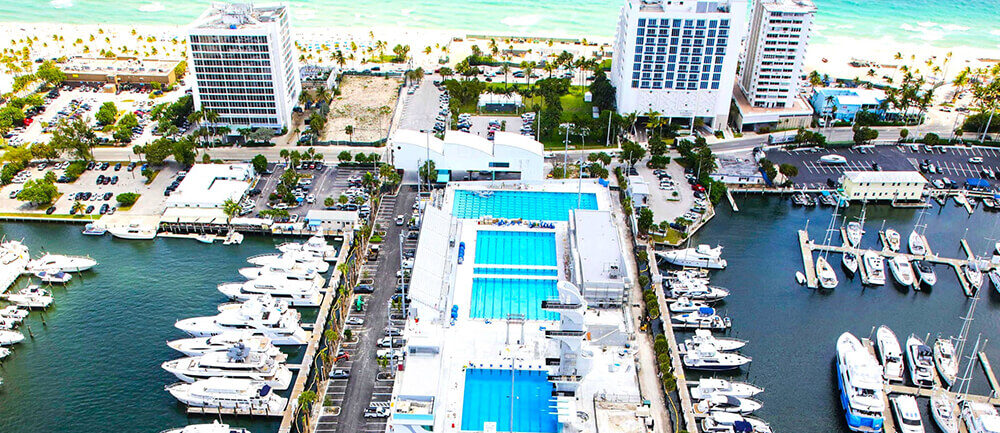
The Fort Lauderdale Aquatic Complex, originally built in 1965, has been no stranger to world records through the years. Some of the biggest names in the sport have competed at the venue since its unveiling, including numerous members of the International Swimming Hall of Fame. Simply, Fort Lauderdale is a destination for elite athletes in the sport, and that fact was on display over the past four days.
The USA Swimming TYR Pro Series was held from Wednesday through Saturday at the renovated facility, with sensational performances highlighting each day of action. Notably, Fort Lauderdale returned to world-record status when Katie Ledecky lowered her global standard in the 800 freestyle to 8:04.12 and Gretchen Walsh twice set world records in the 100 butterfly, first going 55.09, and then 54.60.
Thanks to the efforts of Ledecky and Walsh, the Fort Lauderdale Aquatic Complex now boasts 13 world-record swims in its history. The first record was set by Catie Ball in the 100-meter breaststroke in 1966, with the last before this weekend set by Michael Phelps in the 400 individual medley in 2002. The latter race featured Phelps and Erik Vendt both going under the previous world record.
Here is a look at the 13 world records set at the Fort Lauderdale Aquatic Complex
Catie Ball (100 Breaststroke: 1:15.60) – 1966Pam Kruse (400 Freestyle: 4:36.80) – 1967Andy Coan (100 Freestyle: 51.11) – 1975Mary T. Meagher (200 Butterfly: 2:08.41) – 1979Mary T. Meagher (200 Butterfly: 2:07.01) – 1979Kim Linehan (1500 Freestyle: 16:04.49) – 1979Martin Zubero (200 Backstroke: 1:57.30) – 1991Mike Barrowman (200 Breaststroke: 2:10.60) – 1991Natalie Coughlin (100 Backstroke: 59.58) – 2002Michael Phelps (400 Individual Medley: 4:11.09) – 2002Gretchen Walsh (100 Butterfly: 55.09) – 2025Katie Ledecky (800 Freestyle: 8:04.12) – 2025Gretchen Walsh (100 Butterfly: 54.60) – 2025
May Featured Honoree: Dorothy Poynton (USA) and her Memorabilia
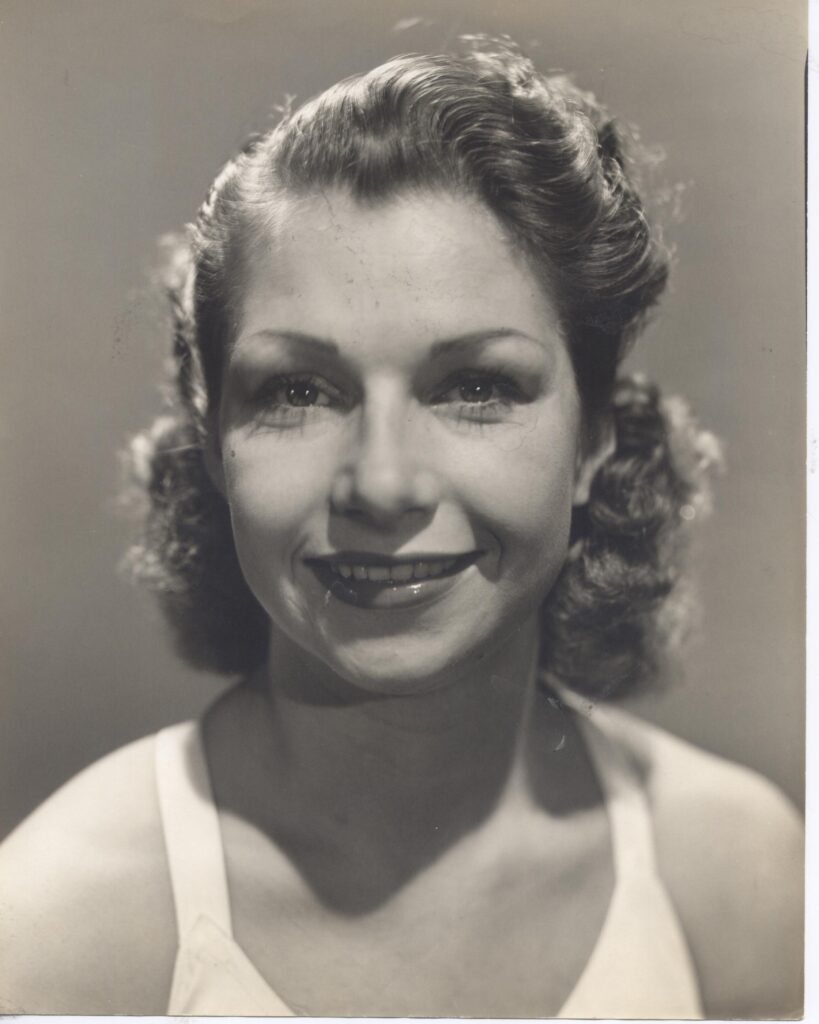
Each month ISHOF will feature an Honoree and some of their aquatic memorabilia, that they have so graciously either given or loaned to us. Since we are closed, and everything is in storage, we wanted to still be able to highlight some of the amazing artifacts that ISHOF has and to be able to share these items with you.
We continue in the new year, April 2025, with 1968 ISHOF Honoree, Dorothy Poynton Honor Diver. Dorothy Poynton donated many fabulous things to ISHOF and we want to share some of them with you now. Also below is his ISHOF Honoree bio that was written the year he was inducted.
Commemorative Medal awarded to Dorothy Poynton from Mayor LaGuardia for 3m Springboard Diving
1932 Participant medal, 1936 Participant medal, 1936 Gold 10m platform, 1936 Bronze, 1932 Gold 10m p
1 Holborow Swimming Club Medal given to Dorothy Poynton from her Coach Frank Holborow
Pro Swim Series Fort Lauderdale: Stacked Field Includes Ledecky, Marchand, Dressel, McIntosh, Douglass, Walsh Sisters (PSYCH SHEETS)

Leon Marchand of France prepares before competing in the Men’s 400m Individual Medley final during the Paris 2024 Olympic Games at La Defense Arena in Paris (France), July 28, 2024.
by Dan D’Addona — Swimming World Managing Editor
24 April 2025
Pro Swim Series Fort Lauderdale: Stacked Field Includes Ledecky, Marchand, Dressel, McIntosh, Douglass, Walsh Sisters (PSYCH SHEETS)
The 2025 TYR Pro Swim Series will make a stop in Fort Lauderdale, Florida, with a meet from April 30-May 3.
The psych sheet has been released for the meet, which is loaded with swimming stars, including Katie Ledecky, Leon Marchand, Summer McIntosh, Caeleb Dressel, Kate Douglass, Lilly King, Hubert Kos, Simone Manuel, Kylie Masse, Penny Oleksiak, Michael Andrew, Shaine Casas, Katie Grimes, Katharine Berkoff, Claire Curzan, Bella Sims, Ilya Kharun and the Walsh sisters.
World record-holder Katie Ledecky headlines the meet and will be joined in the women’s distance events by NCAA champion Jillian Cox.
Ledecky will have a showdown with Canadian Olympic champion Summer McIntosh in the 400 free.
The men’s distance events will feature Olympians Bobby Finke, Aaron Shackell, David Johnston, Kieran Smith and Luke Hobson.
The women’s 100 free might be the most stacked event with 13 Olympians on the list, led by Kate Douglass, Gretchen Walsh and Simone Manuel. They will be joined in the 50 free by Kasia Wasick.
The men’s 100 free is similar, led by Olympians Chris Guiliano, Caeleb Dressel, Hunter Armstrong and Shaine Casas. Dylan Carter and Michael Andrew will add depth to the 50.
The women’s 100 breaststroke will feature Olympians Lilly King, Emma Weber, Douglass and Alex Walsh, while Andrew will lead the men’s event along with international athletes Evgenii Somov and Denis Petrashov. The 50 breaststroke fields will be similar.
The women’s 50 backstroke, now an Olympic event, will feature Regan Smith, Katharine Berkoff, Claire Curzan, Rhyan White and Bella Sims – all U.S. Olympians. If that wasn’t enough, Canadian Olympians Kylie Masse and Taylor Ruck are in the field, too. Armstrong, Hugo Gonzalez, Hubert Kos and Casas lead the men’s event.
Smith and Alex Shackell will lead the 200 butterfly, the two Paris Olympians in the event, while Canada’s Ilya Kharun and U.S. Olympian Carson Foster lead the men’s event.
The women’s 200 free will feature Penny Oleksiak, Claire Weinstein, Ledecky, Sims, Gemmell, Shackell, Manuel, Katie Grimes, Leah Hayes and more.
Hobson, leads the 200 free in a field that has Guiliano, Smith, Foster, Aaron Shackell and Marchand.
Gretchen Walsh, Smith and Douglass will square off in the 50 butterfly. The men’s race will feature Dressel, Kharun, Casas and Andrew. Walsh and Dressel lead the 100 butterfly as well.
The 200 backstroke will see a Smith, White, Curzan, McIntosh and Grimes showdown, while Kos and Gonzalez lead the men’s field.
Marchand leads the field in the men’s 400 IM, 200 IM and 200 breaststroke – by a lot.
Grimes, Emma Weyant and Leah Hayes will square off in the 400 IM.
The women’s 100 backstroke is always stacked. Smith, Katharine Berkoff, Masse, Curzan, White, Ruck and Sims will make sure that trend continues, while Kos, Armstrong and Gonzalez do the same for the men.
Douglass and Alex Walsh will again square off in the 200 breaststroke, while Walsh, Smith and Hayes will do the same in the 200 IM.
Flashback Friday to February 24, 1977 When President Gerald R Ford Was Inducted as an Honorary Member of ISHOF
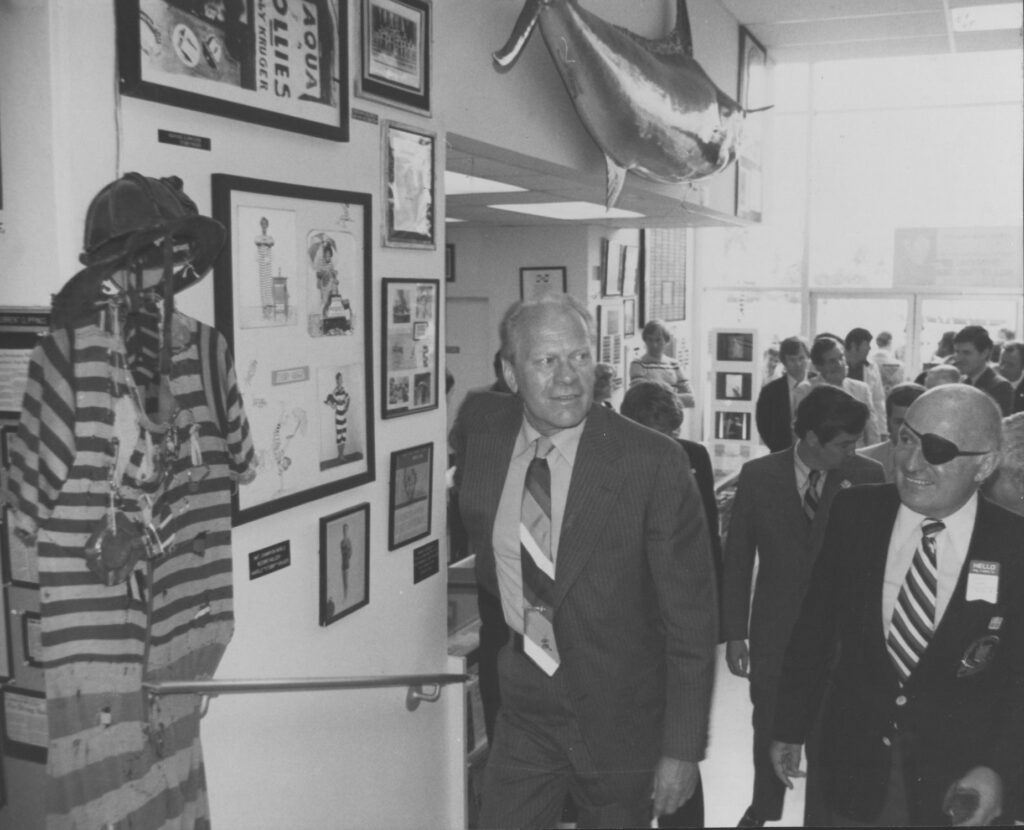
President Ford was an Honorary Director of the International Swimming Hall of Fame (ISHOF) Board of Directors and was a special guest at ISHOF in February, 1977, the year after he left the Presidency.
“You are honored here for your splendid example of swimming for health, exercise and pleasure in the historic tradition of other ‘Wet – Heads of State’ who were accomplished swimmers: John F. Kennedy, John Quincy Adams, Franklin Roosevelt, Winston Churchill, Pierre Trudeau, Julius Caesar, Alexander the Great, Mao Tse Tung, Charlemagne, King Gustav VII, King Louis XI and Prince Albert,” said 1977 ISHOF Executive Director Buck Dawson to President Ford at the meeting.
Just as he took the plunge into politics at an early age, so too did President Gerald Ford take the plunge into the swimming pool. Just as in his many years in politics, he also made swimming a life-long exercise for health benefits
As vice president, Ford swam daily in his Arlington, Va., home pool, and when he rose to the Presidency he was a regular swimmer in the newly-constructed pool on the White House grounds. (The original indoor pool built by FDR, had been removed in the late 1960’s.) The Swimming Hall of Fame contributed the first $1,000 to the fund generated by private donations to rebuild the White House pool in 1975. Widely-admired for his interest in physical fitness and sports, President Ford carried his swming regimen into his life as Citizen Ford.
Some of the things Ford did while he was at the Hall of Fame was sign the ISHOF guest book. He was also given a Picture of the Hall of Fame complex, which was presented by Bob Hoffman. He was also given a lifetime gold pass representnavie of his honerary memebrship into the Hall of Fame by Hall President Dave Roberts. He also watched the 100′ dive by Rick White, captain of the US Acapulco High Diving Team.
Happy Birthday Enith Brigitha!!
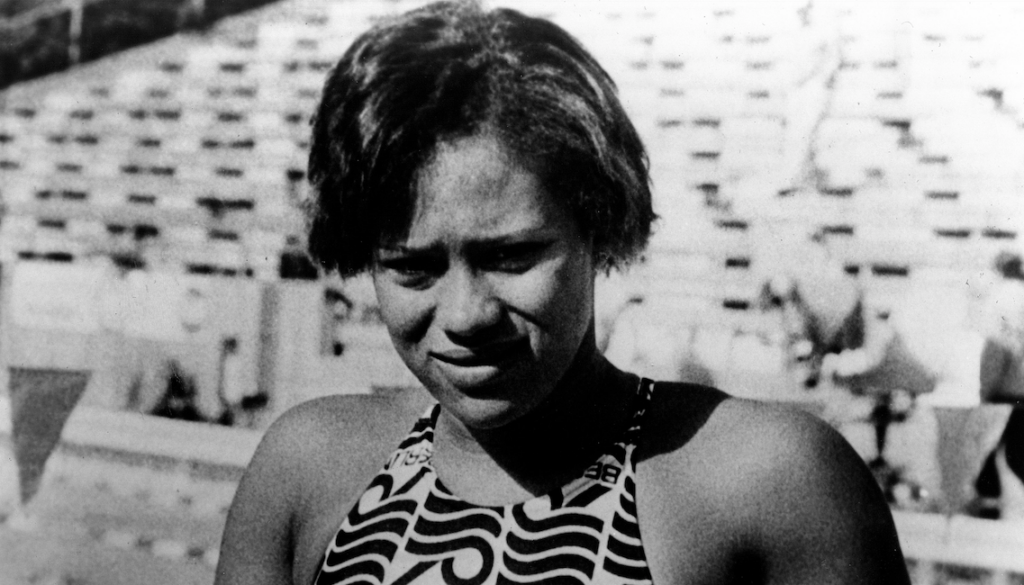
Enith Brigitha (NED)
Honor Swimmer (2015)
FOR THE RECORD: 1972 OLYMPIC GAMES: 8th (100m freestyle), 6th (100m backstroke), 6th (200m backstroke), 5th (4x100m freestyle); 1976 OLYMPIC GAMES: bronze (100m freestyle), bronze (200m freestyle), 4th (4x100m freestyle relay), 5th (4×100 medley relay), 10th (100m backstroke); FIVE SHORT COURSE WORLD RECORDS: 2 (100m freestyle), 2 (200m freestyle), 1 (400m freestyle); 1973 WORLD CHAMPIONSHIPS: bronze (100m freestyle); silver (200m backstroke); 1975 WORLD CHAMPIONSHIPS: bronze (100m freestyle, 200m freestyle, 4x100m freestyle); 1974 EUROPEAN CHAMPIONSHIPS: bronze (100m freestyle, 100m backstroke), silver (200m freestyle, 4x100m freestyle); 1977 EUROPEAN CHAMPIONSHIPS: silver (100m freestyle, 4x100m freestyle).
Enith Brigitha was born on the West Indian Island of Curacao, where she first learned to swim in the Caribbean Sea. By the time she moved to Holland with her mother and brother in 1970, she had become the island’s most promising swimmer.
Two years later, swimming for Coach Willie Storm at the Club Het Y in Amsterdam, Enith qualified for the 1972 Munich Olympic Games and reached the final in four events, and this was just the start of her success. At the 1973 inaugural FINA World Championships in Belgrade, she claimed a silver medal in the 200 meter backstroke and a bronze medal in the 100 meter freestyle. At the 1974 European Championships she won five medals, including four individual medals for the 100 and 200 meter freestyle and backstroke events. In 1975, at the II FINA World Championships in Cali, Columbia, she added three bronze medals to her collection, including individual pieces of hardware in the 100 and 200 meter freestyle.
At the 1976 Olympic Games in Montreal, she earned individual bronze medals in both the 100 and 200 meter freestyle, and at the 1977 European Championships, she won a silver medal in the 100 meter freestyle.
Enith was a genuine superstar in an era dominated by women swimmers from the German Democratic Republic. All told, she set five short course world records and collected 21 Dutch titles in the freestyle, backstroke, medley and butterfly events. She won the Dutch 100 meter freestyle title seven years in a row, was twice named Dutch Sportswoman of the Year – and has the distinction of being the first person of African descent to win Olympic medals in swimming.
Still, her accomplishments have for too long been diminished by the dazzling success of the East Germans. Of the 11 individual medals Enith won at the Olympic Games, World and European Championships – only East German swimmers finished ahead of her in 10 of those events, the one exception being America’s Shirley Babashoff, in the 200 meter freestyle at Munich.
After the fall of the Berlin Wall, Dr. Werner Franke and his wife Brigitte Berendonk, discovered files from the Stasi – the East German secret police – documenting the fact that all of the East German swimmers who finished ahead of Enith Brigitha had been systematically doped, without the knowledge or consent of them or their parents, as a matter of national policy. To the GDR’s rulers, these young athletes were nothing more than pawns in
a global chess game, sacrificial lambs on the altar of East German ideology. Had the world known this at the time, the steroid and testosterone enhanced performances of the GDR’s athletes would have resulted in their disqualification, and Enith’s record would be even more stellar than it is. She also would be recognized today as the first black Olympic champion in swimming history, beating Anthony Nesty of Suriname to the top of the podium by 12 years.
There’s more to life than just swimming, of course. After hanging up her swimsuit and retiring from the sport, Enith married and had three daughters. She moved back to Curacao, where she opened her own swimming school and taught children to swim. Once her daughters were ready to go to University, the family moved back to Holland, where they remain today. Enith says, “With the girls in Holland and with our three grandchildren, it’s not so easy to leave Holland again.”
Happy Birthday Dara Torres!!

Dara Torres (USA)
Honor Swimmer (2016)
FOR THE RECORD: 1984 OLYMPIC GAMES: gold (4×100 m freestyle); 1988 OLYMPIC GAMES: silver (4×100 m medley), bronze (4×100 m freestyle); 1992 OLYMPIC GAMES: gold (4×100 m freestyle); 2000 OLYMPIC GAMES: gold (4×100 m freestyle, 4×100 m medley), bronze (50 m freestyle, 100 m freestyle, 100 m butterfly); 2008 OLYMPIC GAMES: silver (50 m freestyle, 4×100 m freestyle, 4×100 m medley); 1986WORLD CHAMPIONSHIPS (LC): silver (4×100 m freestyle); 1987 PAN PACIFIC CHAMPIONSHIPS: gold (100 m freestyle, 4×100 m freestyle, 4×100 m medley); 1983 PAN AMERICAN GAMES: gold (4×100 m freestyle); SIX WORLD RECORDS: three individual (50m free), three relays (4x100m free, 4x100m medley)
Dara Grace Torres grew up in Beverly Hills, California, where she learned to swim in her family’s backyard pool. At the age of seven, she followed her brothers to swim practice at the local YMCA. During her junior year of high school, Torres moved to Mission Viejo, CA, to train with Hall of Fame Coach Mark Schubert, and in 1983 she broke the world record in the 50-meter freestyle. The next year, while not yet a senior in high school, she won her first Olympic gold medal as a member of the USA’s 4×100 freestyle relay team.
Swimming for Randy Reece at the University of Florida, Torres earned 28 NCAA All-American swimming awards and at the 1988 Olympic Games, she won two silver medals swimming on relays. She finished her collegiate athletic career playing volleyball and took two years off before returning to win her second Olympic relay gold medal in Barcelona, Spain during the summer of 1992.
After 1992, Torres lived what appeared to be a glamorous life. She moved to New York City, worked in television, and as a Wilhelmina model she became the first athlete model in the Sports Illustrated swimsuit issue. Then in the spring of 1999, despite not having trained in a pool for seven years, she decided to give the Olympics one more try.
Training with coach Richard Quick in Palo Alto and Santa Clara, Dara made the Olympic team for the fourth time, at the age of 33. She returned home with five medals, more than any other member of the team, including three in individual events, and retired.
In 2005, while pregnant with her first child, Dara began swimming three or four times a week at the Coral Springs Aquatic Complex, to keep fit. After giving birth to her daughter, Tessa Grace, in April 2006, she entered two Masters meets and posted times that emboldened her to try another comeback. She asked Coral Springs coach Michael Lohberg if he would coach her, and a little over a year later, she won the 100-meter freestyle at the U.S. Nationals in Indianapolis. Three days later, she broke the American record in the 50-meter freestyle for the tenth time – an amazing 24 years after setting it for the very first time. In 2008, Dara qualified for her fifth Olympic team and at the 2008 Beijing Games, she became the oldest swimmer to compete in the Olympics. Dara returned home with three silver medals, including the heartbreaking 50-meter freestyle race where she missed the gold by 1/100th of a second.
In 2009, Dara won the ESPY award for “Best Comeback,” was named one of the “Top Female Athletes of the Decade” by Sports Illustrated magazine and became a best selling author with the release of her inspirational memoir, Age is Just a Number.
Dara continued swimming after recovering from reconstructive knee surgery and with the encouragement of coach Lohberg, she set her sights on making a record sixth U.S. Olympic swim team. When she just missed making the London Olympics by nine-hundredths of a second in the 50-meter freestyle at the 2012 US Swimming Olympic Trials, she announced her retirement with a smile on her face and her six-year old daughter Tessa in her arms.
Olympian, television personality, fitness guru, Queen of the Comeback, best-selling author and mother. Dara Torres is many things to many people, but above all, she is an inspiration.
Today in Swimming History ~ April 11, 1896 ~ Swimming begins at the Athens Olympic Games ISHOF Honoree ~Alfred Hajos wins first Olympic gold medal ever awarded in swimming
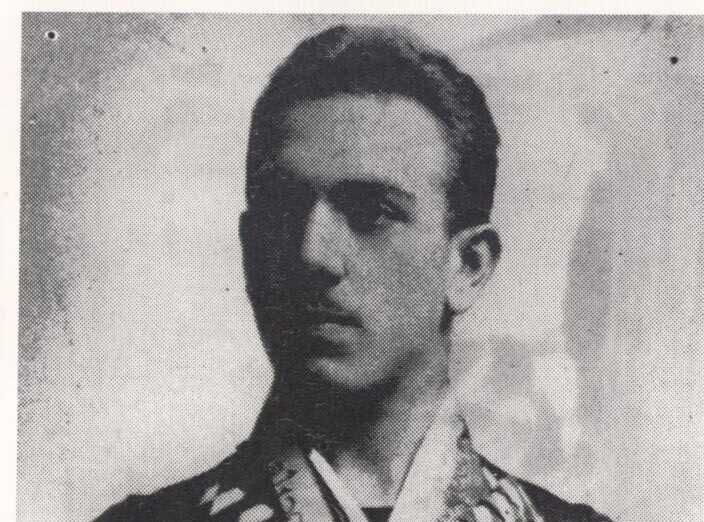
Today in Swimming History…….129 years ago, on April 11, 1896, ISHOF Honor Swimmer, Alfred Hajós of Hungary beats Otto Herschmann of Austria by 0.6s to win the inaugural Olympic 100m freestyle final in a time of 1:22.2 at the first Olympiad in Athens, Greece; He would also take gold in the 1200m on the same day.
Hajos and his Hungarian teammates were one of only three countries that competed in first Olympic Games in swimming. The other two were Austria and Greece. There was a fourth country that competed in the Games, the U.S.A., but they competed in sports other than swimming.
Hajos was inducted into ISHOF in 1966. Read about the rest of his life after that first Olympiad below.
ALFRED HAJOS (HUN) 1966 HONOR SWIMMER
The information on this page was written the year of their induction.
FOR THE RECORD: OLYMPIC GAMES: 1896 gold (100m, 1200m freestyle); first Olympic swim champion. The first modern Olympic swimming champion was Alfred Hajos, a double winner at Athens in 1896. Hajos won the 100 meter freestyle in 1:22.2 beating out the local favorite Chorophas and Herschmann of Austria.
Olympic Swimmers at 1896 Athens Games
The Austrians got back in the swim as Paul Neumann won the 500 meter freestyle over two more Greeks while Hajos was resting up for his second win, the 1200 meter freestyle in 18:22.2. Thus Alfred Hajos took home two of the three gold medals offered in swimming. His teammate, Zoltan Halmay got only a third, but came back in the next four Olympics to be the other Hungarian from the first Olympics to make the International Swimming Hall of Fame. The Austrian Neumann became a prominent U.S. doctor. Hajos stayed in Hungary, survived World War I, and came back to the Olympics 28 years after his first try, this time 1924 Paris, where he won another gold medal. It was in a cultural Olympic art and architectural contest.
Architect Hajos later designed Budapest’s finest competitive swimming pool, club and baths in which Hungary trained its next great Olympic 100 meter champion, Czik Ference in 1936, and its great postwar women swimmers, Szoke, Gyenge, Szekely, Temes and the Novak Sisters.
The Hajós Alfréd National Swimming Pool in 1931… (Photo: Fortepan/No.: 58265)
The National Swimming Pool was opened in 1930. A contemporary newspaper called it the crown of Alfred Hajós’ career.
The National Swimming Pool was commissioned by the Royal Hungarian Ministry for Religion and Education. The minister, Kuno Klebersberg (1875–1932), saw the swimming pool as a vital project.
Happy Birthday Ted Stickles !!!
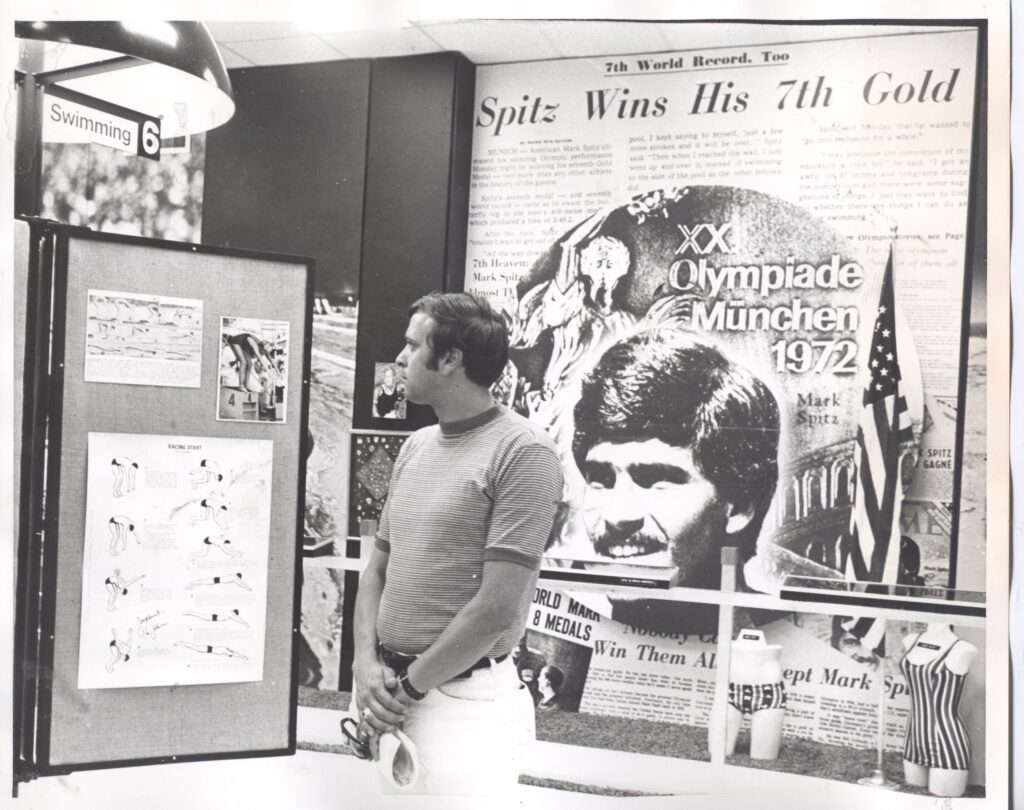
EDWARD “TED” STICKLES (USA) 1995 Honor Swimmer
FOR THE RECORD: 4 WORLD RECORDS: 400m individual medley; 8 U.S. NATIONAL AAU CHAMPIONSHIPS: 200m individual medley, 400m individual medley.
Ted Stickles swam with Doc Councilman’s legendary Indiana University swim team from 1962-1965. At on point during his career, he and his roommate, Hall of Famer Chet Jastremski, held a total of seven world records. Ted dominated the individual medley throughout the early ’60s, breaking a total of nine world records throughout his career.
His mother taught him to swim at an early age, but it was not until he entered high school that Ted began competitive swimming. After enjoying a successful high school career, Hall of Famer Doc Councilman recruited him to his IU team.
At first, Ted felt that Doc had made a mistake in his recruitment, but before long, he surprised himself and began to break unforgettable records. Ted was one of the first people to actually train for the individual medley events. Ted’s ease in moving from one stroke to another and fluidity without breaking stroke helped him be the first person to break two minutes in the 200 yard individual medley and five minutes in the 400 meter individual medley. For a span of three years, Ted Stickles held all of the world records in the individual medley events.
At the height of his career, he developed tendonitis in his elbow, hindering his ability to train. Yet Ted continued to swim and barely missed making the ’64 Olympic team. This was a disappointment because his sister, Terri Stickles, made the team; they would have been the first brother and sister to make an Olympic team.
Ted went on to coach swimming for the University of Illinois and Louisiana State University. Presently, he resides in Louisiana with his wife and two children and is event management director for all athletic functions at Louisiana State University.
Hook’ Em: Texas Captures 16th National Title Behind Hubert Kos, 2023 ISHOF Honoree Bob Bowman and Reassembled Roster
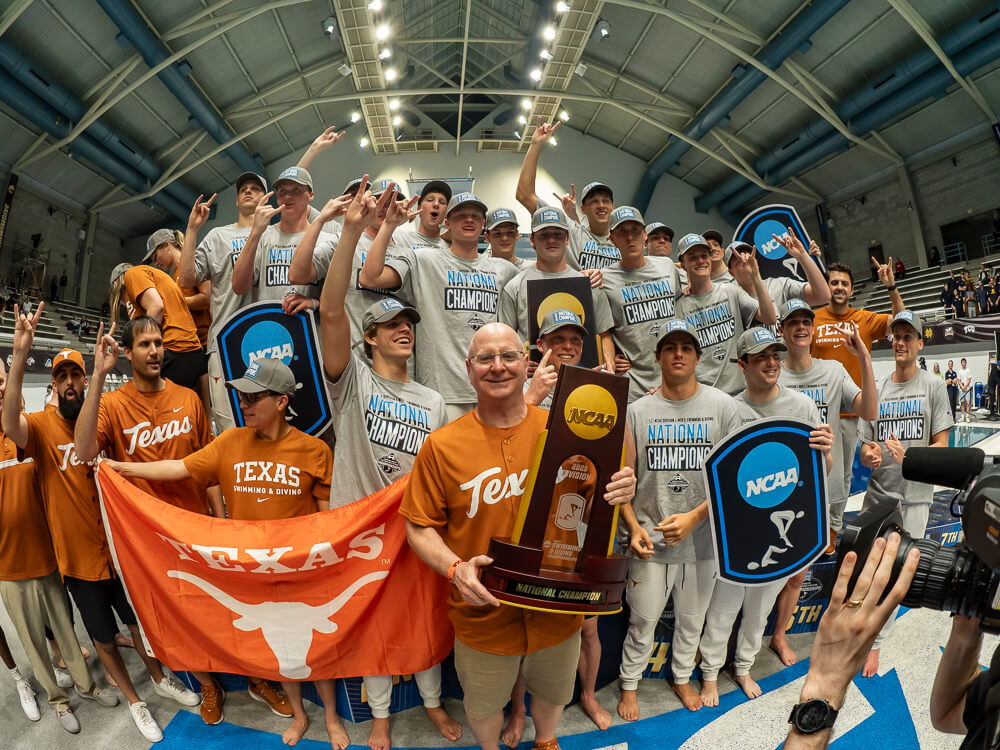
Photo Courtesy: Peter H. Bick
A win in the 200 medley relay started out the Longhorns’ national-title run.
by David Rieder – Senior Writer
30 March 2025
Hook’ Em: Texas Captures 16th National Title Behind Hubert Kos, 2023 ISHOF Honoree Bob Bowman and Reassembled Roster
A seventh-place finish at last year’s NCAA Men’s Championships was a highly unusual result for a University of Texas team so accustomed to finishing atop the table.
During the four decades in which Eddie Reese helmed the program, Texas won 15 national titles, the most all-time by a single swimming program (men’s or women’s) and by a single coach. For 15 consecutive national meets from 2008 through 2023, Texas finished in the top three, and it would have been 16 if not for the cancellation of the 2020 meet by the COVID-19 pandemic.
The 2024 season was an aberration, Reese having already announced his retirement (for the second time) and the program’s future uncertain. Less than 48 hours later, the team announced Bob Bowman would take over, and he would put together a title-winning squad in his first year.
“I’m really proud of this team because they didn’t know me, I didn’t know them. It was a little rocky at first trying to figure everything out,” Bowman said. “I remember in our first team meeting saying that we could contend for a championship. In here, I was like, ‘Maybe next year.’ But then they started getting better and we started swimming some meets and I started seeing some things. We were able to get our roster together a little bit with some firepower. It’s really kind of gratifying to all of those efforts came together, but it’s really all about those guys and their hard work.”
The Longhorns finished this year’s NCAA Championships with 490 points, edging out California by just 19 points. The margin was tiny but actually greater than in Texas’ two previous national wins. Previously, the team won by 17 points in 2021 and by 11.5 points in 2018, with the Golden Bears finishing second on both occasions.
Cal placed second with 471 points, with Indiana’s spirited effort resulting in a third-place finish with 459 points. Florida was fourth (315) while Tennessee grabbed fifth (266.5) thanks to exceptional results in the sprint events. Defending champion Arizona State took sixth (248), followed by Georgia (238.5), Stanford (216), NC State (178) and Virginia Tech (107.5).
When Bowman took over the Texas men’s program, he was coming off putting together the most unlikely of national championship teams in men’s swimming history. Bowman came to Texas after nine years at Arizona State, a program that had been cut and resurrected a decade and a half earlier. During his time in Tempe, the coach lifted the Sun Devils from conference also-ran to national champs. Leon Marchand blossomed into a superstar and eventual Olympic hero under Bowman, and the Frenchman was the catalyst in a 79-point win over Cal.
Hubert Kos — Photo Courtesy: Peter H. Bick
At his next stop, the Hall-of-Fame coach would no longer have the talents of Marchand, now a professional. Only one swimmer from the ASU diaspora joined him in Austin, though it was World and eventual Olympic champion Hubert Kos, who would flourish in his first year racing for Texas, surging to three national titles after never finishing higher than second with the Sun Devils. Kos capped off his meet with a record-crushing performance in the 200 backstroke.
“Obviously it’s two different feelings, but at the end of the day, it’s kind of the same,” Kos said. “Winning is winning, and that’s why we do this sport, to win at the end of the day. So really, really happy with how this meet turned out and so happy for all the guys, because they put in all the hard work. Bob made us put in all this hard work. So really happy to see it come through at the end.”
Of course, building a championship team requires contributions from all angles. Kos was not lifting Texas back to the promised land by himself. The modern era of college swimming requires coaches to explore every option for their programs, and Bowman took full advantage, with returning swimmers, transfers, divers and freshmen all contributing.
Reese’s successor would inherit building blocks. Luke Hobson won a national title in the 200 free and became the fastest swimmer ever in the event. A freshman class featuring Will Modglin and Nate Germonprez had shown promise. Rex Maurer transferred in from Stanford, and after an up-and-down freshman season, became a star at Texas, culminating national titles in the 500 free and 400 IM and a runnerup finish in the 1650 free. Also joining was Chris Guiliano, who became the first American man since Matt Biondi to race the 50, 100 and 200-meter events at the Olympic Games.
Guiliano was a college home following the suspension of the Notre Dame men’s program for the season, and he chose to spend the spring semester racing for Texas. It may have been the addition of Guiliano that took Texas from great team to true contender as Guiliano’s presence was critical for Texas finishing first, second, second, sixth and seventh in the relays.
Hobson remained a star, lowering his American and NCAA records in the 200 free while finishing second in the 500 free and tied for ninth in the 100 free, and he also provided Bowman a valuable bridge from the previous era of Texas swimming. “Luke’s the quiet leader of the team,” Bowman said. “Not very outspoken, but he does everything right. He lives the right way, he trains the right way, he behaves the right way. He’s been invaluable. Also to teach me about Texas culture. It’s been important to make a smooth transition.”
As for the other returners, Modglin qualified for three A-finals while Germonprez became one of the top breaststrokers in the country, taking third in the 100 breast and ninth over 200 yards. Fellow sophomores Camden Taylor and Will Scholtz made one B-final apiece.
Texas also had two fifth-year swimmers on the team who were part of Reese’s last championship team in 2021: David Johnston, who returned to the team after a redshirt year, and Coby Carrozza, a 200 freestyle veteran who was part of this year’s Texas group that smashed the American record and finished just behind Cal’s historic sub-6:00 effort. Divers Jacob Welsh and Nicholas Harris scored points while freshman Cooper Lucas qualified for two evening swims, topping out with a sixth-place finish in the 400 IM.
Those performances allowed Texas to narrowly take down Cal and Indiana, winning the program’s 16th title in the first year under Bowman. Sure, rebuilding a national contender at Texas was never going to be as challenging as what Bowman accomplished at Arizona State, but no one could have expected it to happen in 12 months. This latest roster, assembled considering the new realities of college swimming, has restored the Longhorns’ dynasty.
NCAA Division I Men’s Championships Meet Page
Men – Team Rankings – Through Event 21
1. Texas 490 2. California 471
3. Indiana 459 4. Florida 315
5. Tennessee 266.5 6. Arizona St 248
7. Georgia 238.5 8. Stanford 216
9. NC State 178 10. Virginia Tech 107.5
11. Michigan 98.5 12. Texas A&M 95.5
13. Alabama 93 14. Louisville 84
15. Southern Cal 80 16. Ohio St 78
17. Purdue 62 18. Florida St 54
19. Lsu 47 20. Yale 30
20. Kentucky 30 22. Wisconsin 28
23. Miami (Fl) 25 23. UNC 25
25. Georgia Tech 24 26. Brown 22
27. Penn 17 28. Minnesota 16
29. Arizona 15.5 30. Army 15
30. University of Utah 15 32. Auburn 14
32. Virginia 14 34. Pittsburgh 13
35. Smu 12 36. Missouri 10
37. Cornell 6 38. Cal Baptist 4
39. South Carolina 1
Happy Birthday Tom Stock!!
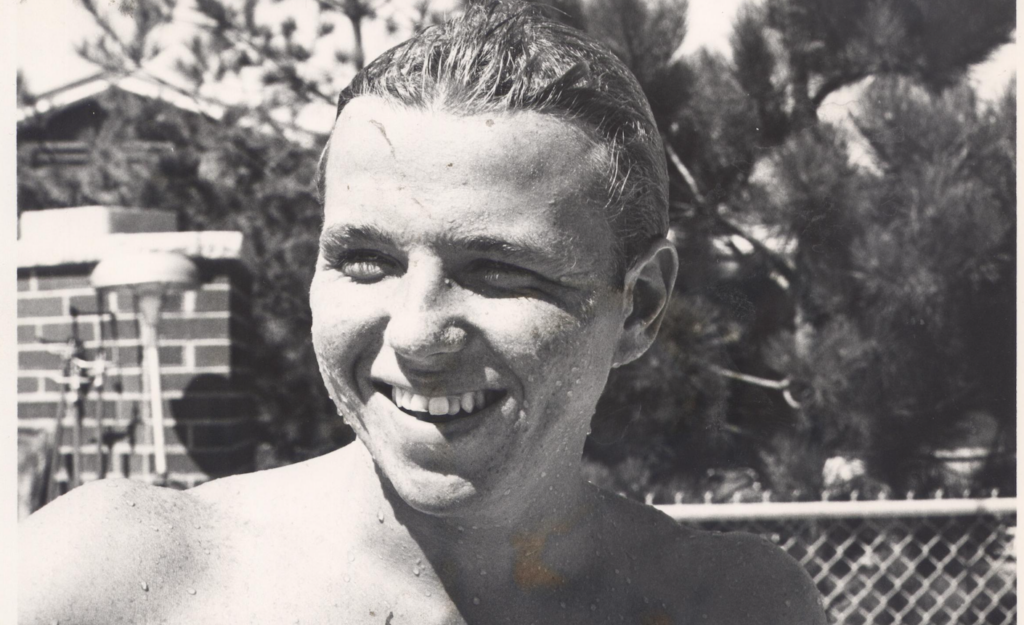
Tom Stock (USA)
Honor Swimmer (1989)
The information on this page was written the year of their induction.
FOR THE RECORD: WORLD RECORDS: 10 (100m, 200m, 220yd backstroke; relays); AAU NATIONAL CHAMPIONSHIPS: 11 (100m, 200m, 220yd backstroke; relays; AMERICAN RECORDS: 14 (200yd, 220 yd, 100m, 200m backstroke; relays).
Tom Stock may just be the greatest backstroker who never swam in the Olympics, due to prolonged illness before the 1964 Olympic Games. He may have been the smallest backstroker to hold a world record. He weighed in at 130 lbs. and set 10 world records. When he was in his second month of competition at Indiana University, Stock became the first man in history to swim the 200 yard backstroke under 2 minutes. This was a performance that caused his coach, “Doc” Counsilman to put a sign on the locker room door which said, “It’s not the size of the dog in the fight, but the size of the fight in the dog.”
This desire and an amazing feel of the water, long arms and a powerful kick, made Tom Stock great in the opinion of his famous coach. To the spectators he looked like he was riding on top of the water from the waist up. This unique buoyancy, plus the fastest arm turnover yet seen in backstroke, took him to 11 National championships, 14 American records and five world records in the 100 meter, 200 meter, 110 yard, 220 yard backstroke and the 400 meter medley relay. For four years he was the World Record holder and “King” of the 200 meter backstroke.
It started just after the Rome Olympics and finished just before Tokyo in 1964. In between, he victoriously represented the USA in Japan, South America, and Europe and was The American Swimmer of the Year in 1962. Stock had only two coaches, Dave Stacy at Bloomington, Illinois and “Doc” Counsilman at Bloomington, Indiana. He missed making the 1960 U.S. Olympic team by a judge’s decision. They took only two and not three as chosen in previous Olympics.